Steadfast Changes Others, Not Self
"To define how I think of steadfast, it's the person whose... resilience and stubbornness affects others, right? So, that's their steadfast in the belief... The most common example (and it's actually where I first heard of this terminology( is in the Hunger Games because Katniss' belief changes others. It's not that she changes her belief, her belief is able to change others."
— Stu Willis
(00:23:07)
· DZ-129: Steadfast Character Arcs - Agents of Change
Aggressive Waiting
"It's an almost a kind of aggressive waiting, if that makes sense. So whoever has the kind of nerve to live with that tension long enough will be the one who wins. It's a great character beat to have someone who is impatient, foolhardy, furious, angry, slighted, to show them really wanting to act. Just, they have to just do something, but what they actually have to do is wait. And they hate it. And that's a nice little -- yeah. That's a nice way to develop character."
— Damon Young
(00:16:28)
· DZ-100: Scenes through Swords
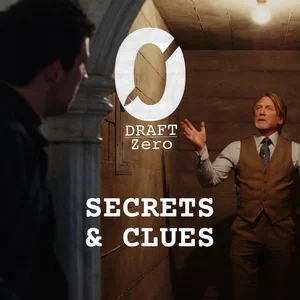
How can Secrets and Clues motivate characters?
AI✦The dual-protagonist structure forces a reckoning with agency: Blanc actively pursues answers while Judd is reactive and cornered, and the episode examines how that difference in agency shapes each character’s arc through the mystery.✦
Listen if you want to understand how hidden information drives character motivation and plot structure!
▶
More Info
“Getting information puts your character in danger. And danger rewards your character with information." — One of three ideas we steal from game design in this episode. In this two part series, we talk about how secrets, clues and hidden information motivate characters and may (or may not) help you plot from a character perspective. Part One (this episode) looks at WAKE UP DEAD MAN; while Part Two (DZ-127) looks at SIDE EFFECTS, and the pilot episode of SHRINKING…
→
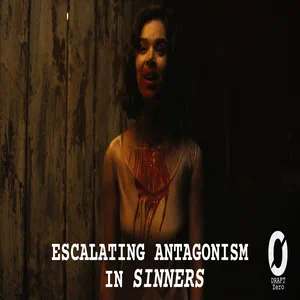
How do the antagonistic forces in your story escalate distinctly from the protagonists' journey?
AI✦The episode frames Survive, Solve, Save as three distinct stakes that protagonists choose based on their position toward the antagonistic threat, moving from internal mystery to externalized action.✦
Listen to strengthen your story by focusing on the antagonistic forces in your script.
▶
More Info
We often struggle to develop the middle stages of a story. Could this be because we focus on our protagonists’ journeys and plot structure more than on how the antagonistic powers are awakened, wronged, discovered, gathering strength and revealing themselves…
→
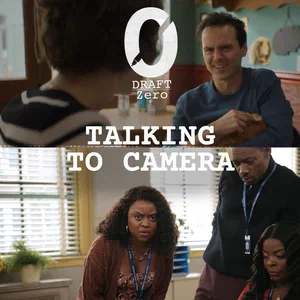
How is the effect of breaking the 4th wall different to voiceover?
AI✦Stu keeps returning to how much narrative control the character wields when they choose to address the camera, and how that lever can be dialled in and out to show whether a character like Fleabag or Rob is driving the story or being driven by it.✦
Listen to understand how breaking the 4th wall directly involves the audience in a character's emotional present.
▶
More Info
As part of our series on how filmmakers can directly communicate to the audience, we finally examine the most blatant tool of them all: when character look directly down the barrel of the camera… and thus look directly at
us, the viewer. Chas, Stu and Mel take the craft tools/levers they identified in previous episodes and use them to examine the tv-version-of HIGH FIDELITY (“Top Five Breakups”), ABBOTT ELEMENTARY (“Attack Ad)”) and - of course - FLEABAG…
→
How can games elevate dramatic scenes?
AI✦Games reveal character through the competency, decisions, and rule-breaking choices characters make when resources and skills are constrained, forcing them to show who they are through action rather than exposition.✦
Listen to understand how games force characters to interact and reveal themselves (through competency, decisions, and rule-breaking)
▶
More Info
In part two of this two parter, Stu and Chas go further into the game (of the scene) and look at how games force characters
other than the protagonist to interact. We deep dive into the wonderful social satires of TRIANGLE OF SADNESS and THE FAVOURITE…
→
What scene-writing tools can be learned from martial arts?
AI✦By examining who chooses to engage first and how characters initiate contact, Stu and Damon highlight how agency manifests in the moment-to-moment decisions that drive confrontation.✦
Listen if you want to know why the distance between two characters matters more than what they say.
▶
More Info
In this slightly unusual episode of Draft Zero (but also incredibly on brand), Stu and philosopher-swordsperson Damon Young discuss how the lessons they have learned from martial arts can be applied to scenes. In particular, they discuss how approaching an opponent in a sword fight can be analogous to how characters approach conflict, such as: the distance between the characters, who chooses to engage first, how to feint, how to lure an attack by leaving yourself vulnerable, etc…
→
How do I tell a powerful story where the protagonist cannot drive the plot?
AI✦The episode’s central question hinges on how to write powerful stories where protagonists cannot drive the plot--a direct inversion of agency-driven narrative.✦
Listen if you want to write powerful stories centred on characters without much agency.
▶
More Info
Stu and Chas are joined by Stephen Cleary following his exploration into Melodrama, and together they try to reclaim the word from its pejorative meaning…
→
Workshopping ways to fix character motivations.
AI✦By workshopping fixes to unmotivated character beats, the episode reveals how agency--or its absence--determines whether an audience stays invested or gets taken out of the movie.✦
Listen if you want to understand how character decisions can break a screenplay and how to fix them
▶
More Info
In this second part of their exploration of character motivations, Chas and Stu dive into what makes “BAD” screenplays NOT work. They examine at moments where they (and maybe you, dear listeners) did not believe a key decision being made by a character and so were taken out of the movie. In a departure from the Draft Zero format, they apply the tools they developed in Part 1 to workshop potential fixes to these beats…
→
Can your characters be given choices and yet still be deprived of agency?
AI✦CS McMullen reveals that Blade Runner 2049 dramatises characters through binary choices while systematically depriving them of agency--the distinction between being given a choice and having a choice that produces different outcomes.✦
Listen to discover how characters can be dramatised through binary choices (and understand the difference between choice and agency).
▶
More Info
To kick off 2018, Chas and Stu take a deep dive into one of their favourite movies of 2017: Blade Runner 2049. However, they abstained from “Fox News-ing this shit” by being joined by the most accomplished screenwriter they know, C.S. McMullen (Blood List 2017, Black List 2017, also a lover of Blade Runner 2049)…
→
Will Director Stu allow Writer Chas on his set?
AI✦Stu and Chas examine how character actions--and the consequences that follow--fundamentally shape how an audience perceives and judges a character.✦
Listen to understand how consequences (not intentions) impact whether an audience roots for or against your protagonist.
▶
More Info
Following our annual wrap up in 2017, we’ve decided to once again explore what craft issues/lessons we can garner from the latest Stars, namely Episode VIII: The Last Jedi, focusing on how consequences of character actions can do a lot of heavy lifting as to how the audience perceives that character (as well as looking at worldview and overall story structure)…
→
How can films maintain audience interest without stakes or plot questions?
AI✦Stuart and Chas examine how character choice--rather than external plot forces--propels these films forward, making what the protagonist decides the engine of engagement.✦
Listen if you're writing a character study and unsure how to build momentum without external conflict.
▶
More Info
Continuing their focus on “character”, Stuart and Chas take a close look at films that may be considered character-driven... or rather character studies... or just plot-lite films? Whatever you call them, these films — CHEF, HAPPY-GO-LUCKY, and AMOUR — let their plots take a back seat to a closer examination of their characters. Stuart and Chas dive in to investigate how, without plot driving the story forward, do these films maintain our interest? We talk Mike Leigh’s idea of the ‘Running Condition’, Character Choice, SceneWork and the myriad other techniques the filmmakers use to keep us interested…
→
How does the experience of a character's decision impact our feelings towards that character?
AI✦The episode examines how withholding a character’s perspective during critical moments--even when they’re driving the narrative--fundamentally changes how an audience perceives their control over events.✦
▶
More Info
After a spectacular end to Season 6 of GAME OF THRONES, Chas and Stu were struck by the very different portrayals of Sansa in
Episode 9 - Battle of the Bastards and Cersei in
Episode 10 - The Winds of Winter. Despite both characters having an enormous impact on the narrative, the audience’s experience of those characters is very different -- largely because Sansa is absent from 98% of Battle of the Bastards…
→
How can the Trinity Syndrome help you write better secondary characters?
AI✦Chas, Stu, and Emily dissect the Trinity Syndrome’s core critique--a ‘Strong Female Character With Nothing To Do’--which is fundamentally a problem of characters lacking meaningful choices and impact on the story.✦
Listen when you're writing secondary female characters and need them to have more depth.
▶
More Info
Chas & Stu are joined by Bamboo Killer (aka Emily Blake) - one of the co-hosts of the
Chicks Who Script podcast. They take a critical look at secondary female characters in mainstream movies through the lens of the oft-cited Bechdel test and the new, less-cited, Trinity Syndrome. The Trinity Syndrome berates movies for creating a
“Strong Female Character With Nothing To Do” (like Trinity in the Matrix sequels) and raises a list of questions for filmmakers to ask themselves about their (female) characters…
→
Is the MacGuffin truly interchangable, and how does it impact on your character writing?
AI✦The relationship between protagonist and MacGuffin determines whether your hero is actively pursuing something meaningful or passively chasing an arbitrary plot device.✦
Listen to discover why the MacGuffin's emotional weight--not its function--determines whether your audience cares enough to follow the entire adventure.
▶
More Info
Stu and Chas are joined by a special guest - Scriptmag contributor Brad Johnson - to discuss how the choice of the MacGuffin can impact on the quality of an action/adventure film. To test this thesis, our heroes compare the auspicious originals of two iconic franchise with their, um, less-than-auspicious 4th instalments (in other words we compare RAIDERS OF THE LOST ARK with KINGDOM OF THE CRYSTAL SKULL and THE CURSE OF THE BLACK PEARL with ON STRANGER TIDES) as well as look at two recent & original entries into the genre, namely NATIONAL TREASURE and PRINCE OF PERSIA…
→
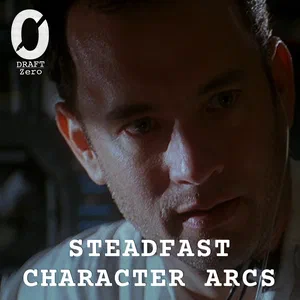
How do you write a satisfying story when your character never changes
AI✦Stu notes that Moana’s refusal to accept the ocean’s choice at the low point--her decision not to change--is itself an act of agency that drives the story forward.✦
Listen to learn how to move an audience with a character who never changes.
▶
More Info
Do characters need to change for you to have a satisfying story? That’s a question we’ve been asking since, like, episode five of this podcast. And we’re finally talking about them - whatever you call ’em: steadfast, resilent, or flat arcs…
→
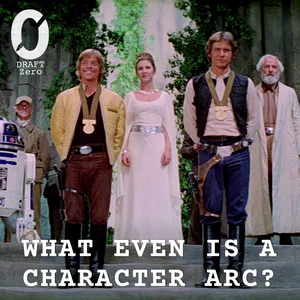
What effect does character changing have on the audience?
AI✦The hosts grapple with whether characters are rocks changed only by external forces or possess intrinsic capacity for self-directed transformation, and how that distinction shapes audience response.✦
Listen to separate the three layers of an arc -- does the character change? How do they feel about it? And how is the audience positioned to feel about it?
▶
More Info
Stu, Chas and Mel finally begin their long-awaited journey into CHARACTER ARCS. In this “primer” episode, we try find some learnings and analytical lenses that we can then apply in future breakdowns…
→
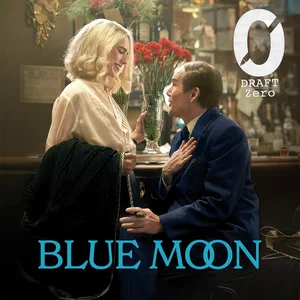
What craft tools make a low-budget, contained, period drama riveting?
AI✦Mel identifies how Larry makes choices throughout the night--organizing a party he knows will fail, pitching Rogers ideas he’s not sure about--and these choices reveal the moral complexity of whether he’s being true or performing for something he wants.✦
Listen if you want to understand how narrative POV, screenplay format, and dialogue craft can elevate a contained biopic into an Oscar-nominated film
▶
More Info
BLUE MOON is a talky, period-drama that film about an obscure songer-writer in the 1940s. Yet, it attracted world-class talent AND Academy Award nominations, including for it’s script. Join Chas & Mel as they explore how narrative POV, interweaving relationships, hooky dialogue, and even the screenplay format itself make the script for BLUE MOON so great…
→
How does Film Noir show us terrible people doing terrible things without endorsing it?
AI✦Mel argues that Easy makes morally grey choices based on survival within a system that’s out to get him, and Woman of the Hour demonstrates how a killer’s agency--choosing victims who won’t be believed--becomes the through-line of his characterization.✦
Listen if you need audiences to root for characters who do terrible things
▶
More Info
Mel and Chas continue to explore what Noir (the genre) can teach writers of all other genres. In particular:…
→
How can you apply horror ideas to action and comedy?
AI✦Chas notes that Terry is intellectually and emotionally in control of the situation at nearly all points--his agency isn’t just physical dominance but emotional mastery--which sets him apart from typical action heroes and drives the story’s moral weight.✦
Listen to learn how thinking of your hero as the horror (for your villains) makes your script dynamic.
▶
More Info
In this episode Chas, Stu and guest Kim Ho continue their exploration into the power(s) of antagonism and how focusing on them can develop story…
→
How do you dramatise a protagonist's internal journey through their final decision?
AI✦The episode argues that even powerless characters can be made active by giving them choices--like Jamie choosing not to tell his father the truth--which connects character agency to the dramatization of internal decision-making.✦
Listen if you want to understand how to better dramatise a character's internal journey
▶
More Info
In this episode, Stu and Chas focus
solely on the final choices made by protagonists and how that reflects their character journey and successfully, or not, dramatises the internal…
→

How does ending your story on the climax affect audience experience?
AI✦Mel and Chas track how the film’s two major changes from script to screen--Art’s underarm serve and the embrace--actually give Patrick and Art more visible decision-making in the final moments than the written page provides.✦
Listen to understand how withholding resolution can make your story great!
▶
More Info
While Stu is on show, Mel and Chas sit down to analyse the meaning behind the ending of 2024’s CHALLENGERS, especially when - upon reading the script - the most impactful moment of the ending on screen (for Chas in particular) is not written on the page…
→
How and why should every scene have an emotional event?
AI✦The Celine Song discussion shows how character agency lives in moment-to-moment choices--Nora interrupting with a mundane question becomes a beat change, and actors taking out their own phones without prompting proves the emotional truth is already written into the relationship dynamics.✦
Listen to understand why a scene's power lives in what shifts between characters, not what happens to them.
▶
More Info
How and why should every scene have an emotional event?…
→
What effect does adding a ton of characters have on your story?
AI✦By exploring how multiple characters with separate storylines function within a single narrative, the episode investigates how agency distributes across an ensemble and what that distribution accomplishes.✦
Listen if you're writing an ensemble storiy and want to understand how different characters serve different narrative and thematic functions!
▶
More Info
In Part 3 (the final part? Ha!) of our exploration into ensemble stories, Stu, Chas & Mel examine films whose genres do not conventionally require a ton of characters or that use those ensembles in unconventional ways. In particular, adding whole storylines that are separate from the main character’s story. To that end, we dive into three films that were horrifically snubbed by the Oscars: THE WOMAN KING, RIDERS OF JUSTICE and NOPE…
→
What is difference between choice and decision when it comes to audience experience?
AI✦In THE FAREWELL, the recurring choice to lie reveals how agency operates moment-to-moment, while WRATH OF MAN’s non-linear structure decouples character decisions from their consequences in ways that fundamentally alter audience perception.✦
Listen when you want to show a character refusing to change despite every opportunity to do so.
▶
More Info
In our second part of our “series” on Choices & Decisions, we take a deep dive into THE FAREWELL and WRATH OF MAN, with a sidebar on NOMADLAND…
→
What is the difference between choice and decision when it comes to characters?
AI✦Chas and Stu analyse how the audience’s understanding of what options are available to a character directly shapes our perception of their agency and culpability in the decisions they make.✦
Listen how the separation of choice, decision, and consequence (for a character) creates emotional impact.
▶
More Info
In order to better understand dramatising of character, Chas and Stu take a very draft zero look at very specific tool: choices and decisions. We analyse three films through the decisions made by their characters. In particular, how the audience understanding of: the choice available, the considered decision itself, and the consequence changes how we feel about these characters. And how separating those three things can create different emotional effects on your audience…
→
What can screenwriters learn from the storytelling techniques used by stand-up comedians?
AI✦Hannah Gadsby’s announcement that she’s quitting comedy raises the dramatic question of why we should care about someone ostensibly refusing to deliver what we came to see, putting her agency and choice at the center of the show.✦
Listen if you want to understand how stand-up comedians grip audiences and build emotional arcs (and what narrative tools screenwriters can borrow from comedy)!
▶
More Info
Standup comedians can keep audiences gripped to their every word for over an hour, and often bring them to emotional climaxes by the end. So how do they do it and what tools can apply to scripted narratives…
→
What to do when a reader says "I don't buy that he/she would do that"?
AI✦The episode examines how characters can make decisions that feel ‘out of character’ while still maintaining believable agency--the tension between what a character would normally do and what the story requires them to do.✦
Listen if you're writing a scene where your character does something 'out of character' and your readers to buy it.
▶
More Info
Chas & Stu look at examples of
good character motivation. We’ve all watched movies where we don’t believe the motivation of a character or characters. We may have even written scripts where readers don’t buy the character’s choices. And that’s often a real problem because most of these choices coincide with key structural moments — e.g. the moments where the characters decide to do something “out of character” in order to progress to the next part of the story. To help us solve the problem of how to improve our character motivations, in this episode we explore great examples of character motivation and how they have helped the audience believe a character’s decision…
→
How can characters be their own antagonist?
AI✦The episode grapples with how much agency a self-antagonistic protagonist retains and how their choices either compound or interrupt the antagonistic forces they embody.✦
Listen if you want to understand how protagonists can serve as their own antagonist and how antagonistic forces shape a character's journey
▶
More Info
In Part Two of our Five Part Epic Exploration™ into antagonists, Chas & Stu take a look at “vs self” stories. Stories where the protagonist (or main character) serves as their own antagonist as well as the antagonist for those around them…
→
What gives your sequences their intensity?
AI✦A recurring theme across the episode’s examples is what happens to your story when your protagonist actively decides to abandon the plot, foregrounding choice over external momentum.✦
Listen to understand how dramatic questions shape audience engagement and pacing through sequences.
▶
More Info
Chas and Stu are joined for the fourth time by the inestimable Stephen Cleary - this time to take a deep dive into sequences. A real deep dive. A 3+ hour deep dive…
→
What screenwriting lessons can be we learn from SPLIT?
AI✦The hosts trace how SPLIT’s structure reinforces the protagonist’s agency (or lack thereof) through carefully controlled revelations that mirror her own discovery of what’s happening around her.✦
Listen when you're writing a twist and need to earn it through point-of-view rather than surprise alone.
▶
More Info
In our first (and perhaps last) one-shot, we take a close look at the M. Night Shyamalan’s SPLIT. Rather than having one topic with many examples, we use the one example to look at many topics. Well, okay, a few topics…
→
How do tactics make your characters and scenes more dynamic?
AI✦The episode shows how a character’s tactical choices under pressure expose who they really are, and how the ability to shift tactics reflects their growth and agency throughout a story.✦
Listen to learn how a character's tactics reveal who they are under pressure--and how their changing tactics reveals their growth.
▶
More Info
In this episode, Stu and Chas turn their gaze to the “tactics” that characters use in scenes to get what they want. Tactics are
how the characters try to achieve their goals and (we reckon) can be revealing of the essence of their character. The shifting and thwarting of tactics can make scenes more dynamic; while over the course of a story, the changing of tactics can reflect the growth of characters... even if their goal stays the same…
→
How can writers make use of their time when hitting LA?
AI✦Stu and Chas examine character choices in Rogue One to understand how writers can give characters meaningful agency within constrained circumstances.✦
Listen if you're about to network at a festival and have no idea what writers actually do with their time there.
▶
More Info
In another backmatter-only episode, Stu & Chas zig-zag through a range of topics. We talk about Chas’ experience(s) hitting both Los Angeles and the Austin Film Festival, effective networking, career capital, the art of receiving feedback, and Stu’s harsh Three Strikes Rule. We look back at the most important lessons we’ve learned about storytelling in 2016 and that leads us to talk about character choices in a little-known and little-talked about film called ROGUE ONE…
→
How does splitting 'character functions' enhance theme?
AI✦When you separate active character function from protagonist function, you’re making deliberate choices about who drives the plot forward and who experiences the internal change, each decision serving different narrative effects.✦
Listen to see how splitting character functions across your cast sharpens what your story actually means.
▶
More Info
We are often told that our ‘protagonist’ needs to be a active. That they need to be compelling. That they need to change. And - old faithful - that they need to be likeable. But after looking at MAD MAX: FURY ROAD, STAR TREK (2009), THE FIGHTER, and SICARIO, Chas and Stu learn that your primary character does not need to do
all these things. In fact, they learn that splitting these functions between your primary characters can reinforce theme and create potential for different types of narratives…
→
How does a screenwriter collaborate with a director on an existing property?
AI✦Horror screenwriting, particularly in a franchise context, hinges on how much control characters retain when the genre demands vulnerability, a tension Aaron and Chas likely examine through WOLF CREEK 2’s choices.✦
Listen if you're co-writing and need to figure out where your voice ends and your collaborator's begins.
▶
More Info
In this halloween special, Chas (sans Stu) is joined by a very special guest... Aaron Sterns the co-writer of WOLF CREEK 2 -- the big budget sequel to the infamous WOLF CREEK, also directed by Greg McLean. Chas and Aaron talk horror, anti-horror, collaboration, novels and how a screenwriter works within an existing franchise…
→
Are your story rules in your pilot strong enough to play out over the life of your show?
AI✦Grant Nebel and the hosts analyze how pilots like BREAKING BAD and MAD MEN establish their protagonists’ agency and capacity for choice, which determines the trajectory of character arcs across an entire show’s run.✦
Listen if you wanna know great television pilots establish the dramatic, literary, and cinematic rules that sustain their entire run.
▶
More Info
Stu and Chas move away from the world of features and dive into the Pilot Episodes of some (New) Golden Age Television: THE SHIELD, THE WIRE, BREAKING BAD, and MAD MEN. And we sneak in some discussion about ANGEL, THE SOPRANOS and GAME OF THRONES…
→
Do the biggest original films of 2013 follow more archetypal - or formulaic - structures?
AI✦Chas and Stu wrestle with whether Ryan Stone is actually driving Gravity or being driven by Matt Kowalski’s mentorship, and whether this distinction matters to how the story functions.✦
Listen if you need to know which guru frameworks actually deliver in Act Three.
▶
More Info
Part 2 of our Screenplay Gurus series takes the same lens from Part 1 — Vogler, Snyder and Hauge — and points it at the two highest-grossing original films of 2013: GRAVITY and FROZEN. No franchise, no sequel. Just the two films that audiences went to see in the biggest numbers that year, and the question of what their scripts actually look like when you run them against the guru formulas…
→
What, exactly, is Draft Zero?
AI✦Chas mentions exploring scenarios where ‘your protagonist doesn’t go on any journey at all’ and might be ‘a point of view protagonist,’ which centers character agency rather than obligatory character arcs.✦
Listen if you're new to the podcast and want to understand our philosophy on screenwriting craft!
▶
More Info
Welcome to Draft Zero. A message from 2019 to those starting with our first episodes dating from 2014. We’ve learned a lot in five years. So where do you begin…
→
How do character goals, tactics, and fears create subtext automatically?
AI✦In The Substance, the hosts examine how Elizabeth’s inability to accept herself--her refusal to leave despite looking great--shows her punished for lacking agency over her own acceptance.✦
Listen if you're struggling to write subtext without it feeling forced!
▶
More Info
Or, how focusing on good drama will result in good subtext. We often hear how subtext is important for good screenwriting. We’re here to tell you it isn’t. Good subtext is a result of good drama, and your focus should be on creating that good drama. But how…
→
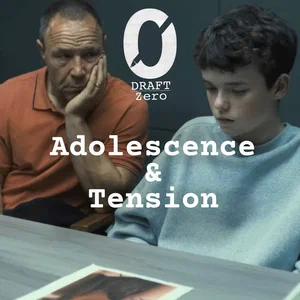
How do dramatic questions create tension?
AI✦Stu argues that Jamie can’t undo what he’s done, which strips him of forward momentum and forces the show to ask character questions instead--a constraint that actually liberates the writing to explore why he did it rather than whether he can escape consequences.✦
Listen when you need tension without external stakes--subtext, stillness, and thematic weight do the work.
▶
More Info
In this episode, Stu and Chas delve into the cultural phenomenon of ADOLESCENCE. We try to find the craft tools that have made the show so compelling and such a catalyst for conversation…
→
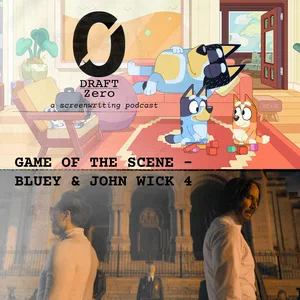
How can 'games' help us write better scenes?
AI✦Understanding the game of the scene clarifies what choices characters can actually make within the arena and rules they’re operating under.✦
Listen to make your scene writing more dynamic (by looking at the underlying game)
▶
More Info
Stu and Chas turn their attention to a topic that has long eluded them: the game of the scene. We look at how considering the game that characters are playing — its rules, arenas, players, referees, and win conditions — can help you write more dynamic scenes…
→