2026
How can repeating the same beat dramatise a character changing?
AI✦Stu anchors the discussion in Judith Weston’s concept of emotional events as relationship changes between characters, using it to explain why Widows’ scenes between Linda and Belle, or Adam and Harry, carry arc significance.✦
Listen to understand how to dramatize a character's internal change.
▶
More Info
Welcome to our third entry in our character arc series; and the first where we talk about characters that
actually change. And positively, too…
→
How do you write a satisfying story when your character never changes
AI✦Chas proposes that emotional events between characters carry the narrative weight when character arcs don’t, defining them through the Judith question of whether characters end up more intimate or distant from the audience.✦
Listen to learn how to move an audience with a character who never changes.
▶
More Info
Do characters need to change for you to have a satisfying story? That’s a question we’ve been asking since, like, episode five of this podcast. And we’re finally talking about them - whatever you call ’em: steadfast, resilent, or flat arcs…
→
What effect does character changing have on the audience?
AI✦Stu identifies the emotional event between audience and character--created through the journey and whether the character ends more intimate or distant--as crucial to understanding what an arc accomplishes.✦
Listen to separate the three layers of an arc -- does the character change? How do they feel about it? And how is the audience positioned to feel about it?
▶
More Info
Stu, Chas and Mel finally begin their long-awaited journey into CHARACTER ARCS. In this “primer” episode, we try find some learnings and analytical lenses that we can then apply in future breakdowns…
→
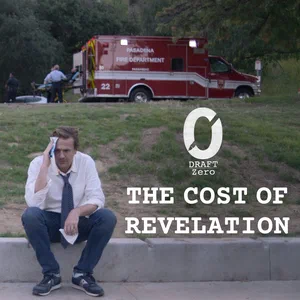
What does it cost a character to find something out, or to say it?
AI✦Stu frames how Dr. Banks is pushed and pulled through Side Effects by the danger that comes from uncovering information, while Chas connects this to whether characters are sharing secrets because they’re pushed by external forces or pulled by internal factors.✦
Listen to learn the emotional impact of revealing secrets vs discovering them.
▶
More Info
In this episode Stu, Chas and Mel apply the Landmark–Hidden–Secret framework (from DZ-126) across two very different genres: the thriller SIDE EFFECTS (2013) and the tragicomic pilot of SHRINKING…
→
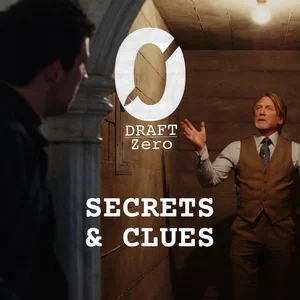
How can Secrets and Clues motivate characters?
AI✦The hosts directly address whether characters are pushed forward or pulled forward by information, and how that distinction shapes the kind of escalation each character can sustain across the film.✦
Listen if you want to understand how hidden information drives character motivation and plot structure!
▶
More Info
“Getting information puts your character in danger. And danger rewards your character with information." — One of three ideas we steal from game design in this episode. In this two part series, we talk about how secrets, clues and hidden information motivate characters and may (or may not) help you plot from a character perspective. Part One (this episode) looks at WAKE UP DEAD MAN; while Part Two (DZ-127) looks at SIDE EFFECTS, and the pilot episode of SHRINKING…
→
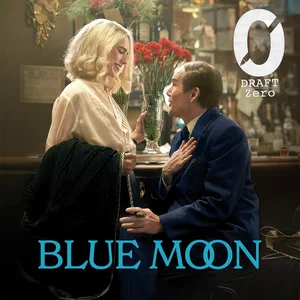
What craft tools make a low-budget, contained, period drama riveting?
AI✦Mel and Chas break down how Blue Moon’s almost total commitment to Larry Hart’s perspective--he’s absent from only two beats in the entire film--shapes both the script’s structure and the audience’s emotional experience of his decline.✦
Listen if you want to understand how narrative POV, screenplay format, and dialogue craft can elevate a contained biopic into an Oscar-nominated film
▶
More Info
BLUE MOON is a talky, period-drama that film about an obscure songer-writer in the 1940s. Yet, it attracted world-class talent AND Academy Award nominations, including for it’s script. Join Chas & Mel as they explore how narrative POV, interweaving relationships, hooky dialogue, and even the screenplay format itself make the script for BLUE MOON so great…
→
How does Film Noir show us terrible people doing terrible things without endorsing it?
AI✦Mel and Chas argue that noir films control audience investment in morally compromised characters by controlling the questions they raise--whether it’s ‘Am I a bad person?’ in Devil in a Blue Dress or ‘Did he really let her go?’ in Woman of the Hour.✦
Listen if you need audiences to root for characters who do terrible things
▶
More Info
Mel and Chas continue to explore what Noir (the genre) can teach writers of all other genres. In particular:…
→
2025
How can you apply horror ideas to action and comedy?
AI✦Stu, Chas, and Kim use TOMBS to reveal how antagonistic forces work across genres--showing that thinking of your hero as the horror for your villains creates dynamic escalation in action, horror, and comedy alike.✦
Listen to learn how thinking of your hero as the horror (for your villains) makes your script dynamic.
▶
More Info
In this episode Chas, Stu and guest Kim Ho continue their exploration into the power(s) of antagonism and how focusing on them can develop story…
→
How do the antagonistic forces in your story escalate distinctly from the protagonists' journey?
AI✦Kim Ho introduces TOMBS (Transgression-Omens-Manifestation-Banishment-Slumber) as a generative story cycle from the MOTHERSHIP RPG that can develop your antagonistic forces independently from your protagonist’s arc.✦
Listen to strengthen your story by focusing on the antagonistic forces in your script.
▶
More Info
We often struggle to develop the middle stages of a story. Could this be because we focus on our protagonists’ journeys and plot structure more than on how the antagonistic powers are awakened, wronged, discovered, gathering strength and revealing themselves…
→
How do you dramatise a protagonist's internal journey through their final decision?
AI✦Chas and Stu compare narrative POV structures across five films to show how much the audience knows about a character’s options, the act of choosing, and the consequences, with Michael Clayton’s approach withholding experience to serve theme.✦
Listen if you want to understand how to better dramatise a character's internal journey
▶
More Info
In this episode, Stu and Chas focus
solely on the final choices made by protagonists and how that reflects their character journey and successfully, or not, dramatises the internal…
→
How do dramatic questions create tension?
AI✦Chas and Stu demonstrate how ADOLESCENCE controls what questions the audience asks at any given moment--plot questions in episode one, character questions in episodes two and three, thematic questions by the end--and how this macro-level precision creates tension without relying on plot.✦
Listen when you need tension without external stakes--subtext, stillness, and thematic weight do the work.
▶
More Info
In this episode, Stu and Chas delve into the cultural phenomenon of ADOLESCENCE. We try to find the craft tools that have made the show so compelling and such a catalyst for conversation…
→
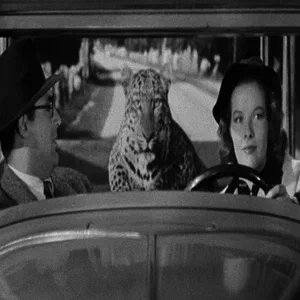
How do you make extended technical scenes funny on the page?
AI✦The Happy Endings wedding sequence exemplifies how spending time in setup--establishing props like the beer float and Kleenex box--pays off later when those same items trigger gags, giving actors and designers material to play with.✦
Listen to learn how formatting--white space, caps, dashes--becomes your comedy toolkit without a director.
▶
More Info
Mel joins Chas to tackle physical comedy. We limited our homework selection to extended scenes (as opposed to moments and sight gags) in live action projects and – with the help of our Patreons – selected early sequences from BRINGING UP BABY, the pilot for HAPPY ENDINGS and that wonderful food poisoning scene in BRIDESMAIDS…
→
2024
"By not showing us what comes next, the filmmakers are essentially asking us to complete the emotional contract ourselves in our heads."
— Mel Killingsworth | DZ-114: Climaxes in CHALLENGERS

What magic do Christmas movies use to make them so rewatchable?
AI✦The episode credits intricate plots as a structural ingredient that keeps holiday films engaging and rewatchable, suggesting complexity as an antidote to predictability.✦
Listen if you want to understand what makes holiday films enduring parts of our seasonal rituals!
▶
More Info
In this “backmatter” episode of Draft Zero, Stu, Chas, and Mel Killingsworth embark on a festive exploration of what makes holiday films so engaging and so re-watchable that they can become part of our rituals. To that end, we breakdown the charm of of Christmas films like KISS KISS BANG BANG, RIDERS OF JUSTICE, and IT’S A WONDERFUL LIFE…
→

How does ending your story on the climax affect audience experience?
AI✦Mel and Chas examine what it means structurally and thematically when filmmakers choose to end their story at the climax rather than after it, using CHALLENGERS as a case study in how that choice reshapes audience experience.✦
Listen to understand how withholding resolution can make your story great!
▶
More Info
While Stu is on show, Mel and Chas sit down to analyse the meaning behind the ending of 2024’s CHALLENGERS, especially when - upon reading the script - the most impactful moment of the ending on screen (for Chas in particular) is not written on the page…
→
What tools help ensure that you as the filmmaker are not misunderstood?
AI✦The episode’s central question--what tools help ensure you as the filmmaker are not misunderstood--operates as a thematic throughline uniting how ADAPTATION, STORIES WE TELL, and THE FORTY-YEAR-OLD VERSION each answer it differently.✦
Listen if you want to explore how you can make your creative hand visible through meta-storytelling and structural choices!?!
▶
More Info
In our final (ha!) episode looking at Talking Directly to the Audience, we turn away from character-and-text based craft tools to look at other ways that filmmakers - whether they be directors, writers, editors, or anyone else - can make the audience feel their ‘hand’ more. To that end, Mel, Stu and Chas dive into ADAPTATION, STORIES WE TELL and THE FORTY-YEAR-OLD VERSION…
→
How does the unreliability of a narrator impact the way a story is told?
AI✦Jack’s perspective as narrator determines everything the audience receives, and Stu and Mel show how point-of-view becomes a weapon when the person telling the story cannot be trusted.✦
Listen to learn how unreliable narrators shape storytelling through voiceover, structure, and control.
▶
More Info
In this episode, Stu and Mel (sans Chas!) take a deep dive into FIGHT CLUB and its use of the unreliable narrator. This is a bridging episode between our previous episode on VOICEOVER and our forthcoming episode on TALKING TO CAMERA as Fight Club does
both.…
→
What are the different ways a filmmaker can ask something of the audience?
AI✦Chas uses the concept of perspective and point of view to distinguish between objective narration, subjective internal monologue, and the Rashomon effect of multiple competing viewpoints.✦
Listen if you've wondered what a character actually wants when they're talking directly to the audience!?
▶
More Info
What are the different ways a filmmaker can ask something of the audience…
→
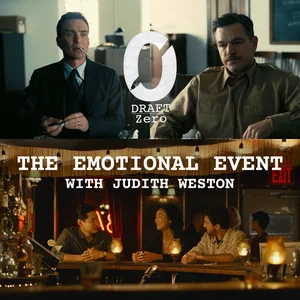
How and why should every scene have an emotional event?
AI✦Judith Weston frames the emotional event as the core unit of scene work--a shift in the relationship between characters rather than plot advancement--and Chas, Stu, and Judith dissect how this concept lives on the page through close reading of scenes from Oppenheimer, Casino Royale, and Past Lives.✦
Listen to understand why a scene's power lives in what shifts between characters, not what happens to them.
▶
More Info
How and why should every scene have an emotional event?…
→
How can we use dramatisation to create tone?
AI✦Stu proposes given circumstances as one vertex of his tone triangle, arguing that the rules of the world and the conditions characters inhabit directly determine what actions and reactions feel appropriate and tonally resonant.✦
Listen if you want to understand how character actions and reactions shape a film's tone
▶
More Info
In this episode, Chas and Stu continue their deep dive into how to write tone by examining films with “light” (we use the phrase loosely) tones: LADY BIRD, EMILY THE CRIMINAL, THE BALLAD OF BUSTER SCRUGGS, and SPONTANEOUS. We also talk a surprising amount about DUNE and CRAZY STUPID LOVE…
→
2023
"Because it’s like, does that concept or the way that you’re pitching it in your listeners or in the room spark sufficient content or material or ideas or conflicts and all that kind of stuff?"
— Chas Fisher | DZ-106: How do you know if you have enough story?
How do you know if you have enough narrative fuel to write a script?
AI✦Stu argues that identifying your midpoint early is one of the best structural tests for whether you have enough juice, and that plotting scene-by-scene with clear turning points tells you whether 40 scenes worth of story exists.✦
Listen you're not sure whether your idea has enough fuel for 90 pages.
▶
More Info
In this episode, Chas, Stu and Mel attempt to answer a listener question:
“In your own pre-writing process, how do you know you have enough for a feature? And do you have a specific pre-writing method you’re going to?”…
→
How can the same story feel different when you have more characters?
AI✦By comparing single protagonists and two-handers against true ensembles, Chas, Stu, and Mel establish the structural distinctions that matter when you have multiple leads.✦
Listen if you're working on a story with multiple protagonists and want to understand what makes an ensemble different from a single-protagonist narrative
▶
More Info
In the first part of our series on ensembles, Chas, Stu and Mel start by laying the groundwork for our future episodes. And we begin by asking the seemingly innocuous question:
What do we mean by calling a story an ensemble?…
→
2022
How do you maintain hope in the face of, er, screenwriting
AI✦Chas and Stu discuss the ostensible shortening of first acts as a contemporary structural trend worth examining.✦
Listen listen to hear why first acts keep shrinking--and whether yours should too
▶
More Info
Time for our annual backmatter episode, where we drop any ruse of any objectivity, and fully embrace our subjective opinions…
→
How can you use physical objects to track character change… wordlessly?
AI✦The beats used to turn objects into talismans operate as a setup-and-payoff system, where early associations with an object accumulate meaning and create resonance when that object reappears or transforms.✦
Listen to write objects that accumulate powerful meanings across your story and create unspoken emotional payoffs.
▶
More Info
In part two of our two-part series on TALISMANS, we break down the beats used to turn objects (in a broad sense) into talismans; how talismans can track character journeys and transitions; and how they can be used to create powerful moments without words…
→
How can endings prompt an audience to reflect on your story?
AI✦The episode directly investigates what makes certain endings powerful by analyzing LA LA LAND, INCEPTION, NO COUNTRY FOR OLD MEN, and TURNING RED as case studies in ending craft.✦
Listen if you want to write endings that make audiences pause and ponder (in a good way, obvs)
▶
More Info
Stu & Chas set out to explore what makes certain endings powerful, in particular those of LA LA LAND, INCEPTION, NO COUNTRY FOR OLD MEN and TURNING RED. The lens they bring to those endings is Aristotle’s moment of “anagnorisis” (don’t worry - we can’t pronounce it either), traditionally when a character moves from ignorance to knowledge (particularly of self)…
→
How can you keep your audience hooked when they know the end of the story?
AI✦Chas, Stu and Mel use biopics as a lens to dissect how internal, external, and philosophical stakes function when audiences already know the plot outcome.✦
Listen listen if you're writing a biopic or any story where the audience already knows how it ends.
▶
More Info
Chas, Stu and Mel take a deep dive into stakes, using then lens of biopics to help us think about them. If an audience already knows the “plot” outcome of a story, then how do you create stakes to make a story tense for the audience…
→
How can you use setups and payoffs to stitch your film together?
AI✦Chas and Stu break down the difference between Pointers and Plants and Stitches as the core mechanism EVERYTHING EVERYWHERE ALL AT ONCE uses to create narrative cohesion across its multiverse structure.✦
Listen to understand how setups, payoffs, and reversals create narrative cohesion even when your story is fkn bonkers.
▶
More Info
In this one-shot, Chas and Stu jump into the utter chaos of EVERYTHING EVERYWHERE ALL AT ONCE. Y’know, nultiverses, butt-plug action sequences, hot-dog fingers, a raccoon chef, a nihilist bagel. All the good stuff. And yet it lands emotionally in a way that feels inevitable…
→
How does your opening sequence set up your audience?
AI✦Jessica Ellis, Chas, and Stu examine how inventive opening sequences in OCEAN’S ELEVEN, LONG SHOT, ARRIVAL, and A SERIOUS MAN establish character, genre, and theme while defying expectations.✦
Listen if you want to understand how great opening sequences establish character, genre, and theme while defying genre conventions
▶
More Info
Inspired by her tweet on how subversive an opening OCEAN’S ELEVEN has, Chas and Stu invited amazing writer/director Jessica Ellis onto the show to deep dive into opening sequences. How does a good opening setup character, genre, and theme…
→
How can dramas use genre elements to hook their audiences?
AI✦Rather than plot questions, Stu and Chas show how these films plant character questions early--who is this person, what do they really want beneath the surface--that carry more weight than the genre mechanics.✦
Listen if you're writing a genre film but sense your story wants to become something else entirely.
▶
More Info
Stu and Chas reunite with TV writer & director Kodie Bedford to look at how some films start out as genre but gradually become character dramas. Or, as Stu never said on the episode
“Genre in the streets, Drama in the sheets”.…
→
How do you deliver on the emotional contract of a genre while surprising the audience?
AI✦These films are analyzed as case studies in how to construct twists that feel earned rather than cheap -- recontextualizing what the audience thought it was watching.✦
Listen when you're writing within a genre but terrified you'll deliver something your audience has already seen.
▶
More Info
In tackling this enormous topic, Stu and Chads enlist professional TV writer and director Kodie Bedford, someone who has somehow managed to defy genre pigeon-holing by writing mystery, comedy and vampire shows…
→
2021
What is difference between choice and decision when it comes to audience experience?
AI✦WRATH OF MAN’s non-linear structure becomes a craft tool that decouples character decisions from their outcomes, requiring the audience to reconstruct causality and reassess their emotional relationship to the protagonist.✦
Listen when you want to show a character refusing to change despite every opportunity to do so.
▶
More Info
In our second part of our “series” on Choices & Decisions, we take a deep dive into THE FAREWELL and WRATH OF MAN, with a sidebar on NOMADLAND…
→
How can you elegantly convey given circumstances and exposition?
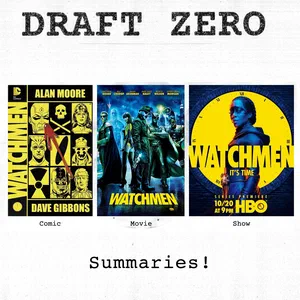
AI✦Chas, Stu, and Mel use WATCHMEN as a masterclass in how writers communicate the unique rules and world of their story -- the alternate history, superhero mechanics, political systems, and character backstories that differ from an audience’s lived experience.✦
Listen if you're drowning your readers in world-building and can't figure out how to make it awesome!
▶
More Info
In this final podcast release of last year’s run of LiveSoLation episodes, Chas and Stu are joined by Uber-geek Mel Killingsworth (who else?) in an epic exploration of how Dave Gibbons’ and Alan Moore’s seminal graphic novel WATCHMEN is adapted differently in Zack Snyder’s 2009 film and Damon Lindelof’s 2019 HBO television show…
→
How do you make effective pitch decks and look books for your projects?
AI✦Lookbooks establish the visual world of a project, and Marc addresses how to construct and present that world across television versus features.✦
Listen if you're preparing to pitch a project and want to understand how to create compelling visual materials
▶
More Info
Chas and Stu are joined by writer/director/producer/multi-hyphenate Marc Furmie of Rezistor Studios to talk all things pitch decks and look books. Coming from an advertising and music video background, Marc shares his experience in putting together visual materials to pitch a project. We discuss the difference between pitch decks and lookbooks, how they help you sell your projects, what buyers are looking for, television vs features, and how do we make yours better…
→
How can interweaving timelines elevate the emotional experience for the audience?
AI✦Chas, Stu & Mel structure the entire discussion around how Gerwig’s non-chronological interweaving of Little Women and Good Wives creates emotional and thematic effects that the source material’s original chronological order cannot achieve.✦
Listen to explore non-chronological structures can make work thematically resonant.
▶
More Info
In our final part, part 3, of our Interweaving Timelines series, we — Chas, Stu & Mel — take a deep dive into Greta Gerwig’s 2019 adaptation of Little Women. In her adaptation of Louisa May Alcott’s iconic novels, Greta chose to interweave the seperate timelines of Little Women and it’s sequel, Good Wives, to create a thematically and emotionally potent work. This differs from all the other adaptations, which have chosen to keep the chronological storytelling of the source material…
→
How can interweaving two timelines change how we feel about a character?
AI✦The episode’s central question asks how interweaving two timelines changes how we feel about a character, using The Social Network’s flash-forwards and flashbacks as the primary case study for this structural technique.✦
Listen to understand how manage stakes when you're using flashforwards.
▶
More Info
In this Part 2 of Interweaving Timelines (aka The Stu Monologue Episode), Mel, Chas and Stu tackle Sorkin/Fincher’s The Social Network. As you’ll hear, it is clearly Stu’s favourite of the examples we cover and, ah,
not Mel’s favourite. While all three bring their own biases and opinions on the reality of Facebook as it has become, we do manage to put the destruction of democracy to one side to actually analyse the meticulous craft that this film displays…
→
How does interweaving two timelines change how the audience feel?
AI✦The entire episode dissects how two plot lines featuring the same characters across different timelines are woven together, using DESTROYER as the primary case study for managing this structural approach.✦
Listen when you're writting multiple timelines and struggling to anchor your reader to one timeline's perspective.
▶
More Info
Stu and Chas are joined by Mel Killingsworth to dissect interweaving timelines. Not anthology films. Not Cloud Atlas. But films where two plot lines featuring the same characters, but from different timelines, are woven together…
→
2020
How can you do powerful storytelling... without dialogue?
AI✦Lia, Stu, and Chas break down how FURY ROAD uses setups and payoffs as the primary engine of visual storytelling, allowing narrative information and character development to land without dialogue.✦
Listen to hear how visual storytelling can carry an entire narrative with minimal dialogue.
▶
More Info
Stu and Chas are joined by filmmaker, podcaster and writer Lia Matthew Brownn to deep dive into FURY ROAD and its astounding
visual storytelling, both on the page and on screen. We talk about setups and payoffs, given circumstances, image systems, environmental storytelling, and how the relationship between Furiosa and Max is built over the course of the story with very little dialogue (besides Tom Hardy’s grunts and the odd bellow of “MEDIOCRE!”).
You can also watch the complete live stream on YouTube or just the breakdown of the Furiosa/Max fight (which isn’t in the podcast) here:
https://www.youtube.com/watch?v=f8uYAbEcQeQ&feature=youtu.be…
→
What can we learn from folk horror?
AI✦The episode examines how the Hårga community’s customs, calendar, and mythology create a fully realized world that operates by its own logic, making the horror feel inevitable rather than imposed.✦
Listen if you want to understand how folk horror works as a genre and how Ari Aster uses it to explore grief and toxic relationships
▶
More Info
Draft Zero return with their next YouTube livestream! Stu and Chas are joined by previous guest (and successful screenwriter) C.S. McMullen for a deep dive into MIDSOMMAR! We analyse the film through the lens of Folk Horror, but tackle broader topics such as horror vs dread, rising tension, transgressions, unfilmables, and portraying toxic relationships…
→
How can I develop my plot before writing the screenplay?
AI✦Cleary’s producer and development experience shapes a conversation centered on the mechanics of plotting your story before you hit the page.✦
Listen to understand why a treatment isn't something to dread, but the plot-development tool that saves you months of writing.
▶
More Info
Stu and Chas are joined by fan-favourite, Stephen Cleary, to NOT look at what makes great screenplays work -- but what makes great “short documents” work. We draw on Stephen Cleary’s wealth of experience in developing work with writers, as a producer, as a script editor and as a former head of development…
→
How can you use audience questions to heighten emotional investment?
AI✦The deep dive into Parasite reveals how the film layers dramatic questions--about class, intention, and what will happen next--to sustain narrative momentum.✦
Listen to understand how refusing to give your audience moral clarity can deepen their investment in character fates.
▶
More Info
Draft Zero return with their next YouTube livestream! Stu and Chas take a deep dive into PARASITE and how its mastery of audience questions elevates the film. They then answer listeners questions on PARASITE and much more…
→
How can shifting narrative point of view drive your sequences?
AI✦Stu and Chas use shifts in what the audience knows relative to the characters as the structural spine for breaking down Knives Out’s sequences and turning points.✦
Listen to help you master the gap between what your audience knows and what your characters know.
▶
More Info
Born out of isolation madness, this episode is an edited version of Draft Zero’s first YouTube livestream. Stu and Chas both watched KNIVES OUT and - together with our listeners - broke down each sequence and turning point by reference to what the audience knows in relation to the characters (aka narrative point of view). They then answer listener questions on KNIVES OUT and much else besides live on air…
→
How do I tell a powerful story where the protagonist cannot drive the plot?
AI✦Melodrama centers on character questions more deeply than the Hero’s Journey, since the plot happens to characters rather than being driven by them.✦
Listen if you want to write powerful stories centred on characters without much agency.
▶
More Info
Stu and Chas are joined by Stephen Cleary following his exploration into Melodrama, and together they try to reclaim the word from its pejorative meaning…
→
2019
What to do when a reader says "I don't buy that he/she would do that"?
AI✦Understanding what’s at stake for a character--what they stand to gain or lose--is essential to making their motivations land with audiences at pivotal story moments.✦
Listen if you're writing a scene where your character does something 'out of character' and your readers to buy it.
▶
More Info
Chas & Stu look at examples of
good character motivation. We’ve all watched movies where we don’t believe the motivation of a character or characters. We may have even written scripts where readers don’t buy the character’s choices. And that’s often a real problem because most of these choices coincide with key structural moments — e.g. the moments where the characters decide to do something “out of character” in order to progress to the next part of the story. To help us solve the problem of how to improve our character motivations, in this episode we explore great examples of character motivation and how they have helped the audience believe a character’s decision…
→
2018
How does removing character and plot question force your audience to engage with theme?
AI✦The episode builds on the previous conversation about sequence structure, this time isolating thematic sequences as a category that operates by different rules than plot or character sequences.✦
Listen if you want to make theme your primary driver (for a sequence)
▶
More Info
Chas and Stu are joined, once again, by the inestimable Stephen Cleary. This episode is a spiritual sequel to our last episode with Stephen, the one on sequence structure. That episode explored how sequences could be broken into plot, character, and plot/character sequences…
→
What if there is no antagonist?
AI✦Stu and Chas use these five films to prove that antagonism doesn’t require a singular antagonist -- it can be the film itself actively working against audience expectations.✦
Listen to turn narrative uncertainty itself into the engine that keeps viewers compelled.
▶
More Info
It’s time. The Epic Deep Dive(TM) into Antagonists has reached its shuddering conclusion. And for this Part V - by choosing films that have no obvious singular antagonist (and in some cases no obvious narrative either) - Stu and Chas realised there was indeed a final category of antagonists: the films themselves. Where the film (and the filmmaker) are engaging directly with the audience. Where the films are... VERSUS AUDIENCE…
→
How do systems pressure your characters to change?
AI✦The episode builds a sophisticated toolkit for understanding system/world/society antagonists as distinct pressure sources--obstacles, enablers, pushers, and pullers--that function as antagonistic forces independent of a traditional villain.✦
Listen if you want to use how societal, governmental, or environmental forces as villains.
▶
More Info
This is Part Four (!!) of our Five Part Epic Exploration into antagonists forces and sources of conflict. In this episode we explore “system/world/society” antagonists. While stereotypically associated with science-fiction, these sources of conflict are found across genres…
→
What changes in your story if your antagonistic forces can't be bargained with?
AI✦Chas and Stu distinguish between antagonistic forces that make choices versus those that don’t, fundamentally reshaping how conflict operates when your antagonist cannot be bargained with or reasoned into submission.✦
Listen to understand why pressure--not obstacles--is what transforms a protagonist when they face an unstoppable force.
▶
More Info
In this Part Three of our Five Part Epic Exploration™ into antagonistic forces (and sources of conflict), Chas & Stu explore “nature” antagonists, including some supernatural ones. What became clear in doing the homework (and recording this episode
twice) was that the antagonistic forces - whether natural or supernatural - presented different narrative challenges to the protagonists if (a) they did not seem to make choices and (b) could not be bargained with or defeated…
→
How can characters be their own antagonist?
AI✦Chas and Stu’s central thesis--that antagonistic forces carve out the protagonist’s journey--reframes how antagonism operates beyond a singular opposing character.✦
Listen if you want to understand how protagonists can serve as their own antagonist and how antagonistic forces shape a character's journey
▶
More Info
In Part Two of our Five Part Epic Exploration™ into antagonists, Chas & Stu take a look at “vs self” stories. Stories where the protagonist (or main character) serves as their own antagonist as well as the antagonist for those around them…
→
What makes a strong human antagonist?
AI✦Stu and Chas structure this entire episode around the foundational question of what makes a human antagonist work, using Die Hard, Misery, and Three Billboards to demonstrate how antagonistic forces operate through direct opposition.✦
Listen if you want to understand how to craft compelling antagonists who oppose your protagonist through direct human conflict
▶
More Info
Prompted by a listener (and patron of the podcast) question, Stu and Chas dive into antagonistic forces. And because Draft Zero does not do anything by halves, this is Part One of a Five Part Epic Exploration™ into antagonists; namely: vs humans, vs self, vs nature/supernatural, vs systems and “other”. aka the classic narrative conflicts…
→
2017
"I think there are three kinds of sequences, fundamentally. I think there are plot sequences, which are sequences that are driven entirely by the plot question, where character can kind of perform underneath, but really the sequence is driven by the plot question. Then you have what I would call plot character sequences."
DZ-43: Driving Sequences - Character and Plot Intensity
What questions do you want your audience asking at any given time?
AI✦Stu and Chas take their micro examination of how shifting narrative point of view heightens emotion in scenes and apply it macro-structurally--organizing entire sequences and acts around what the audience knows relative to the characters.✦
Listen if you want to understand how narrative point of view can organise your entire story structure
▶
More Info
Waaaaaaaaaay back in DZ-5, Stu and Chas examined how shifting narrative point of view (i.e. what the audience knows in relation to the characters on screen) heightens emotions in any given scene. We’ve now taken that micro idea and applied it to the macro: how can deciding what the audience knows and when in relation to the characters organise your story? Are whole sequences or even acts driven by the audience following a character, feeling concerned about a character, empathising with a character or being absorbed in the irony of knowing more than all the characters interacting on screen…
→
How can your first act effectively establish your character journey?
AI✦Stu and Chas break down how three MCU origin films structure their first acts to establish character wounds and flaws, treating the opening sequence as a repeatable schema across the franchise.✦
Listen if your first act exposition feels clunky--the MCU has a schema for burying backstory inside character introductions.
▶
More Info
First Acts are hard. They have to set so much in motion, especially setting up characters. To help them understand how to write effective first acts better, Stu and Chas turn their analytical gaze to a franchise that has been refining and reiterating its first act “schema” for over a decade... THE MARVEL CINEMATIC UNIVERSE…
→
What gives your sequences their intensity?
AI✦Stephen Cleary spends 3+ hours dissecting how sequences function as structural units that compel audiences through different dramatic mechanisms and pacing strategies.✦
Listen to understand how dramatic questions shape audience engagement and pacing through sequences.
▶
More Info
Chas and Stu are joined for the fourth time by the inestimable Stephen Cleary - this time to take a deep dive into sequences. A real deep dive. A 3+ hour deep dive…
→
What screenwriting lessons can be we learn from SPLIT?
AI✦The hosts examine SPLIT’s macro point of view choices and how the contained structure controls what the audience knows relative to the characters to generate both conventional and unconventional tension.✦
Listen when you're writing a twist and need to earn it through point-of-view rather than surprise alone.
▶
More Info
In our first (and perhaps last) one-shot, we take a close look at the M. Night Shyamalan’s SPLIT. Rather than having one topic with many examples, we use the one example to look at many topics. Well, okay, a few topics…
→
How can your characters' worldview dramatise your theme?
AI✦The hosts pay particular attention to how pilots open--what they establish about character perspective and theme--using specific scenes from their show examples to demonstrate thematic setup.✦
Listen if theme feels abstract - we talk how how to make it visible through what characters believe.
▶
More Info
In this episode, Stu and Chas tackle one of the more esoteric topics in screenwriting (and writing in general): theme! To help us tackle this topic, we decided to look at television pilots, because we felt that television requires the theme to be more explicit. Our zig-zagging (and long) discussion covers thematic engines, music themes, thematic loglines, punishment vs reward, and - perhaps most of all - the worldview of characters…
→
2016
How can exposition twist your story in new directions?
AI✦Great exposition often works as a payoff to setup--facts planted earlier that suddenly click into place and reshape what the audience thought the story was about.✦
Listen to learn how to use exposition as dramatic revelation rather than mere information delivery.
▶
More Info
In the second part of Draft Zero’s two-part episode on “Exposition”, Stu & Chas take an even deeper look at this notoriously challenging part of screenwriting. For many stories there are pre-existing facts (or given circumstances) that need to be communicated to an audience, and often we rely on dialogue to do it. But exposition can do more than just communicate, it can serve as dramatic revelation that twists a story into a new direction or provides an emotional payoff - or both!. So how do great writers make exposition work for the story, rather than just tell audience stuff they need to know? And how can writers go wrong…
→
How can writers wisely invest their time in projects?
AI✦Doing ‘you down work first’ reflects the hosts’ conviction that structural clarity pays dividends before investing heavily in drafting, a prioritization question central to time-wise project management.✦
Listen if you're juggling multiple projects and can't figure out which one deserves your attention right now.
▶
More Info
In this “special”, backmatter-only episode, Stu & Chas take inspiration from Terry Rossio’s excellent article on TIME RISK and ice skate over a range of topics. We talk about time investment in projects, Stuart’s project Restoration, doing you down work first, managing feedback, thinking positive being a negative, and we open the listener mail bag for critiques, praise and suggestions. We also explore how we could do Draft Zero episodes exploring tone and theme…
→
How can films maintain audience interest without stakes or plot questions?
AI✦The episode’s central question directly addresses how films maintain tension without plot questions or conventional stakes, forcing a reconsideration of what actually constitutes stakes in character-driven work.✦
Listen if you're writing a character study and unsure how to build momentum without external conflict.
▶
More Info
Continuing their focus on “character”, Stuart and Chas take a close look at films that may be considered character-driven... or rather character studies... or just plot-lite films? Whatever you call them, these films — CHEF, HAPPY-GO-LUCKY, and AMOUR — let their plots take a back seat to a closer examination of their characters. Stuart and Chas dive in to investigate how, without plot driving the story forward, do these films maintain our interest? We talk Mike Leigh’s idea of the ‘Running Condition’, Character Choice, SceneWork and the myriad other techniques the filmmakers use to keep us interested…
→
How does the experience of a character's decision impact our feelings towards that character?
AI✦Both Game of Thrones episodes demonstrate contrasting narrative point of view strategies that produce opposite effects on character perception despite equivalent narrative importance.✦
▶
More Info
After a spectacular end to Season 6 of GAME OF THRONES, Chas and Stu were struck by the very different portrayals of Sansa in
Episode 9 - Battle of the Bastards and Cersei in
Episode 10 - The Winds of Winter. Despite both characters having an enormous impact on the narrative, the audience’s experience of those characters is very different -- largely because Sansa is absent from 98% of Battle of the Bastards…
→
How can you recreate the feeling of cinematic high-tension on the page?
AI✦Shifting POV across scenes in NO COUNTRY FOR OLD MEN, ZODIAC, ROOM, and THE BABADOOK demonstrates how perspective choices control what readers know and fear at any moment.✦
Listen if you want to evoke fear and tension using only the written word (without relying on camera, lighting, music, or sound).
▶
More Info
Chas & Stu take a close look at sequences of high-tension - the ones that make you lean forward in fear, or jump backwards in terror. Without camera angles, lighting, music or sound, how can screenwriters can evoke those emotions in readers using only the page? These sequences can be found in any genre of film, not just thriller or horror. To that end, Stu and Chas dive into high tension scenes from NO COUNTRY FOR OLD MEN, ZODIAC, ROOM, and THE BABADOOK. We cover their use of shifting POV, Dramatic Irony, Status Transactions, White Space, Sound FX, and many more…
→
What makes a script so compelling that it ends up with an Oscar nod?
AI✦The dramatic point of view in each screenplay shapes what information the audience receives and when, a precision choice that Chas and Stu connect to the scripts’ narrative compulsion.✦
Listen to learn how catharsis, world-building, mid-points, and status transactions elevate great writing
▶
More Info
In this episode Stu and Chas return to their first ever episode by tackling two Oscar-nominated screenplays. But this time - instead of exploring the rigid structures laid down by gurus - they use it as an opportunity to explore what they’ve learned in the last three years and apply them to the phenomenal writing in SPOTLIGHT and CAROL (with slight digression towards THE EXPANSE and GAME OF THRONES (which has possibly replaced Star Wars as the de facto reference point for anything.)…
→
What can fight scenes - whether physical or verbal - teach us about structuring any scene?
AI✦Fight scenes demand escalation to stay dynamic, and Chas and Stu trace how reversals and rising stakes keep audience attention from opening blow to final resolution.✦
Listen to discover how fight scenes can be great inspiration for writing any kind of showdown (verbal or otherwise)
▶
More Info
In exploring how to write good fight scenes, Stu and Chas compare how writers structure memorable showdowns - both verbal and physical. Fights vs arguments. Swords vs insults. Lightsabres vs passive aggressive subtext. To do this, they analyse the showdowns in EASTERN PROMISES, ROB ROY, THE FORCE AWAKENS (yes, yes, we finally let Stu
officially discuss Star Wars), A FEW GOOD MEN, BREAKING BAD and BEFORE SUNSET…
→
2015
How do screenwriters get away with using coincidences in their stories?
AI✦The episode centers on when and how coincidences actually work in screenwriting, and whether Pixar’s rule against using them to bail out characters is as absolute as it seems.✦
Listen when you need to know which coincidences earn trust and which ones feel like cheating.
▶
More Info
Remember that time in THE DARK KNIGHT RETURNS when Bruce suddenly - magically - returned to Gotham, and you were like “WTF?!” Well, it turns out that many of the best films have moments that are just as coincidental or contrived (or a flock of Giant Eagles) and yet get away with it. Does Pixar’s “rule” that it is ‘cheating to use coincidences to get your characters out of trouble’, always apply…
→
Are your story rules in your pilot strong enough to play out over the life of your show?
AI✦Chas and Stu pay particular attention to the final acts of these pilots, examining how the climactic moments crystallize the dramatic, literary, and cinematic rules that will sustain the entire series.✦
Listen if you wanna know great television pilots establish the dramatic, literary, and cinematic rules that sustain their entire run.
▶
More Info
Stu and Chas move away from the world of features and dive into the Pilot Episodes of some (New) Golden Age Television: THE SHIELD, THE WIRE, BREAKING BAD, and MAD MEN. And we sneak in some discussion about ANGEL, THE SOPRANOS and GAME OF THRONES…
→
How can studying RomCom clichés teach us to subvert them?
AI✦Romcom structure relies on establishing promises early and delivering on them later, a mechanism Chas and Alli trace through successful examples to show how timing and patience build satisfaction.✦
Listen if you're writing a romcom and want to understand what makes this gentre tick.
▶
More Info
With Stu busy working on Hollywood blockbusters, Chas is joined by Alli Parker (script department on Aussie TV series and former co-ordinator of European #scriptchat) to unpick successful romcoms to see if they can illuminate a path for writers working in this struggling genre. Cheap to produce and potentially highly lucrative, Chas and Alli look at RomCom’s conventions to see what it may take to reinvigorate this genre…
→
2014
How does setting up rules help you build a world?
AI✦Chas and Stu argue that rules make something a world and not just a setting, using the opening 3-5 pages to establish how audiences learn to read the fictional reality of your story.✦
Listen when your opening pages feel like exposition dumps (which is bad, okay?)
▶
More Info
In our most epic/longest episode yet, Chas and Stu tackle world building in films. Specifically, how the rules make something a world and not just a setting. Starting with world-centric genres like sci-fi and fantasy, we also cover horror, crime drama and - er - “other”. We discuss a variety of techniques for setting up the rules of the world, including cold opens, voiceover, title cards and outsider characters! We’ve limited ourselves to the opening 3-5 pages... mostly... because (so the theory goes) they’re the pages that teach the audience how to read/watch your story/film…
→
What is it about Tarantino's *writing* that elevates his work?
AI✦The episode analyzes how Tarantino plants and executes payoffs across his scripts, using them as a structural device that rewards attentive viewing and rereading.✦
Listen to steal Tarantino's technique for planting details that detonate as payoffs three scenes later.
▶
More Info
Chapter 1: Of Milk and Men…
→
Is the MacGuffin truly interchangable, and how does it impact on your character writing?
AI✦Comparing the originals to their sequels reveals how establishing the MacGuffin’s importance early--its setup--determines whether audiences care enough to sustain the adventure.✦
Listen to discover why the MacGuffin's emotional weight--not its function--determines whether your audience cares enough to follow the entire adventure.
▶
More Info
Stu and Chas are joined by a special guest - Scriptmag contributor Brad Johnson - to discuss how the choice of the MacGuffin can impact on the quality of an action/adventure film. To test this thesis, our heroes compare the auspicious originals of two iconic franchise with their, um, less-than-auspicious 4th instalments (in other words we compare RAIDERS OF THE LOST ARK with KINGDOM OF THE CRYSTAL SKULL and THE CURSE OF THE BLACK PEARL with ON STRANGER TIDES) as well as look at two recent & original entries into the genre, namely NATIONAL TREASURE and PRINCE OF PERSIA…
→
How can the middle of your film pivot so much that it pulls the rug out of your audience?
AI✦Stu and Chas center the entire episode on midpoint reversals or shifts--that plot point bang in the middle of Act II that changes the protagonist’s goal and raises the stakes.✦
Listen when your second act sags and you need a structural jolt to accelerate audience engagement.
▶
More Info
Stu and Chas embark on the first of a series of explorations into the dreaded Second Act. Their first stop is midpoint reversals or shifts, a plot point bang in the middle of ACT II that changes the protagonist’s goal, raises the stakes and potentially leaves your audience leaning forward and asking “
How the hell is this going to end?&rdquo…
→
Films:
Death at a Funeral (2007)
,
Prisoners (2013)
,
Short Term 12 (2013)
,
Alien (1979)
,
Aliens (1986)
,
The Bourne Supremacy (2004)
,
Full Metal Jacket (1987)
,
Philomena (2013)
,
How I Live Now (2013)
,
Elysium (2013)
,
Die Hard (1988)
,
Star Wars (1977)
Can one scene be the key to unlocking the whole story?
AI✦The dynamic between protagonist and antagonist in these key scenes is what generates the story’s forward momentum and thematic weight.✦
Listen if you want to understand how a single key scene between protagonist and antagonist can unlock the entire structure of your story!
▶
More Info
Can one scene be the key to unlocking the whole story…
→
Can forcing your audience to ask questions - and then answering them - trigger an emotional response?
AI✦Stu and Chas isolate audience point of view as the most powerful tool in screenwriting--whether your audience knows more, less, or the same as your characters determines emotional impact.✦
Listen to learn about the most powerful tool in screenwriting: narrative POV.
▶
More Info
Stu and Chas delve into audience point of view - not character point of view! Does your audience know more, less or the same as your characters? And does changing this within a scene trigger or heighten the desired emotional response…
→
How does the end of certain films make your soul shudder?
AI✦Stephen Cleary joins the hosts to analyze how the last few pages of Field of Dreams, Toy Story 3, and Se7en trigger outpourings of emotion from audiences.✦
Listen if you want to make you endings great!
▶
More Info
Stu and Chas are joined by their first guest – illustrious script developer and producer Stephen Cleary – to explore how certain films can trigger an outpouring of emotion from the audience. Turns out that Aristotle may have figured it out a few thousand years ago and called it Catharsis…
→
How do you keep an audience watching a character everyone in the film hates?
AI✦Stu argues that explicitly stating a character’s flaw early creates a subtle but powerful dramatic question for the audience: when and how will the character realize or overcome this flaw?✦
Listen if you want to make audiences care about deeply flawed protagonists!
▶
More Info
In this episode, Stu and Chas try to work out what stops a-holes protoganists from pushing the audience out of the movie…
→
Do the biggest original films of 2013 follow more archetypal - or formulaic - structures?
AI✦The episode’s central question hinges on whether these films follow archetypal plotting structures like those outlined by Vogler and Snyder or rely instead on formulaic story beats.✦
Listen if you need to know which guru frameworks actually deliver in Act Three.
▶
More Info
Part 2 of our Screenplay Gurus series takes the same lens from Part 1 — Vogler, Snyder and Hauge — and points it at the two highest-grossing original films of 2013: GRAVITY and FROZEN. No franchise, no sequel. Just the two films that audiences went to see in the biggest numbers that year, and the question of what their scripts actually look like when you run them against the guru formulas…
→
Do Oscar-Nominated screenwriters follow the structural formulas prescribed by the 'gurus' and books?
AI✦Stu and Chas repeatedly examine how both scripts structure their major plot points against Snyder, Hauge, and Vogler’s prescribed beat sheets, finding that neither film adheres cleanly to the formulas despite being Oscar-nominated successes.✦
Listen if you want to know whether Blake Snyder, Michael Hauge and Christopher Vogler's structural theories actually apply to Academy Award-nominated screenplays
▶
More Info
Three of the most widely read structure books in screenwriting — Snyder’s
Save the Cat, Vogler’s
The Writer’s Journey, and Michael Hauge’s
Six Stages — all make essentially the same claim: this is how great films are built. In our debut episode, we run that claim against two Oscar-nominated films to see if it holds: PHILOMENA and DALLAS BUYERS CLUB…
→