Contrast And Affinity Shape Character Arc
"I think one of the things I'm coming into with arcs is how are you creating contrast? Not just the contrast over time or forward from the character that they go from, they're hateful, now they're loving, which is, we'll go into the specifics of that, but how we even understand that as a thing. How do we understand that these characters' values exist is about contrast, that we, in that point of time, understanding that this person has underdog values, to use the Michael Hauge term, because he's talking about character arcs when he's talking about the philosophical stakes or the values. Oh, this is underdog value you have to have contrast around it."
— Stu Willis
(00:39:32)
· DZ-128: What even is a Character Arc?
Theme and Ending as Starting Points
"I don't even bother doing any work on a story until I know how it ends and what theme I'm exploring, whatever theme means to me. So, I need to know those things just from like, you know, doing the dishes or in Mel's case, is going on a run or something like that. I need to have that in my head as inspiration before I even start doing other work."
— Chas Fisher
(00:40:15)
· DZ-106: How do you know if you have enough story?
Ethos Logos Pathos
"Ethos, logos, and pathos is what I think about. So ethos being who you are in relation to the audience. Why should they listen to you? What's your position? Logos is the structure, and that's the joke structure. Are the jokes funny? Do they work as jokes? Does the story make sense? Does the story follow? Does it, if it is non-linear, are all the pieces in place? Do they come back in a satisfying way? Does the logos work? And then pathos, why do I care? And that's, you know, that can be sad or it can be, it doesn't need to be sad, but it is incredibly important. You know, if this math professor is telling you math problems that all make sense, I don't give a shit. Are these math problems relevant to my life? Maybe I give a shit."
— Alice Fraser
(00:33:11)
· DZ-83: A Very Thematic Stand-up Special!
Theme as Ethos Logos Pathos
"The big thing I've taken away from this, and it's come from you, Alice, is ethos, logos, and pathos. I think they're all forms of theme. The way that screenwriters think about theme is actually all those things intermingled, right? You've got Logos, which is the overall structure, can be what the theme is about. And even though we didn't talk directly to Inside, the structure of Inside, the way it's structured, is what it is about, more than the ending itself."
— Stu Willis
(02:04:45)
· DZ-83: A Very Thematic Stand-up Special!
Plot as Meaning
"If you say my life makes sense, then what you're saying is the actions that I take have meaning. And if you say my life makes no sense, then what you're saying is the actions in my life are of no consequence. So in some way, plot at the beginning of a story like that is where the character kind of thinks that they are part of something -- society and a group of relationships, and they can make sense of themselves. Plot is important or has a value. And if they go through their journey and they begin to realize that actually no one cares for them, that society has no interest in them, that there is no way that they're going to fit into this world and there is no place for them -- by the end of that story you only have character. There's no plot. It doesn't matter what Johnny does. Nobody cares."
— Stephen Cleary
(00:56:18)
· DZ-43: Driving Sequences - Character and Plot Intensity

How does ending your story on the climax affect audience experience?
AI✦Chas and Mel trace how the decision to cut at the climax--and what gets shown versus what gets written--directly impacts the perceived theme of the film and what the story ultimately says.✦
Listen to understand how withholding resolution can make your story great!
▶
More Info
While Stu is on show, Mel and Chas sit down to analyse the meaning behind the ending of 2024’s CHALLENGERS, especially when - upon reading the script - the most impactful moment of the ending on screen (for Chas in particular) is not written on the page…
→
What tools help ensure that you as the filmmaker are not misunderstood?
AI✦These tools ultimately give filmmakers more control in conveying their theme by creating scenes where characters debate what the story is really about, collapsing the distance between narrative and authorial argument.✦
Listen if you want to explore how you can make your creative hand visible through meta-storytelling and structural choices!?!
▶
More Info
In our final (ha!) episode looking at Talking Directly to the Audience, we turn away from character-and-text based craft tools to look at other ways that filmmakers - whether they be directors, writers, editors, or anyone else - can make the audience feel their ‘hand’ more. To that end, Mel, Stu and Chas dive into ADAPTATION, STORIES WE TELL and THE FORTY-YEAR-OLD VERSION…
→
How do you know if you have enough narrative fuel to write a script?
AI✦Both Chas and Mel stress that knowing your theme before you start any formal development work is essential -- Chas won’t even begin plotting until he knows how it ends and what he’s exploring thematically.✦
Listen you're not sure whether your idea has enough fuel for 90 pages.
▶
More Info
In this episode, Chas, Stu and Mel attempt to answer a listener question:
“In your own pre-writing process, how do you know you have enough for a feature? And do you have a specific pre-writing method you’re going to?”…
→
How do you deliver on the emotional contract of a genre while surprising the audience?
AI✦Each of the films discussed uses thematic depth to transcend genre formula, with Kodie, Stu, and Chas identifying how theme becomes the engine that makes genre storytelling feel necessary rather than obligatory.✦
Listen when you're writing within a genre but terrified you'll deliver something your audience has already seen.
▶
More Info
In tackling this enormous topic, Stu and Chads enlist professional TV writer and director Kodie Bedford, someone who has somehow managed to defy genre pigeon-holing by writing mystery, comedy and vampire shows…
→
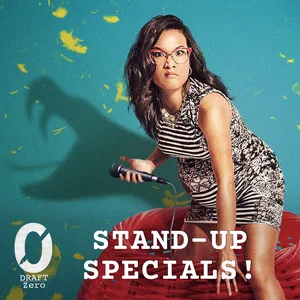
What can screenwriters learn from the storytelling techniques used by stand-up comedians?
AI✦Alice Fraser’s Masters in Narrative Rhetoric grounds the discussion in how stand-ups construct thematic power through the rhetorical triangle--logos, ethos, and pathos--making thematic resonance the backbone of what makes a comedy set emotionally gripping.✦
Listen if you want to understand how stand-up comedians grip audiences and build emotional arcs (and what narrative tools screenwriters can borrow from comedy)!
▶
More Info
Standup comedians can keep audiences gripped to their every word for over an hour, and often bring them to emotional climaxes by the end. So how do they do it and what tools can apply to scripted narratives…
→
How does removing character and plot question force your audience to engage with theme?
AI✦Chas, Stu, and Stephen examine how the deeper underlying meaning of a story can be revealed through structural choices--specifically by limiting what else competes for the audience’s interpretive energy.✦
Listen if you want to make theme your primary driver (for a sequence)
▶
More Info
Chas and Stu are joined, once again, by the inestimable Stephen Cleary. This episode is a spiritual sequel to our last episode with Stephen, the one on sequence structure. That episode explored how sequences could be broken into plot, character, and plot/character sequences…
→
How do systems pressure your characters to change?
AI✦By anchoring all character choices to their relationship with the system itself, the episode shows how thematically strong stories emerge when protagonist agency is measured against worldview and societal pressure.✦
Listen if you want to use how societal, governmental, or environmental forces as villains.
▶
More Info
This is Part Four (!!) of our Five Part Epic Exploration into antagonists forces and sources of conflict. In this episode we explore “system/world/society” antagonists. While stereotypically associated with science-fiction, these sources of conflict are found across genres…
→
Can your characters be given choices and yet still be deprived of agency?
AI✦Since the film is thematically about choice itself, the hosts examine how Blade Runner 2049 dramatises its central theme through the mechanical difference between choice and agency.✦
Listen to discover how characters can be dramatised through binary choices (and understand the difference between choice and agency).
▶
More Info
To kick off 2018, Chas and Stu take a deep dive into one of their favourite movies of 2017: Blade Runner 2049. However, they abstained from “Fox News-ing this shit” by being joined by the most accomplished screenwriter they know, C.S. McMullen (Blood List 2017, Black List 2017, also a lover of Blade Runner 2049)…
→
How can you dramatise your theme on a scene level?
AI✦Stu and Chas directly examine how thematic concerns can be dramatised within individual scenes, using films with particularly strong and consistent themes as case studies.✦
Listen to discover how a character's worldview becomes the engine of conflict inside a single scene.
▶
More Info
As part of their ongoing exploration of scene-work, Stu and Chas apply their earlier thinking on theme and character worldview to individual scenes. Can examining a scene from a thematic perspective impact the drama, conflict or stakes of the scene? How does your character’s conscious and subconscious world views dramatise the overall theme of the work? How can an individual scene reflect the larger themes of the overall story? Do any of these questions or approaches lead to writing better scenes…
→
What screenwriting lessons can be we learn from SPLIT?
AI✦SPLIT offers a very clear example of how a film’s worldview and the rules of its world work together to create a coherent thematic statement.✦
Listen when you're writing a twist and need to earn it through point-of-view rather than surprise alone.
▶
More Info
In our first (and perhaps last) one-shot, we take a close look at the M. Night Shyamalan’s SPLIT. Rather than having one topic with many examples, we use the one example to look at many topics. Well, okay, a few topics…
→
How does splitting 'character functions' enhance theme?
AI✦The entire episode frames character function splitting as a thematic tool--choosing which character does what serves the story’s central meaning, as demonstrated across MAD MAX: FURY ROAD, STAR TREK, THE FIGHTER, and SICARIO.✦
Listen to see how splitting character functions across your cast sharpens what your story actually means.
▶
More Info
We are often told that our ‘protagonist’ needs to be a active. That they need to be compelling. That they need to change. And - old faithful - that they need to be likeable. But after looking at MAD MAX: FURY ROAD, STAR TREK (2009), THE FIGHTER, and SICARIO, Chas and Stu learn that your primary character does not need to do
all these things. In fact, they learn that splitting these functions between your primary characters can reinforce theme and create potential for different types of narratives…
→
Are your story rules in your pilot strong enough to play out over the life of your show?
AI✦Chas and Stu identify how the thematic DNA of each show--corruption in THE SHIELD, systemic failure in THE WIRE, transformation in BREAKING BAD--gets encoded in the pilot’s dramatic rules and paid out over seasons.✦
Listen if you wanna know great television pilots establish the dramatic, literary, and cinematic rules that sustain their entire run.
▶
More Info
Stu and Chas move away from the world of features and dive into the Pilot Episodes of some (New) Golden Age Television: THE SHIELD, THE WIRE, BREAKING BAD, and MAD MEN. And we sneak in some discussion about ANGEL, THE SOPRANOS and GAME OF THRONES…
→
How can scene transitions do more than just move from one location to another?
AI✦By analyzing SCOTT PILGRIM, HIGHLANDER, AMERICAN SPLENDOR, and BOYHOOD, the hosts show how transitions actively enhance thematic connections between scenes rather than simply bridging them.✦
Listen to understand how transitions compress time, enhance thematic connections, unify story threads, and orient your reader
▶
More Info
Stu and Chas look at one of the basic building blocks of a script: scene transitions. Transitions don’t just move you from one scene to another in a slick way, they can help you compress time, enhance thematic connections, unify different story threads, orient (or disorient) your reader... and just make your script feel more like a movie… →
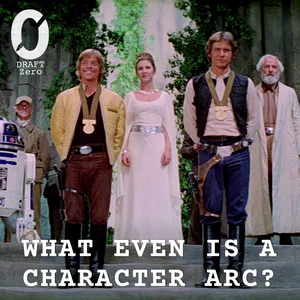
What effect does character changing have on the audience?
AI✦Stu argues that character arcs are inseparable from what the story is fundamentally about, requiring a values-based framework to discuss internal change without being moralistic or didactic.✦
Listen to separate the three layers of an arc -- does the character change? How do they feel about it? And how is the audience positioned to feel about it?
▶
More Info
Stu, Chas and Mel finally begin their long-awaited journey into CHARACTER ARCS. In this “primer” episode, we try find some learnings and analytical lenses that we can then apply in future breakdowns…
→
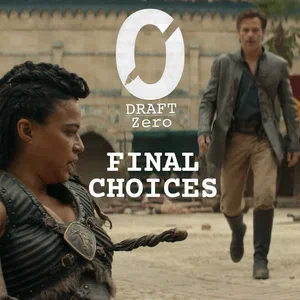
How do you dramatise a protagonist's internal journey through their final decision?
AI✦Both Michael Clayton and Promising Young Woman withhold the complete experience of the final choice to speak more toward theme, with Chas and Stu arguing that theme questions are character questions dramatized in the ending.✦
Listen if you want to understand how to better dramatise a character's internal journey
▶
More Info
In this episode, Stu and Chas focus
solely on the final choices made by protagonists and how that reflects their character journey and successfully, or not, dramatises the internal…
→
What effect does adding a ton of characters have on your story?
AI✦The discussion contextualizes how adding multiple storylines and characters ultimately serves a film’s thematic purpose, showing the relationship between ensemble size and thematic expression.✦
Listen if you're writing an ensemble storiy and want to understand how different characters serve different narrative and thematic functions!
▶
More Info
In Part 3 (the final part? Ha!) of our exploration into ensemble stories, Stu, Chas & Mel examine films whose genres do not conventionally require a ton of characters or that use those ensembles in unconventional ways. In particular, adding whole storylines that are separate from the main character’s story. To that end, we dive into three films that were horrifically snubbed by the Oscars: THE WOMAN KING, RIDERS OF JUSTICE and NOPE…
→
How can you keep your audience hooked when they know the end of the story?
AI✦Mel distinguishes philosophical or moral stakes from plot-driven ones, surfacing how thematic stakes can be the primary engine in narratives with known endings.✦
Listen listen if you're writing a biopic or any story where the audience already knows how it ends.
▶
More Info
Chas, Stu and Mel take a deep dive into stakes, using then lens of biopics to help us think about them. If an audience already knows the “plot” outcome of a story, then how do you create stakes to make a story tense for the audience…
→
How does your opening sequence set up your audience?
AI✦Jessica Ellis and the hosts explore how thematic material can be baked into an opening sequence as a foundational choice rather than stated outright.✦
Listen if you want to understand how great opening sequences establish character, genre, and theme while defying genre conventions
▶
More Info
Inspired by her tweet on how subversive an opening OCEAN’S ELEVEN has, Chas and Stu invited amazing writer/director Jessica Ellis onto the show to deep dive into opening sequences. How does a good opening setup character, genre, and theme…
→
How can dramas use genre elements to hook their audiences?
AI✦Kodie Bedford and the hosts identify how thematic intent--what each film is actually about beneath its genre skin--shapes the gradual pivot away from genre obligations.✦
Listen if you're writing a genre film but sense your story wants to become something else entirely.
▶
More Info
Stu and Chas reunite with TV writer & director Kodie Bedford to look at how some films start out as genre but gradually become character dramas. Or, as Stu never said on the episode
“Genre in the streets, Drama in the sheets”.…
→
What changes in your story if your antagonistic forces can't be bargained with?
AI✦Chas highlights how nature antagonists can mirror the protagonist and reinforce theme, using the antagonistic force itself as a thematic statement rather than merely an obstacle to overcome.✦
Listen to understand why pressure--not obstacles--is what transforms a protagonist when they face an unstoppable force.
▶
More Info
In this Part Three of our Five Part Epic Exploration™ into antagonistic forces (and sources of conflict), Chas & Stu explore “nature” antagonists, including some supernatural ones. What became clear in doing the homework (and recording this episode
twice) was that the antagonistic forces - whether natural or supernatural - presented different narrative challenges to the protagonists if (a) they did not seem to make choices and (b) could not be bargained with or defeated…
→
Will Director Stu allow Writer Chas on his set?
AI✦Chas and Stu connect character behavior to thematic meaning, showing how what characters do crystallizes what a story is actually about.✦
Listen to understand how consequences (not intentions) impact whether an audience roots for or against your protagonist.
▶
More Info
Following our annual wrap up in 2017, we’ve decided to once again explore what craft issues/lessons we can garner from the latest Stars, namely Episode VIII: The Last Jedi, focusing on how consequences of character actions can do a lot of heavy lifting as to how the audience perceives that character (as well as looking at worldview and overall story structure)…
→
What can be gleamed from the substantial rewrite of a famed spec?
AI✦The substantial rewrite from BULLSHIT to HUSTLE involved thematic shifts that Stu and Chas trace through both scripts and the final film.✦
Listen to learn how impactful rewriting can be.
▶
More Info
Stu and Chas look at AMERICAN BULLSHIT (the 2010 Black List spec script by Eric Warren Singer) and the film it became… AMERICAN HUSTLE (co-written and directed by David O’Russell), which garnered 10 Oscar nominations in 2014…
→
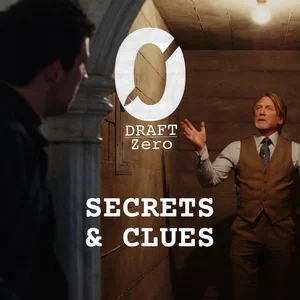
How can Secrets and Clues motivate characters?
AI✦Chas uses theme as philosophical argument--not fists but hugs, wolves versus sheep--and the hosts track how these ideas repeat throughout to explore the interplay between charisma and faith in community.✦
Listen if you want to understand how hidden information drives character motivation and plot structure!
▶
More Info
“Getting information puts your character in danger. And danger rewards your character with information." — One of three ideas we steal from game design in this episode. In this two part series, we talk about how secrets, clues and hidden information motivate characters and may (or may not) help you plot from a character perspective. Part One (this episode) looks at WAKE UP DEAD MAN; while Part Two (DZ-127) looks at SIDE EFFECTS, and the pilot episode of SHRINKING…
→
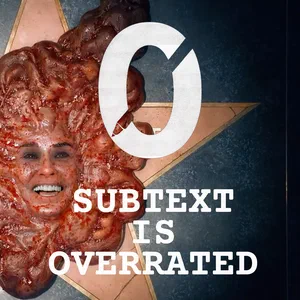
How do character goals, tactics, and fears create subtext automatically?
AI✦The Substance sequence discussion shows how escalating choices and denials hammer home a thematic point about aging, desire, and self-acceptance without requiring dialogue to state it explicitly.✦
Listen if you're struggling to write subtext without it feeling forced!
▶
More Info
Or, how focusing on good drama will result in good subtext. We often hear how subtext is important for good screenwriting. We’re here to tell you it isn’t. Good subtext is a result of good drama, and your focus should be on creating that good drama. But how…
→
How can writers wisely invest their time in projects?
AI✦Stu and Chas discuss how to approach exploring tone and theme as potential future episode topics, signaling that thematic work deserves dedicated craft attention.✦
Listen if you're juggling multiple projects and can't figure out which one deserves your attention right now.
▶
More Info
In this “special”, backmatter-only episode, Stu & Chas take inspiration from Terry Rossio’s excellent article on TIME RISK and ice skate over a range of topics. We talk about time investment in projects, Stuart’s project Restoration, doing you down work first, managing feedback, thinking positive being a negative, and we open the listener mail bag for critiques, praise and suggestions. We also explore how we could do Draft Zero episodes exploring tone and theme…
→
How can studying RomCom clichés teach us to subvert them?
AI✦Chas and Alli identify the thematic through-lines in films like Notting Hill and Friends with Benefits that elevate romcoms beyond simple plot mechanics into stories about connection and vulnerability.✦
Listen if you're writing a romcom and want to understand what makes this gentre tick.
▶
More Info
With Stu busy working on Hollywood blockbusters, Chas is joined by Alli Parker (script department on Aussie TV series and former co-ordinator of European #scriptchat) to unpick successful romcoms to see if they can illuminate a path for writers working in this struggling genre. Cheap to produce and potentially highly lucrative, Chas and Alli look at RomCom’s conventions to see what it may take to reinvigorate this genre…
→