DRAFT ZERO
§ RESOURCES / TOPICS / Tension

Tension

Every episode covering Tension.


"they discussed the concept of measure which and I could be completely wrong here but my understanding from how they talk about it is the distance between the two fighters in particular whether you are within striking distance of one fighter or another."

— Chas Fisher  |  DZ-100: Scenes through Swords

Start here

DZ-32: High-Tension Sequences

How can you recreate the feeling of cinematic high-tension on the page?
AIChas and Stu dissect how screenwriters evoke fear and tension on the page alone, without relying on the director’s toolkit of camera, lighting, music, or sound.
⏱ 2h 23m
12 JUN 2016
Listen if you want to evoke fear and tension using only the written word (without relying on camera, lighting, music, or sound).
More Info
Chas & Stu take a close look at sequences of high-tension - the ones that make you lean forward in fear, or jump backwards in terror. Without camera angles, lighting, music or sound, how can screenwriters can evoke those emotions in readers using only the page? These sequences can be found in any genre of film, not just thriller or horror. To that end, Stu and Chas dive into high tension scenes from NO COUNTRY FOR OLD MEN, ZODIAC, ROOM, and THE BABADOOK. We cover their use of shifting POV, Dramatic Irony, Status Transactions, White Space, Sound FX, and many more…


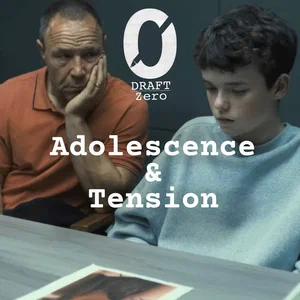
DZ-118: ADOLESCENCE -- How Questions Create Dramatic Tension

How do dramatic questions create tension?
AIThe episode’s central argument is that ’the absence of plot does not mean the absence of tension,’ and Stu and Chas show how the writers achieve urgency and immediacy through unity of time and POV architecture rather than external stakes.
⏱ 2h 0m
1 MAY 2025
Listen when you need tension without external stakes--subtext, stillness, and thematic weight do the work.
More Info
In this episode, Stu and Chas delve into the cultural phenomenon of ADOLESCENCE. We try to find the craft tools that have made the show so compelling and such a catalyst for conversation…


KEY IDEAS

Real-Time Narrative Creates Inescapable Tension

"when something's being shot in real time, I think you feel like narratively you can't escape. There won't be a cut to three weeks later. There's a kind of sense of terror that comes with watching something in real time."

— Chas Fisher (00:07:28) · DZ-118: ADOLESCENCE -- How Questions Create Dramatic Tension

Plot Questions Drive Thriller Momentum

"The first episode is a very classic thriller. You're discombulated, you're with the characters, right? You're going through this discombulating experience, you're playing catch up. So there's a lot of these plot questions about like what has happened, what is he accused of, you know, all these kinds of questions, which are kind of plot questions, kind of keep us hooked."

— Stu Willis (00:25:34) · DZ-118: ADOLESCENCE -- How Questions Create Dramatic Tension


Even More
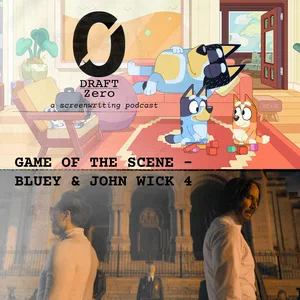
DZ-102: Game of the Scene - Bluey, John Wick 4

How can 'games' help us write better scenes?
AIStu and Chas use examples from John Wick 4 and Bluey to show how clear game rules and win conditions generate tension through uncertainty about who will win.
⏱ 1h 23m
31 AUG 2023
Listen to make your scene writing more dynamic (by looking at the underlying game)
More Info
Stu and Chas turn their attention to a topic that has long eluded them: the game of the scene. We look at how considering the game that characters are playing — its rules, arenas, players, referees, and win conditions — can help you write more dynamic scenes…


DZ-100: Scenes through Swords

What scene-writing tools can be learned from martial arts?
AIThe discussion of distance between combatants and the timing of engagement shows how physical and psychological spacing generates the pressure that sustains a conflict scene.
⏱ 1h 0m
29 MAY 2023
Listen if you want to know why the distance between two characters matters more than what they say.
More Info
In this slightly unusual episode of Draft Zero (but also incredibly on brand), Stu and philosopher-swordsperson Damon Young discuss how the lessons they have learned from martial arts can be applied to scenes. In particular, they discuss how approaching an opponent in a sword fight can be analogous to how characters approach conflict, such as: the distance between the characters, who chooses to engage first, how to feint, how to lure an attack by leaving yourself vulnerable, etc…


DZ-91: Raising (different kinds of) Stakes

How can you keep your audience hooked when they know the end of the story?
AIThe central question of how to keep an audience hooked in predetermined-outcome stories hinges on understanding what creates tension beyond plot surprise.
⏱ 2h 19m
31 AUG 2022
Listen listen if you're writing a biopic or any story where the audience already knows how it ends.
More Info
Chas, Stu and Mel take a deep dive into stakes, using then lens of biopics to help us think about them. If an audience already knows the “plot” outcome of a story, then how do you create stakes to make a story tense for the audience…


DZ-28: Containing Your Script

How do you keep contained movies engaging?
AIThe central problem the episode tackles is how good contained films hook and sustain audience interest when traditional momentum-building techniques--multiple locations, intercutting between characters--are unavailable.
⏱ 1h 55m
21 DEC 2015
Listen if you're writing a contained thriller, drama, or any story limited to a single location
More Info
Contained Thrillers* *seem to be a genre that never goes out of fashion. But being contained is not just limited to thrillers. It’s a way of telling stories on a lower budget, regardless of genre. So - while allegedly easier to make / get made - limiting a story to a single location also limits the tools that maintain an audience’s interest. Changing audience or character point of view, intercutting between locations or characters are all much harder (if not impossible) in contained films. So how do good contained films hook their audience and keep them…


DZ-5: Shifting audience point of view and heightened emotions

Can forcing your audience to ask questions - and then answering them - trigger an emotional response?
AIThe gap between audience knowledge and character knowledge--heightened through scenes from THE BOURNE SUPREMACY, ZERO DARK THIRTY, and ARGO--is what generates and sustains tension.
⏱ 1h 29m
27 APR 2014
Listen to learn about the most powerful tool in screenwriting: narrative POV.
More Info
Stu and Chas delve into audience point of view - not character point of view! Does your audience know more, less or the same as your characters? And does changing this within a scene trigger or heighten the desired emotional response…


DZ-110: Voiceover

How can you use voiceover without it feeling like a cheat?
AIPain & Gain reveals how voiceover can function as dramatic irony--creating pressure between what the narrator tells us and what we know or suspect about their reliability.
⏱ 1h 41m
31 MAY 2024
Listen to explore how voiceover can set tone, reveal character, enhance empathy, and create tension.
More Info

DZ-74: Midsommar & Folk Horror

What can we learn from folk horror?
AIThe episode analyzes rising tension as a structural tool, distinguishing between horror (jump scares, sudden violence) and dread (the slow accumulation of unease that folk horror specializes in).
⏱ 2h 1m
1 DEC 2020
Listen if you want to understand how folk horror works as a genre and how Ari Aster uses it to explore grief and toxic relationships
More Info
Draft Zero return with their next YouTube livestream! Stu and Chas are joined by previous guest (and successful screenwriter) C.S. McMullen for a deep dive into MIDSOMMAR! We analyse the film through the lens of Folk Horror, but tackle broader topics such as horror vs dread, rising tension, transgressions, unfilmables, and portraying toxic relationships…


DZ-35: Driving Characters or Character Driven?

How can films maintain audience interest without stakes or plot questions?
AIStuart and Chas investigate how tension survives in plot-lite films, suggesting it emerges from character work and scene dynamics rather than narrative compression or external conflict.
⏱ 1h 20m
6 OCT 2016
Listen if you're writing a character study and unsure how to build momentum without external conflict.
More Info
Continuing their focus on “character”, Stuart and Chas take a close look at films that may be considered character-driven... or rather character studies... or just plot-lite films? Whatever you call them, these films — CHEF, HAPPY-GO-LUCKY, and AMOUR — let their plots take a back seat to a closer examination of their characters. Stuart and Chas dive in to investigate how, without plot driving the story forward, do these films maintain our interest? We talk Mike Leigh’s idea of the ‘Running Condition’, Character Choice, SceneWork and the myriad other techniques the filmmakers use to keep us interested…