"The film actually does breadcrumb these quiet, non-humorous, emotional punches and they escalate throughout the film such that I think not only does it allow us to accept the mother’s death, but it allows them to really go for emotion because they’ve already taught us that throughout the film there will be these moments."
— Chas Fisher | DZ-117: Pulling Off Tonal Shifts
Repeating Beats Shows Gradual Arc
"I think the big learning is like when we're talking about positive character arcs, that if you are going to if you can repeat events or beats from different angles, that helps demonstrate positive change. And that's like, again, we talked about it in All of Us Strangers, where you have a similar beat, but a different outcome with Harry. You have almost five of the same sort of beats where Adam completely rejects him. And then Adam's like, but he doesn't really mean it. And then I was like, actually, okay, if you want to touch me in the bath. And then he's like, actually, no, I want you to stay. And then at the end, he embraces him. Like, very similar beats or events from different angles."
— Mel Killingsworth
(02:24:47)
· DZ-130: Positive Character Arcs
Character as Habitual Action
"I really like David Mamet's definition of a character being habitual action. That's his interpretation of Aristotle, that all a character is is habitual action. And therefore, I think, when... talking about a character change, you're talking about a character's habits changing, right? And therefore, you know, and the other derivation of that is that that means the film has to do enough setup to understand what a character's habit is. And then it needs enough payoff to understand that it wasn't just a one-off thing that they did, but it's actually going to stick."
— Stu Willis
(00:05:04)
· DZ-129: Steadfast Character Arcs - Agents of Change

How can we teach our audience new storytelling rules in the middle of our story?
AI✦Mel and Chas repeatedly emphasize that pulling off a tonal shift takes a lot of setup--Sorry to Bother You takes nine pages to establish its satirical rules before the equisapien reveal hits with earned impact.✦
Listen if you want to write tonal pivots that land on the page without a director's toolkit.
▶
More Info
Following on from our episodes on
establishing tone through action lines and
through character, this is what we have been building up to: how to pull off a tonal switch… that does NOT throw the audience out of the film. And, in particular, how to pull that off on the page when writers don’t have framing, lighting, music, editing, etc. at our disposal…
→
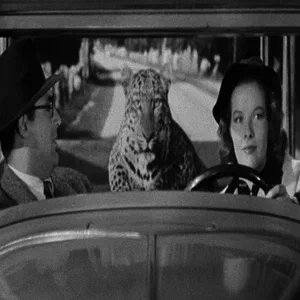
How do you make extended technical scenes funny on the page?
AI✦The Happy Endings wedding sequence exemplifies how spending time in setup--establishing props like the beer float and Kleenex box--pays off later when those same items trigger gags, giving actors and designers material to play with.✦
Listen to learn how formatting--white space, caps, dashes--becomes your comedy toolkit without a director.
▶
More Info
Mel joins Chas to tackle physical comedy. We limited our homework selection to extended scenes (as opposed to moments and sight gags) in live action projects and – with the help of our Patreons – selected early sequences from BRINGING UP BABY, the pilot for HAPPY ENDINGS and that wonderful food poisoning scene in BRIDESMAIDS…
→
How can you use physical objects to track character change… wordlessly?
AI✦The beats used to turn objects into talismans operate as a setup-and-payoff system, where early associations with an object accumulate meaning and create resonance when that object reappears or transforms.✦
Listen to write objects that accumulate powerful meanings across your story and create unspoken emotional payoffs.
▶
More Info
In part two of our two-part series on TALISMANS, we break down the beats used to turn objects (in a broad sense) into talismans; how talismans can track character journeys and transitions; and how they can be used to create powerful moments without words…
→
How can you use setups and payoffs to stitch your film together?
AI✦Chas and Stu break down the difference between Pointers and Plants and Stitches as the core mechanism EVERYTHING EVERYWHERE ALL AT ONCE uses to create narrative cohesion across its multiverse structure.✦
Listen to understand how setups, payoffs, and reversals create narrative cohesion even when your story is fkn bonkers.
▶
More Info
In this one-shot, Chas and Stu jump into the utter chaos of EVERYTHING EVERYWHERE ALL AT ONCE. Y’know, nultiverses, butt-plug action sequences, hot-dog fingers, a raccoon chef, a nihilist bagel. All the good stuff. And yet it lands emotionally in a way that feels inevitable…
→
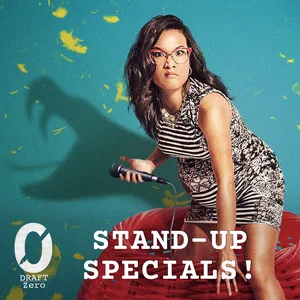
What can screenwriters learn from the storytelling techniques used by stand-up comedians?
AI✦Stu and Chas analyze how stand-ups like Hannah Gadsby and Ali Wong structure their material through set-ups and pay-offs, showing how comedians engineer laughs and emotional beats across an hour-long narrative.✦
Listen if you want to understand how stand-up comedians grip audiences and build emotional arcs (and what narrative tools screenwriters can borrow from comedy)!
▶
More Info
Standup comedians can keep audiences gripped to their every word for over an hour, and often bring them to emotional climaxes by the end. So how do they do it and what tools can apply to scripted narratives…
→
How can you do powerful storytelling... without dialogue?
AI✦Lia, Stu, and Chas break down how FURY ROAD uses setups and payoffs as the primary engine of visual storytelling, allowing narrative information and character development to land without dialogue.✦
Listen to hear how visual storytelling can carry an entire narrative with minimal dialogue.
▶
More Info
Stu and Chas are joined by filmmaker, podcaster and writer Lia Matthew Brownn to deep dive into FURY ROAD and its astounding
visual storytelling, both on the page and on screen. We talk about setups and payoffs, given circumstances, image systems, environmental storytelling, and how the relationship between Furiosa and Max is built over the course of the story with very little dialogue (besides Tom Hardy’s grunts and the odd bellow of “MEDIOCRE!”).
You can also watch the complete live stream on YouTube or just the breakdown of the Furiosa/Max fight (which isn’t in the podcast) here:
https://www.youtube.com/watch?v=f8uYAbEcQeQ&feature=youtu.be…
→
How do screenwriters get away with using coincidences in their stories?
AI✦The difference between a coincidence that lands and one that feels like cheating often comes down to whether the writer has planted earlier setups that make the payoff feel inevitable in retrospect.✦
Listen when you need to know which coincidences earn trust and which ones feel like cheating.
▶
More Info
Remember that time in THE DARK KNIGHT RETURNS when Bruce suddenly - magically - returned to Gotham, and you were like “WTF?!” Well, it turns out that many of the best films have moments that are just as coincidental or contrived (or a flock of Giant Eagles) and yet get away with it. Does Pixar’s “rule” that it is ‘cheating to use coincidences to get your characters out of trouble’, always apply…
→
How can scene transitions do more than just move from one location to another?
AI✦Transitions function as invisible machinery for linking setup and payoff across a script, colliding different story threads to create coherence and resonance that readers feel even when they’re not consciously aware of it.✦
Listen to understand how transitions compress time, enhance thematic connections, unify story threads, and orient your reader
▶
More Info
Stu and Chas look at one of the basic building blocks of a script: scene transitions. Transitions don’t just move you from one scene to another in a slick way, they can help you compress time, enhance thematic connections, unify different story threads, orient (or disorient) your reader... and just make your script feel more like a movie… →

How can repeating the same beat dramatise a character changing?
AI✦Mel identifies how All of Us Strangers repeats emotional beats--Adam’s isolation, then his reconnection with Harry, then his parents’ death--to trace his gradual evolution from avoiding feeling to embracing connection.✦
Listen to understand how to dramatize a character's internal change.
▶
More Info
Welcome to our third entry in our character arc series; and the first where we talk about characters that
actually change. And positively, too…
→
What does it cost a character to find something out, or to say it?
AI✦Chas notes that Shrinking’s pilot sets up future reversals and payoffs across multiple seasons, using the Landmark-Hidden-Secret framework to plant information the characters have but the audience doesn’t yet need to understand.✦
Listen to learn the emotional impact of revealing secrets vs discovering them.
▶
More Info
In this episode Stu, Chas and Mel apply the Landmark–Hidden–Secret framework (from DZ-126) across two very different genres: the thriller SIDE EFFECTS (2013) and the tragicomic pilot of SHRINKING…
→
How can Secrets and Clues motivate characters?
AI✦The team uses William Dunn’s framework of pointers and plants to show how a setup makes the audience aware they’re being set up, creating a question that demands a payoff later in the film.✦
Listen if you want to understand how hidden information drives character motivation and plot structure!
▶
More Info
“Getting information puts your character in danger. And danger rewards your character with information." — One of three ideas we steal from game design in this episode. In this two part series, we talk about how secrets, clues and hidden information motivate characters and may (or may not) help you plot from a character perspective. Part One (this episode) looks at WAKE UP DEAD MAN; while Part Two (DZ-127) looks at SIDE EFFECTS, and the pilot episode of SHRINKING…
→
What craft tools make a low-budget, contained, period drama riveting?
AI✦The script demonstrates obsessive craftsmanship with repetition: the ‘cigarette heart’ line, the Blue Moon references, the rule of threes applied to dialogue beats--these aren’t scattered but built to accumulate and circle back in ways that reward careful listening.✦
Listen if you want to understand how narrative POV, screenplay format, and dialogue craft can elevate a contained biopic into an Oscar-nominated film
▶
More Info
BLUE MOON is a talky, period-drama that film about an obscure songer-writer in the 1940s. Yet, it attracted world-class talent AND Academy Award nominations, including for it’s script. Join Chas & Mel as they explore how narrative POV, interweaving relationships, hooky dialogue, and even the screenplay format itself make the script for BLUE MOON so great…
→

What magic do Christmas movies use to make them so rewatchable?
AI✦Stu highlights how Gay Perry’s apparent death and later reveal that he’s alive exemplifies the kind of setup and payoff structure that rewards re-watching, since viewers forget exactly how things get solved.✦
Listen if you want to understand what makes holiday films enduring parts of our seasonal rituals!
▶
More Info
In this “backmatter” episode of Draft Zero, Stu, Chas, and Mel Killingsworth embark on a festive exploration of what makes holiday films so engaging and so re-watchable that they can become part of our rituals. To that end, we breakdown the charm of of Christmas films like KISS KISS BANG BANG, RIDERS OF JUSTICE, and IT’S A WONDERFUL LIFE…
→
How can you use physical objects to reveal inner character?
AI✦Talismans operate on the principle of setup and payoff--introducing an object early that carries accumulated meaning, then deploying that weight at moments where it crystallizes everything about who a character is.✦
Listen to so you can write talismans that are powerful tools for accessing character!
▶
More Info
In this series, Chas and Stu discuss TALISMANS. Physical objects that are imbued with meaning by a character or characters. They’re a powerful tool to access inner character…
→
How can dramas use genre elements to hook their audiences?
AI✦The discussion of chapter breaks and structural pivots reveals how early genre setups (heist planning, grievance, power dynamics) function as long-form payoffs to character revelations later.✦
Listen if you're writing a genre film but sense your story wants to become something else entirely.
▶
More Info
Stu and Chas reunite with TV writer & director Kodie Bedford to look at how some films start out as genre but gradually become character dramas. Or, as Stu never said on the episode
“Genre in the streets, Drama in the sheets”.…
→
How can exposition twist your story in new directions?
AI✦Great exposition often works as a payoff to setup--facts planted earlier that suddenly click into place and reshape what the audience thought the story was about.✦
Listen to learn how to use exposition as dramatic revelation rather than mere information delivery.
▶
More Info
In the second part of Draft Zero’s two-part episode on “Exposition”, Stu & Chas take an even deeper look at this notoriously challenging part of screenwriting. For many stories there are pre-existing facts (or given circumstances) that need to be communicated to an audience, and often we rely on dialogue to do it. But exposition can do more than just communicate, it can serve as dramatic revelation that twists a story into a new direction or provides an emotional payoff - or both!. So how do great writers make exposition work for the story, rather than just tell audience stuff they need to know? And how can writers go wrong…
→
How can studying RomCom clichés teach us to subvert them?
AI✦Romcom structure relies on establishing promises early and delivering on them later, a mechanism Chas and Alli trace through successful examples to show how timing and patience build satisfaction.✦
Listen if you're writing a romcom and want to understand what makes this gentre tick.
▶
More Info
With Stu busy working on Hollywood blockbusters, Chas is joined by Alli Parker (script department on Aussie TV series and former co-ordinator of European #scriptchat) to unpick successful romcoms to see if they can illuminate a path for writers working in this struggling genre. Cheap to produce and potentially highly lucrative, Chas and Alli look at RomCom’s conventions to see what it may take to reinvigorate this genre…
→
What is it about Tarantino's *writing* that elevates his work?
AI✦The episode analyzes how Tarantino plants and executes payoffs across his scripts, using them as a structural device that rewards attentive viewing and rereading.✦
Listen to steal Tarantino's technique for planting details that detonate as payoffs three scenes later.
▶
More Info
Chapter 1: Of Milk and Men…
→
Is the MacGuffin truly interchangable, and how does it impact on your character writing?
AI✦Comparing the originals to their sequels reveals how establishing the MacGuffin’s importance early--its setup--determines whether audiences care enough to sustain the adventure.✦
Listen to discover why the MacGuffin's emotional weight--not its function--determines whether your audience cares enough to follow the entire adventure.
▶
More Info
Stu and Chas are joined by a special guest - Scriptmag contributor Brad Johnson - to discuss how the choice of the MacGuffin can impact on the quality of an action/adventure film. To test this thesis, our heroes compare the auspicious originals of two iconic franchise with their, um, less-than-auspicious 4th instalments (in other words we compare RAIDERS OF THE LOST ARK with KINGDOM OF THE CRYSTAL SKULL and THE CURSE OF THE BLACK PEARL with ON STRANGER TIDES) as well as look at two recent & original entries into the genre, namely NATIONAL TREASURE and PRINCE OF PERSIA…
→
Can one scene be the key to unlocking the whole story?
AI✦Key scenes function as massive setups that the rest of the story pays off, establishing the conflict, stakes, and character positions that everything else hinges on.✦
Listen if you want to understand how a single key scene between protagonist and antagonist can unlock the entire structure of your story!
▶
More Info
Can one scene be the key to unlocking the whole story…
→
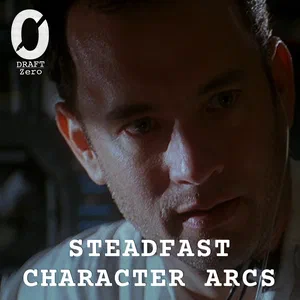
How do you write a satisfying story when your character never changes
AI✦Mel and Chas track how The Dressmaker sets up the expectation of revenge and curse-breaking in its opening, then systematically pays off these questions through Tilly’s steadfast actions rather than her transformation.✦
Listen to learn how to move an audience with a character who never changes.
▶
More Info
Do characters need to change for you to have a satisfying story? That’s a question we’ve been asking since, like, episode five of this podcast. And we’re finally talking about them - whatever you call ’em: steadfast, resilent, or flat arcs…
→
Do you want your audience feeling with or for your characters?
AI✦The episode implicitly grapples with what setup demands payoff: if you establish a character’s wound or flaw early, what does the audience expect to see resolved by the end?✦
Listen if you're interested in how to dramatise character change, position your audience in relation to characters, and explore the difference between empathy and sympathy in screenwriting
▶
More Info
One day, Chas saw
Avengers: Endgame for the second time and wrote a review on Letterboxd. In particular, he had issues with how little he perceived the characters of Cap and Tony changed within the film, their big finale (spoiler). Then friend and patron of the podcast Julio Olivera vehemently disagreed in the comments. He was egged on by Stu. And there in the comments began a debate that looked a lot like an episode of Draft Zero. So we decided to make it one…
→