§ RESOURCES / TOPICS / POV Characters
POV Characters
Every episode covering POV Characters.
"How have they taught us what Sean’s experience of the violence is?"
— Chas Fisher | DZ-117: Pulling Off Tonal Shifts
DZ-101: Oners - Creating Immediacy & Anchoring Action on the Page
What can we learn by analysing how 'oners' are written on the page?
AI✦Chas notes that the sensory experience in these oner sequences is written from the point of view of the character, making what we hear and see reflect their myopic, immediate awareness rather than omniscient observation.✦
Listen to understand how screenwriters direct the camera without calling shots.
▶ More Info
Chas, Stu and Mel reunite to talk about writing the feel of camerawork in screenplays. We use “oners” — a long-playing continuous take — as a lens to talk about how some writers have “directed” from the page. We talk immediacy, camera positions, handovers, and anchoring action and more… →
DZ-34: Game of Choices - Decision Making and Character Implications
How does the experience of a character's decision impact our feelings towards that character?
AI✦Stu and Chas use Sansa’s near-total absence from Battle of the Bastards as a case study in how point of view selection determines what an audience can know and feel about a character’s agency.✦
▶ More Info
After a spectacular end to Season 6 of GAME OF THRONES, Chas and Stu were struck by the very different portrayals of Sansa in Episode 9 - Battle of the Bastards and Cersei in Episode 10 - The Winds of Winter. Despite both characters having an enormous impact on the narrative, the audience’s experience of those characters is very different -- largely because Sansa is absent from 98% of Battle of the Bastards… →
Films:
Game of Thrones (2011)
DZ-118: ADOLESCENCE -- How Questions Create Dramatic Tension
How do dramatic questions create tension?
AI✦The hosts identify POV selection as a primary writing tool--particularly how the strip-search scene assigns the audience Eddie’s perspective rather than Jamie’s, fundamentally shaping what we understand and when we understand it.✦
Listen when you need tension without external stakes--subtext, stillness, and thematic weight do the work.
▶ More Info
In this episode, Stu and Chas delve into the cultural phenomenon of ADOLESCENCE. We try to find the craft tools that have made the show so compelling and such a catalyst for conversation… →
Films:
Adolescence (2025)

DZ-117: Pulling Off Tonal Shifts
How can we teach our audience new storytelling rules in the middle of our story?
AI✦Mel notes that Swiss Army Man’s tonal shift happens precisely when the script stops filtering everything through Hank’s unreliable point of view and introduces Sarah as a separate consciousness.✦
Listen if you want to write tonal pivots that land on the page without a director's toolkit.
▶ More Info
Following on from our episodes on establishing tone through action lines and through character, this is what we have been building up to: how to pull off a tonal switch… that does NOT throw the audience out of the film. And, in particular, how to pull that off on the page when writers don’t have framing, lighting, music, editing, etc. at our disposal… →
DZ-116: Writing Physical Comedy
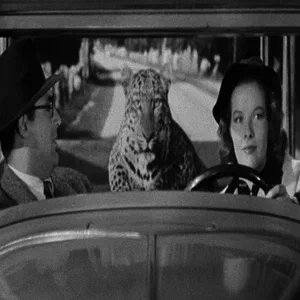
How do you make extended technical scenes funny on the page?
AI✦Chas notes that the slug lines and action choices in Bringing Up Baby’s golf scene reveal whose point of view you’re in, with the repeated action of David ‘doggedly’ teeing his ball establishing his perspective and emotional state.✦
Listen to learn how formatting--white space, caps, dashes--becomes your comedy toolkit without a director.
▶ More Info
Mel joins Chas to tackle physical comedy. We limited our homework selection to extended scenes (as opposed to moments and sight gags) in live action projects and – with the help of our Patreons – selected early sequences from BRINGING UP BABY, the pilot for HAPPY ENDINGS and that wonderful food poisoning scene in BRIDESMAIDS… →
Shows:
Happy Endings 1x1
DZ-97: Ensembles 2 - Servicing Characters
How do you give your audience access to a lot of characters?
AI✦Breaking POV emerges as a technique to give different ensemble members narrative weight and perspective, shifting whose story the audience inhabits.✦
Listen if you're writing ensemble stories and want to discover tools for giving all your characters adimension
▶ More Info
In Part 2 of our exploration into ensemble stories, Stu, Chas and Mel examine films whose plot and genre require a lot of characters. Thus we tackle a team sports film (PITCH PERFECT), a murder mystery (GLASS ONION), a slasher (SCREAM 2022) and a family holiday flick (THE FAMILY STONE)… →
Films:
Pitch Perfect (2012)
, Glass Onion: A Knives Out Mystery (2022)
, Scream (2022)
, The Family Stone (2005)
DZ-68: Using POV to structure KNIVES OUT
How can shifting narrative point of view drive your sequences?
AI✦The discussion traces how Johnson’s choice of which character’s perspective to privilege in each beat controls information flow and shapes the audience’s investigative journey alongside the detective.✦
Listen to help you master the gap between what your audience knows and what your characters know.
▶ More Info
Born out of isolation madness, this episode is an edited version of Draft Zero’s first YouTube livestream. Stu and Chas both watched KNIVES OUT and - together with our listeners - broke down each sequence and turning point by reference to what the audience knows in relation to the characters (aka narrative point of view). They then answer listener questions on KNIVES OUT and much else besides live on air… →
Films:
Knives Out (2019)