DRAFT ZERO

Words

Every episode tagged Words, newest first.

2026

"We know what the choice is. We know what the consequences are of him continually refusing to change."

— Chas Fisher  |  DZ-125: Oscars One-shot - BLUE MOON
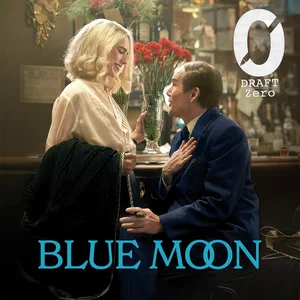
DZ-125: Oscars One-shot - BLUE MOON
What craft tools make a low-budget, contained, period drama riveting?
AIChas and Mel dissect how nearly every line of dialogue functions as a hook, a play on words, or a callback, with pop culture references woven through 1940s context in ways that don’t require prior knowledge to land, and how this demands performers who can keep up with the repartee.
⏱ 1h 18m
Structure · Character · Words | 26 FEB 2026
Listen if you want to understand how narrative POV, screenplay format, and dialogue craft can elevate a contained biopic into an Oscar-nominated film
More Info
BLUE MOON is a talky, period-drama that film about an obscure songer-writer in the 1940s. Yet, it attracted world-class talent AND Academy Award nominations, including for it’s script. Join Chas & Mel as they explore how narrative POV, interweaving relationships, hooky dialogue, and even the screenplay format itself make the script for BLUE MOON so great…


2025

"You have fewer tools on the page than you have on the screen, and so how you’re using those tools to give the reader a sense of what you’re feeling."

— Mel Killingsworth  |  DZ-117: Pulling Off Tonal Shifts

DZ-117: Pulling Off Tonal Shifts
How can we teach our audience new storytelling rules in the middle of our story?
AIChas and Mel repeatedly examine how action line description–’the big print’–signals tone and prepares audiences for shifts, particularly noting Swiss Army Man uses it ’to greater lengths to tell us how to feel as an audience.'
⏱ 2h 8m
Character · Words · Genre | 31 MAR 2025
Listen if you want to write tonal pivots that land on the page without a director's toolkit.
More Info
Following on from our episodes on establishing tone through action lines and through character, this is what we have been building up to: how to pull off a tonal switch… that does NOT throw the audience out of the film. And, in particular, how to pull that off on the page when writers don’t have framing, lighting, music, editing, etc. at our disposal…


DZ-116: Writing Physical Comedy
How do you make extended technical scenes funny on the page?
AIMel and Chas detail how judicious use of ALL CAPS, ellipses, and m-dashes in action lines recreate visual gags on the page, and when to let a paragraph go long to draw attention to itself–a technique all three scripts deploy differently.
⏱ 1h 35m
Words · Structure · Genre | 26 FEB 2025
Listen if you're writing physical comedy and have no idea how to make it work on the page
More Info
Mel joins Chas to tackle physical comedy. We limited our homework selection to extended scenes (as opposed to moments and sight gags) in live action projects and – with the help of our Patreons – selected early sequences from BRINGING UP BABY, the pilot for HAPPY ENDINGS and that wonderful food poisoning scene in BRIDESMAIDS…


2024

"What does the character who’s doing that want from the audience at this particular moment in time? Is this the best method to get it? Is there maybe another and or additional method that you can use to get it?"

— Mel Killingsworth  |  DZ-109: Talking DIRECTLY to your audience
DZ-113: Tools For Filmmakers To Talk To The Audience
What tools help ensure that you as the filmmaker are not misunderstood?
AIMel, Stu, and Chas spend the episode cataloging how filmmakers communicate directly with audiences through meta-storytelling and structural choices that sit outside the story world.
⏱ 2h 3m
Theme · Words · Structure | 22 SEP 2024
Listen if you want to explore how you can make your creative hand visible through meta-storytelling and structural choices!?!
More Info
In our final (ha!) episode looking at Talking Directly to the Audience, we turn away from character-and-text based craft tools to look at other ways that filmmakers - whether they be directors, writers, editors, or anyone else - can make the audience feel their ‘hand’ more. To that end, Mel, Stu and Chas dive into ADAPTATION, STORIES WE TELL and THE FORTY-YEAR-OLD VERSION…


DZ-112: Breaking the 4th wall
How is the effect of breaking the 4th wall different to voiceover?
AIMel, Chas, and Stu examine breaking the fourth wall as the most blatant tool of direct audience communication, analyzing how characters looking directly at the camera create a fundamentally different effect than voiceover.
⏱ 1h 52m
Character · Words · Tone | 31 JUL 2024
Listen to understand how breaking the 4th wall directly involves the audience in a character's emotional present.
More Info
As part of our series on how filmmakers can directly communicate to the audience, we finally examine the most blatant tool of them all: when character look directly down the barrel of the camera… and thus look directly at us, the viewer. Chas, Stu and Mel take the craft tools/levers they identified in previous episodes and use them to examine the tv-version-of HIGH FIDELITY (“Top Five Breakups”), ABBOTT ELEMENTARY (“Attack Ad)”) and - of course - FLEABAG…


DZ-111: Unreliable Narrators and FIGHT CLUB
How does the unreliability of a narrator impact the way a story is told?
AIFight Club’s voiceover functions as the connective tissue that stitches together a deliberately disconnected sequence-driven structure, making it central to how the film’s unreliability operates.
⏱ 55h 26m
Character · Structure · Words | 2 JUL 2024
Listen to learn how unreliable narrators shape storytelling through voiceover, structure, and control.
More Info
In this episode, Stu and Mel (sans Chas!) take a deep dive into FIGHT CLUB and its use of the unreliable narrator. This is a bridging episode between our previous episode on VOICEOVER and our forthcoming episode on TALKING TO CAMERA as Fight Club does both.


DZ-110: Voiceover
How can you use voiceover without it feeling like a cheat?
AIChas, Stu, and Mel apply four levers to distinguish when voiceover works as character revelation rather than expository shortcut, using Veronica Mars, The Emperor’s New Groove, and Pain & Gain as models.
⏱ 1h 41m
Character · Audience · Words | 31 MAY 2024
Listen to explore how voiceover can set tone, reveal character, enhance empathy, and create tension.
More Info
DZ-109: Talking DIRECTLY to your audience
What are the different ways a filmmaker can ask something of the audience?
AIChas and Stu build a taxonomy of direct audience address by isolating four levers: diagetic to non-diagetic, who is talking, whom they’re talking to, and when in time the communication originates.
⏱ 1h 20m
Words · Character · Structure | 1 MAY 2024
Listen if you've wondered what a character actually wants when they're talking directly to the audience!?
More Info

2022

DZ-86: Backmatter - Minimum Viable Product
How do you determine what is your MVP?
AIThe MVP and minimum loveable thing framework forces you to identify what’s actually essential to your story–the non-negotiable core that defines your project.
⏱ 1h 29m
Process · Words | 1 FEB 2022
Listen for screenwriting lessons from 2021, strategies for pitching projects, and insights on running a writers workshop
More Info
In their annual full backwater episode, Stu and Chas let out their pandemic hair, drop the ruse of objectivity, and allow themselves to have even more options about writing and the business of writing…


2021

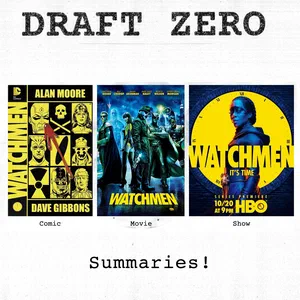
DZ-82: Dramatising Given Circumstances in Watchmen
How can you elegantly convey given circumstances and exposition?
AIThe episode examines how both Snyder and Lindelof convey massive amounts of exposition – character worldview, backstory, and world-building – through the lens of given circumstances, demonstrating that the same information lands differently depending on presentation order and tonal context.
⏱ 2h 6m
Structure · Words · Tone | 18 AUG 2021
Listen if you're drowning your readers in world-building and can't figure out how to make it awome.
More Info
In this final podcast release of last year’s run of LiveSoLation episodes, Chas and Stu are joined by Uber-geek Mel Killingsworth (who else?) in an epic exploration of how Dave Gibbons’ and Alan Moore’s seminal graphic novel WATCHMEN is adapted differently in Zack Snyder’s 2009 film and Damon Lindelof’s 2019 HBO television show…


Shows: Watchmen

DZ-76: Spotlight on Sofia Coppola
What can we learn from Sofia Coppola's on-the-page skills over her career?
AICoppola’s insightful use of whitespace is central to how she constructs her scripts, creating space for actor performance and directorial choice rather than spelling everything out on the page.
⏱ 1h 54m
Words · Character · Tone | 1 FEB 2021
Listen to discover how Sofia Coppola crafts character performance on the page and uses whitespace to create her distinctive cinematic voice
More Info
Following the success of the Tips from Tarantino episode, we have again decided to look at three different scripts from over the course of a long screenwriting career from a single writer to see what we can learn. Our beloved patreons not only selected Sofia Coppola as said writer, but also selected the scripts to analyse: LOST IN TRANSLATION, THE BLING RING and THE BEGUILED…


2020

DZ-75: Fury Road & Visual Storytelling
How can you do powerful storytelling... without dialogue?
AIThe hosts examine what happens when you strip dialogue down to grunts and a single memorable line, forcing every other storytelling tool to carry the weight of character and plot.
⏱ 1h 9m
Structure · Genre · Words | 31 DEC 2020
Listen to hear how visual storytelling can carry an entire narrative with minimal dialogue.
More Info
Stu and Chas are joined by filmmaker, podcaster and writer Lia Matthew Brownn to deep dive into FURY ROAD and its astounding visual storytelling, both on the page and on screen. We talk about setups and payoffs, given circumstances, image systems, environmental storytelling, and how the relationship between Furiosa and Max is built over the course of the story with very little dialogue (besides Tom Hardy’s grunts and the odd bellow of “MEDIOCRE!”). You can also watch the complete live stream on YouTube or just the breakdown of the Furiosa/Max fight (which isn’t in the podcast) here: https://www.youtube.com/watch?v=f8uYAbEcQeQ&feature=youtu.be


2019

DZ-62: Unfilmables 3 - As Ifs & Emotional Context
How do you know if your unfilmable is good... or if you're just being a wanker?
AIThe entire series culminates here as Chas and Stu apply their learnings by critiquing unfilmables in each other’s actual scripts and discussing what separates a justified stylistic choice from self-indulgence.
⏱ 2h 17m
Words · Process · Character | 2 DEC 2019
Listen if you want to learn how to write tone and emotional context on the page.
More Info
In this third and final part of our series on unfilmables, Chas and Stu turn their critical eye to… each other’s work! They take their key learnings from the previous episodes and apply them to rewriting scenes from their own projects. They discuss metaphors, emotional context, and how you can write tone on the page without resorting to unfilmables…


DZ-61: Unfilmables 2 - Moments of Awe
How can unfilmables help you create those cinematic moments of awe?
AIChas and Stu return to unfilmables specifically to examine how writing moments that feel beyond the page–moments of awe–can actually be shaped and controlled through deliberate craft choices.
⏱ 2h 5m
Words · Genre · Theme | 25 SEP 2019
Listen if you're writing a moment that feels too big for the page (but you need it on the page).
More Info
In this second part of our series on unfilmables, Chas and Stu continue their deep dive into how writing the “unfilmable” can enhance your script. Rather than looking at micro moments, they turn their gaze to “moments of awe” — those often breathtaking cinematic moments that feel beyond writing. But are those scenes actually unscriptable…


DZ-60: Unfilmables 1 - Engaging imagination
How can unfilmables enhance the experience of your script?
AIThe entire episode interrogates why ‘unfilmables’ – those allegedly forbidden techniques – work brilliantly in produced specs, and Chas and Stu systematically deconstruct how writers get away with writing things that can’t be seen or heard.
⏱ 2h 25m
Words · Tone · Process | 7 AUG 2019
Listen to discover how *produced* screenplays use unfilmables to shape tone, performance, and humour on the page.
More Info
DZ-58: Game of Thrones - Character Exposition
How can you let your characters tell us how they feel?
AIThis episode directly addresses how to use dialogue in reunion and first-meeting scenes to let characters tell us who they are rather than what happened.
⏱ 1h 47m
Character · Words · Scenes | 16 MAY 2019
Listen to understand why what a character *doesn't* say reveals more than exposition ever could.
More Info
In watching Season 7 (and the first three episodes of Season 8) of Game of Thrones, Stu noticed that there were lots of scenes where characters either met for the first time or were reunited after a long time apart. In these scenes, the audience knows (or thinks they know) more than either character. And so the fascination, power and subversion comes from what the characters choose to reveal… or not…


2018

DZ-53: Antagonists! 5 - vs Audience
What if there is no antagonist?
AIThe episode identifies direct address to the audience as a specific technique these films deploy to become antagonists themselves, collapsing the boundary between film and viewer.
⏱ 2h 26m
Character · Structure · Words | 26 AUG 2018
Listen to turn narrative uncertainty itself into the engine that keeps viewers compelled.
More Info
It’s time. The Epic Deep Dive(TM) into Antagonists has reached its shuddering conclusion. And for this Part V - by choosing films that have no obvious singular antagonist (and in some cases no obvious narrative either) - Stu and Chas realised there was indeed a final category of antagonists: the films themselves. Where the film (and the filmmaker) are engaging directly with the audience. Where the films are… VERSUS AUDIENCE…


2017

DZ-44: Marvel - First Acts and Establishing Characters
How can your first act effectively establish your character journey?
AIThe breakdown of MCU first acts reveals how these films handle the burden of establishing a new world, character backstory, and narrative stakes without grinding momentum to a halt.
⏱ 2h 7m
Character · Structure · Words | 17 SEP 2017
Listen if your first act exposition feels clunky--the MCU has a schema for burying backstory inside character introductions.
More Info
First Acts are hard. They have to set so much in motion, especially setting up characters. To help them understand how to write effective first acts better, Stu and Chas turn their analytical gaze to a franchise that has been refining and reiterating its first act “schema” for over a decade… THE MARVEL CINEMATIC UNIVERSE…


DZ-39: Backmatter - Hitting LA, Receiving Feedback, and a Roguish One
How can writers make use of their time when hitting LA?
AIFollow-up listener questions about the two-part Exposition episodes indicate Stu and Chas fielded real reactions to their framework for handling backstory and world-building information.
⏱ 1h 29m
Process · Character · Words | 15 JAN 2017
Listen if you're about to network at a festival and have no idea what writers actually do with their time there.
More Info
In another backmatter-only episode, Stu & Chas zig-zag through a range of topics. We talk about Chas’ experience(s) hitting both Los Angeles and the Austin Film Festival, effective networking, career capital, the art of receiving feedback, and Stu’s harsh Three Strikes Rule. We look back at the most important lessons we’ve learned about storytelling in 2016 and that leads us to talk about character choices in a little-known and little-talked about film called ROGUE ONE…


2016

DZ-38: Excelling at Exposition (Part 2)
How can exposition twist your story in new directions?
AIExposition is the explicit subject of this episode, and Stu & Chas examine how great writers transform it from information delivery into dramatic revelation that shifts story direction.
⏱ 1h 52m
Words · Structure · Scenes | 6 DEC 2016
Listen to learn how to use exposition as dramatic revelation rather than mere information delivery.
More Info
In the second part of Draft Zero’s two-part episode on “Exposition”, Stu & Chas take an even deeper look at this notoriously challenging part of screenwriting. For many stories there are pre-existing facts (or given circumstances) that need to be communicated to an audience, and often we rely on dialogue to do it. But exposition can do more than just communicate, it can serve as dramatic revelation that twists a story into a new direction or provides an emotional payoff - or both!. So how do great writers make exposition work for the story, rather than just tell audience stuff they need to know? And how can writers go wrong…


DZ-37: Excelling at Exposition (Part 1)
How can you successfully integrate exposition into your story?
AIThe episode’s central focus is breaking down how great writers integrate necessary information–world rules, locations, character backstories, motivations–without halting narrative momentum.
⏱ 1h 46m
Words · Scenes · Character | 23 NOV 2016
Listen if your exposition scenes feel like information dumps disguised as dialogue.
More Info
In Draft Zero’s first two part episode, Stu & Chas take an in-depth look at one of screenwriting’s most common challenges: EXPOSITION. For many stories there are pre-existing facts that need to be communicated to the audience — whether those facts be about the rules of the world, the nature of a location, character motivations, character backstories or just character names. So how have great writers made exposition move the story forward, rather than stopping it to tell the audience stuff they need to know…


DZ-31: Tools for Better Dialogue 1
How does dialogue serve to reveal character?
AIStephen Cleary breaks down how dialogue individualizes characters through speech patterns, word choice, and verbal tics that make each voice distinctly recognizable.
⏱ 2h 5m
Character · Words · Scenes | 10 APR 2016
Listen if your want your dialogue to individualizes characters, reveal characterization, and shift status!
More Info
Chas & Stu are joined once again by the renowned script developer and producer, Stephen Cleary. In the first part of our series on writing better dialogue (there will be more!), we take a close look at how dialogue serves character: individuating characters, revealing characterisation, shifting status, and much more…


2015

DZ-20: Writing Strong Secondary Characters - Trinity, Bechdel and a Bamboo Killer
How can the Trinity Syndrome help you write better secondary characters?
AIThe Bechdel Test anchors the conversation around whether female characters speak to each other about something other than men, making dialogue a diagnostic tool for catching the Trinity Syndrome in your own work.
⏱ 1h 18m
Character · Words · Theme | 2 APR 2015
Listen when you're writing secondary female characters and need them to have more depth.
More Info
Chas & Stu are joined by Bamboo Killer (aka Emily Blake) - one of the co-hosts of the Chicks Who Script podcast. They take a critical look at secondary female characters in mainstream movies through the lens of the oft-cited Bechdel test and the new, less-cited, Trinity Syndrome. The Trinity Syndrome berates movies for creating a “Strong Female Character With Nothing To Do” (like Trinity in the Matrix sequels) and raises a list of questions for filmmakers to ask themselves about their (female) characters…


2014

DZ-16: Masters of Time and Whitespace
Does manipulating time on the page make your script feel more cinematic?
AIKhrob Edmonds and the hosts center white space as a primary tool for manipulating time on the page, showing how strategic blank space recreates cinema’s pacing.
⏱ 1h 49m
Words · Genre · Process | 16 DEC 2014
Listen if you want your screenplay to feel cinematic before a director ever reads it.
More Info
DZ-15: World Building Rules, Okay?
How does setting up rules help you build a world?
AIChas and Stu demonstrate how to deliver necessary world information in opening pages through techniques like title cards and outsider characters, sidestepping clumsy exposition while still teaching your rules.
⏱ 2h 0m
Structure · Words · Tone | 4 NOV 2014
Listen when your opening pages feel like exposition dumps (which is bad, okay?)
More Info

In our most epic/longest episode yet, Chas and Stu tackle world building in films. Specifically, how the rules make something a world and not just a setting. Starting with world-centric genres like sci-fi and fantasy, we also cover horror, crime drama and - er - “other”. We discuss a variety of techniques for setting up the rules of the world, including cold opens, voiceover, title cards and outsider characters! We’ve limited ourselves to the opening 3-5 pages… mostly… because (so the theory goes) they’re the pages that teach the audience how to read/watch your story/film…


DZ-14: Writing For Actors with Succession's Sarah Snook
How can we make our screenwriting more appealing to Actors?
AITracy Letts’s dialogue–drawn from his background as both playwright and actor–demonstrates how writers can craft lines that feel natural while giving actors rich material to perform.
⏱ 1h 16m
Character · Scenes · Words | 22 OCT 2014
Listen to understand how writers can craft more compelling material for actors (and how they approach scripts)
More Info
In this episode, Chas and Stu are joined by a very special guest, SARAH SNOOK - star of Succession, Predestination, Jessabelle, and Oddball, amongst many others - to discuss ACTING and it’s relationship with WRITING…