DZ-95: Backmatter - Building and MaintenanceHow do you maintain hope in the face of, er, screenwriting
AI✦The comparison of Andor versus Obi-Wan as Star Wars iterations engages with how genre conventions function and evolve within the same franchise.✦
Listen listen to hear why first acts keep shrinking--and whether yours should too
▶
More Info
Time for our annual backmatter episode, where we drop any ruse of any objectivity, and fully embrace our subjective opinions…
→

DZ-94: Talismans (Part 2)How can you use physical objects to track character change… wordlessly?
AI✦The episode focuses on how objects and locations become a visual grammar for character states, using paintings, instruments, and recurring spaces to articulate emotional arcs wordlessly.✦
Listen to write objects that accumulate powerful meanings across your story and create unspoken emotional payoffs.
▶
More Info
In part two of our two-part series on TALISMANS, we break down the beats used to turn objects (in a broad sense) into talismans; how talismans can track character journeys and transitions; and how they can be used to create powerful moments without words…
→

DZ-93: Talismans (Part 1)How can you use physical objects to reveal inner character?
AI✦Talismans function as a visual storytelling device–the object itself becomes a language through which audiences read character interiority without a word being spoken.✦
Listen to so you can write talismans that are powerful tools for accessing character!
▶
More Info
In this series, Chas and Stu discuss TALISMANS. Physical objects that are imbued with meaning by a character or characters. They’re a powerful tool to access inner character…
→

DZ-90: Setups & Payoffs in Everything Everywhere All At OnceHow can you use setups and payoffs to stitch your film together?
AI✦The multiverse storytelling framework demands a particular relationship between setup, payoff, and reversal that differs from linear narrative, and the episode examines how the film navigates those genre-specific requirements.✦
Listen to understand how setups, payoffs, and reversals create narrative cohesion even when your story is fkn bonkers.
▶
More Info
In this one-shot, Chas and Stu dive into the awesomeness of EVERYTHING EVERYWHERE ALL AT ONCE. In particular, we focus on its use of setups, payoffs and reversals; breakdown the difference between Pointers and Plants and Stitches; deep dive into its Michael Arndt inspired ending. And, of course, we talk hotdog fingers and butt-plugs…
→

DZ-89: Opening SequencesHow does your opening sequence set up your audience?
AI✦The episode’s core insight is that these films open in ways that seem to defy their genre conventions and yet still provide all the setup needed to tell their stories.✦
Listen if you want to understand how great opening sequences establish character, genre, and theme while defying genre conventions
▶
More Info
Inspired by her tweet on how subversive an opening OCEAN’S ELEVEN has, Chas and Stu invited amazing writer/director Jessica Ellis onto the show to deep dive into opening sequences. How does a good opening setup character, genre, and theme…
→

DZ-88: Drama in Genre clothingHow can dramas use genre elements to hook their audiences?
AI✦Kodie Bedford, Stu, and Chas examine how Hustlers, Pig, and The Power of the Dog exploit genre expectations–heist film, revenge thriller, western–to hook audiences before pivoting away from them.✦
Listen if you're writing a genre film but sense your story wants to become something else entirely.
▶
More Info
Stu and Chas reunite with TV writer & director Kodie Bedford to look at how some films start out as genre but gradually become character dramas. Or, as Stu never said on the episode
“Genre in the streets, Drama in the sheets”.…
→

DZ-87: Keeping Genre FreshHow do you deliver on the emotional contract of a genre while surprising the audience?
AI✦The entire episode pivots on understanding what audiences expect to feel from a genre and how to honor that contract while still surprising them.✦
Listen when you're writing within a genre but terrified you'll deliver something your audience has already seen.
▶
More Info
In tackling this enormous topic, Stu and Chads enlist professional TV writer and director Kodie Bedford, someone who has somehow managed to defy genre pigeon-holing by writing mystery, comedy and vampire shows…
→

DZ-28: Containing Your ScriptHow do you keep contained movies engaging?
AI✦The episode uses contained thrillers as its anchor genre, examining how films locked to a single location maintain tension and engagement across scripts like LOCKE, EVERLY, and THE ONE I LOVE.✦
Listen if you're writing a contained thriller, drama, or any story limited to a single location
▶
More Info
Contained Thrillers* *seem to be a genre that never goes out of fashion. But being contained is not just limited to thrillers. It’s a way of telling stories on a lower budget, regardless of genre. So - while allegedly easier to make / get made - limiting a story to a single location also limits the tools that maintain an audience’s interest. Changing audience or character point of view, intercutting between locations or characters are all much harder (if not impossible) in contained films. So how do good contained films hook their audience and keep them…
→

DZ-27: Competing views on Screenplay CompetitionsCan screenplay competitions be worth it?
AI✦Chas and Stu interrogate what screenplay competitions are really selling–whether they’re feeding ’the hope machine’ or delivering genuine value on the emotional investment writers make by entering.✦
Listen if you're considering entering a screenplay competition and want to hear from writers and industry professionals about whether it's a worthwhile investment!
▶
More Info
After being repeatedly asked by listeners for thoughts on screenplay competitions, Stu and Chas go full back matter for this special episode. They tackle the question - do comps just feeding the hope machine or are they a valid investment? - in their typical detailed (i.e. long) style. With their differing perspectives, Stu (a director looking for material) and Chas (a writer keen for exposure), talk to an impressive roster of guests. We start with Gordy Hoffman, founder and judge of the Bluecat Screenplay Competition; repeat Austin Film Festival attendees - first for the screenplay and now for the finished web series of EX BEST - Diana Gettinger & Monica Hewes; Launchpad 2014 finalist Tony Pitman; and Insite Competition winner Blake Ashford, whose winning script CUT SNAKE hit cinemas in 2015… ten years after winning the competition…
→

DZ-26: Horror and Collaboration- Wolf Creek 2How does a screenwriter collaborate with a director on an existing property?
AI✦Aaron discusses how horror as a genre operates within WOLF CREEK 2, and the episode frames this conversation around what makes anti-horror distinct from traditional horror beats.✦
Listen if you're co-writing and need to figure out where your voice ends and your collaborator's begins.
▶
More Info
In this halloween special, Chas (sans Stu) is joined by a very special guest… Aaron Sterns the co-writer of WOLF CREEK 2 – the big budget sequel to the infamous WOLF CREEK, also directed by Greg McLean. Chas and Aaron talk horror, anti-horror, collaboration, novels and how a screenwriter works within an existing franchise…
→

DZ-25: Coincidences, Contrivances & Giant EaglesHow do screenwriters get away with using coincidences in their stories?
AI✦When a writer needs coincidence to move the plot forward, they’re testing whether they’ve built enough trust with the audience to honor an implicit agreement about what kind of story this is.✦
Listen when you need to know which coincidences earn trust and which ones feel like cheating.
▶
More Info
Remember that time in THE DARK KNIGHT RETURNS when Bruce suddenly - magically - returned to Gotham, and you were like “WTF?!” Well, it turns out that many of the best films have moments that are just as coincidental or contrived (or a flock of Giant Eagles) and yet get away with it. Does Pixar’s “rule” that it is ‘cheating to use coincidences to get your characters out of trouble’, always apply…
→

DZ-24: Forging story rules in TV pilotsAre your story rules in your pilot strong enough to play out over the life of your show?
AI✦The discussion across THE SHIELD, THE WIRE, BREAKING BAD, and MAD MEN reveals how each pilot establishes its own genre contract–procedural, ensemble crime drama, transformation narrative, and period drama respectively–that signals what kind of show you’re watching.✦
Listen if you wanna know great television pilots establish the dramatic, literary, and cinematic rules that sustain their entire run.
▶
More Info
Stu and Chas move away from the world of features and dive into the Pilot Episodes of some (New) Golden Age Television: THE SHIELD, THE WIRE, BREAKING BAD, and MAD MEN. And we sneak in some discussion about ANGEL, THE SOPRANOS and GAME OF THRONES…
→

DZ-22: Romantic Comedy, ActuallyHow can studying RomCom clichés teach us to subvert them?
AI✦Chas and Alli dissect the established patterns that define romantic comedy as a genre to understand what writers can work with or against.✦
Listen if you're writing a romcom and want to understand what makes this gentre tick.
▶
More Info
With Stu busy working on Hollywood blockbusters, Chas is joined by Alli Parker (script department on Aussie TV series and former co-ordinator of European #scriptchat) to unpick successful romcoms to see if they can illuminate a path for writers working in this struggling genre. Cheap to produce and potentially highly lucrative, Chas and Alli look at RomCom’s conventions to see what it may take to reinvigorate this genre…
→

DZ-18: Michael Bay - F*ing the Frame and P*ing the PageAre there screenwriting lessons to be taken from analysing the work of Michael f-ing Bay?
AI✦Stu, Chas, and Bitter analyze how Bay makes visual decisions on the page itself, translating cinematic action into screenwriting craft that serves the story’s information architecture.✦
Listen to understand how one of the world's highest-grossing directors structures story, makes great villians, controls information flow, and makes visual decisions on the page
▶
More Info
Of course there are. How could there not be? After all, Michael Bay is the 3rd highest grossing director at the worldwide box office… of all time. Behind, y’know, Spielberg and stuff. How could a man of such credentials not know story? Or, so argues this week’s guest: the author of MICHAEL F-ING BAY: THE UNHERALDED GENIUS IN MICHAEL BAY’S FILMS… [drumroll]… the Bitter Script Reader…
→

DZ-17: Where's my gold-plated ensuite?When you're an emerging filmmaker, what are different ways to tackle a "career"?
AI✦By examining different formats–shorts, features, web content–Chas and Stu implicitly consider how genre and medium conventions shape what stories emerging filmmakers can realistically execute.✦
Listen when you're deciding between shorts, features, and web content--and need to know which format actually builds a sustainable creative practice.
▶
More Info
It’s our Holiday Special! In this episode (recorded December 2014), Chas and Stu break all the rules. No homework. No pages. No empirical analysis. They reluctantly but boldly reflect over the first year of Draft Zero and how it has influenced their ‘careers’ (such as they are). They also engage in a heated debate on whether a short film, a micro-budget feature or web-based content is the best way to go in terms of pushing a filmmaking career forward…
→
"most of his emphasis about the beats is in the first act. That’s where he gives the most information. You know, you’ve got to have your opening image, you’ve got to state the theme, you’ve got to do the setup, you’ve got to do your catalyst inciting incident. You have to have your debate, which I think is Snyder’s term, effectively for the call to adventure and the refusal of the call. We’ll get to the hero’s journey, but that’s kind of that same section. And then you break into the second act, right? And then it becomes, oh, then you got your B story, your midpoint, your rise to your third and then beginning your third act."
— Stu Willis | DZ-1: Do Screenplay Gurus win you Oscars?

DZ-16: Masters of Time and WhitespaceDoes manipulating time on the page make your script feel more cinematic?
AI✦By examining scripts like PULP FICTION and THE BOURNE IDENTITY, Chas and Stu reveal how screenwriters use formatting and structure to write like you’d edit–creating visual momentum on the page.✦
Listen if you want your screenplay to feel cinematic before a director ever reads it.
▶
More Info
Chas and Stu are joined by Khrob Edmonds - an award-winning filmmaker - to discuss manipulation of time&hellip…
→

DZ-12: Craft, Career and CoffinsIt's the The Podcast You Used To Know…
AI✦Her MTV-nominated music video work for Goyte means Natasha brings directorial sensibility to how images and sound design communicate what words alone cannot.✦
Listen if you're navigating multiple creative disciplines and wondering how to build a sustainable career across them.
▶
More Info
Well, half of us is… Chas (sans Stu) is joined by a very special guest - Natasha Pincus. As a screenwriter, Tash’s feature CLIVE was on the 2012 Black List. As a director, her music video for Goyte’s
Someone I Used To Know was nominated for an MTV Music Video Award. And at the time of this recording, her debut feature as a screenwriter FELL was weeks away from opening night…
→

DZ-3: Making Unlikeable Protagonists CompellingHow do you make obnoxious a-holes compelling
AI✦Chas and Stu show how filmmakers establish an implicit agreement with the audience that despite the protagonist’s obnoxiousness, there’s something underneath worth investing in.✦
Listen if you want to understand how filmmakers make audiences care about deeply flawed protagonists
▶
More Info
Stu and Chas delve into unlikable protagonists in comedy. How do filmmakers keep us watching characters who should alienate us? To answer this question, Stu and Chas look at the first 20 pages of HOT FUZZ, AS GOOD AS IT GETS and - of course - GROUNDHOG DAY…
→

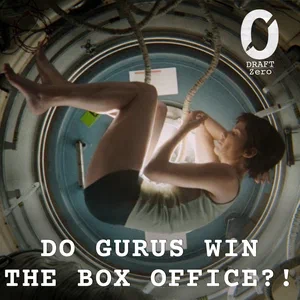
DZ-2: Do the Screenplay Gurus score big at the Box Office?Do the biggest original films of 2013 follow more archetypal - or formulaic - structures?
AI✦Stu and Chas examine whether GRAVITY and FROZEN–the biggest original films of 2013–adhere to or subvert the genre conventions audiences expect from award nominees versus box office hits.✦
Listen to see how GRAVITY and FROZEN use completely different structural blueprints.
▶
More Info
After analysing awards-nominated screenplays, Stu and Chas turn to the original screenplays that struck it biggest at the box office in 2013: GRAVITY and FROZEN. Do bigger films stick more closely to the archetypal story structures espoused by Vogler and Snyder…
→

DZ-1: Do Screenplay Gurus win you Oscars?Do Oscar-Nominated screenwriters follow the structural formulas prescribed by the 'gurus' and books?
AI✦Stu observes that Philomena ‘could be written as a thriller’ with nuns as antagonists, but instead uses ‘people not wanting to speak to them’ as resistance, upending the genre’s opposition mechanics.✦
Listen if you want to know whether Blake Snyder, Michael Hauge and Christopher Vogler's structural theories actually apply to Academy Award-nominated screenplays
▶
More Info
In this, our debut episode of Draft Zero, Stu and Chas analyse two screenplays nominated for Academy Awards in 2014 – PHILOMENA and DALLAS BUYERS CLUB – to see whether they follow the structural theories espoused by Blake Snyder, Michael Hauge and Christopher Vogler. We discuss character dynamics, structural challenges, and the complexities of narrative…
→