
§ RESOURCES / FILMMAKER INDEX
David Fincher
Director
Films Discussed 8
- · Alien³ (1992) (d)
- · Fight Club (1999) (d)
- · Gone Girl (2014) (d)
- · Mank (2020) (d)
- · Se7en (1995) (d)
- · The Girl with the Dragon Tattoo (2011) (d)
- · The Social Network (2010) (d)
- · Zodiac (2007) (d)
Draft Zero Episodes 9
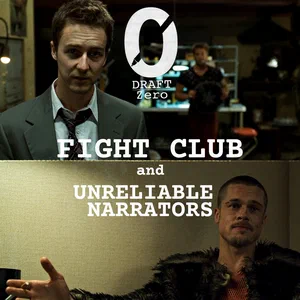
DZ-111: Unreliable Narrators and FIGHT CLUB
How does the unreliability of a narrator impact the way a story is told?
In this episode, Stu and Mel (sans Chas!) take a deep dive into FIGHT CLUB and its use of the unreliable narrator. This is a bridging episode between our previous episode on VOICEOVER and our forthcoming episode on TALKING TO CAMERA as Fight Club does both.… →
Listen to learn how unreliable narrators shape storytelling through voiceover, structure, and control.
▶ More Info
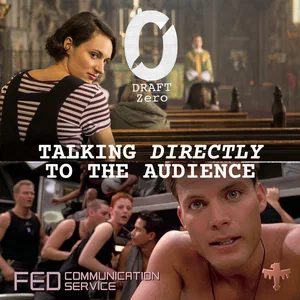
DZ-109: Talking DIRECTLY to your audience
What are the different ways a filmmaker can ask something of the audience?
What are the different ways a filmmaker can ask something of the audience… →
Listen if you've wondered what a character actually wants when they're talking directly to the audience!?
DZ-84: Choices & Decisions 1 - Booksmart
What is the difference between choice and decision when it comes to characters?
In order to better understand dramatising of character, Chas and Stu take a very draft zero look at very specific tool: choices and decisions. We analyse three films through the decisions made by their characters. In particular, how the audience understanding of: the choice available, the considered decision itself, and the consequence changes how we feel about these characters. And how separating those three things can create different emotional effects on your audience… →
Listen how the separation of choice, decision, and consequence (for a character) creates emotional impact.
DZ-79: Interweaving Timelines 2 - The Social Network
How can interweaving two timelines change how we feel about a character?
In this Part 2 of Interweaving Timelines (aka The Stu Monologue Episode), Mel, Chas and Stu tackle Sorkin/Fincher’s The Social Network. As you’ll hear, it is clearly Stu’s favourite of the examples we cover and, ah, not Mel’s favourite. While all three bring their own biases and opinions on the reality of Facebook as it has become, we do manage to put the destruction of democracy to one side to actually analyse the meticulous craft that this film displays… →
Listen to understand how manage stakes when you're using flashforwards.
DZ-40: Tactics and Scenes
How do tactics make your characters and scenes more dynamic?
In this episode, Stu and Chas turn their gaze to the “tactics” that characters use in scenes to get what they want. Tactics are how the characters try to achieve their goals and (we reckon) can be revealing of the essence of their character. The shifting and thwarting of tactics can make scenes more dynamic; while over the course of a story, the changing of tactics can reflect the growth of characters... even if their goal stays the same… →
Listen to learn how a character's tactics reveal who they are under pressure--and how their changing tactics reveals their growth.
DZ-38: Excelling at Exposition (Part 2)
How can exposition twist your story in new directions?
In the second part of Draft Zero’s two-part episode on “Exposition”, Stu & Chas take an even deeper look at this notoriously challenging part of screenwriting. For many stories there are pre-existing facts (or given circumstances) that need to be communicated to an audience, and often we rely on dialogue to do it. But exposition can do more than just communicate, it can serve as dramatic revelation that twists a story into a new direction or provides an emotional payoff - or both!. So how do great writers make exposition work for the story, rather than just tell audience stuff they need to know? And how can writers go wrong… →
Listen to learn how to use exposition as dramatic revelation rather than mere information delivery.
DZ-32: High-Tension Sequences
How can you recreate the feeling of cinematic high-tension on the page?
Chas & Stu take a close look at sequences of high-tension - the ones that make you lean forward in fear, or jump backwards in terror. Without camera angles, lighting, music or sound, how can screenwriters can evoke those emotions in readers using only the page? These sequences can be found in any genre of film, not just thriller or horror. To that end, Stu and Chas dive into high tension scenes from NO COUNTRY FOR OLD MEN, ZODIAC, ROOM, and THE BABADOOK. We cover their use of shifting POV, Dramatic Irony, Status Transactions, White Space, Sound FX, and many more… →
Listen if you want to evoke fear and tension using only the written word (without relying on camera, lighting, music, or sound).
▶ More Info
DZ-8: Status Transactions
How does a shift in status or power reveal character?
Stu and Chas explore an idea they both came across studying theatre: status and by extension (or juxtaposition) power. Is a story where a character changes status or experiences loss (or gains) in power more compelling… →
Listen to make your character relatinships more dynamic.
▶ More Info
DZ-4: Catharsis and the Post-Coital Cigarette
How does the end of certain films make your soul shudder?
Stu and Chas are joined by their first guest – illustrious script developer and producer Stephen Cleary – to explore how certain films can trigger an outpouring of emotion from the audience. Turns out that Aristotle may have figured it out a few thousand years ago and called it Catharsis… →
Listen if you want to make you endings great!
▶ More Info
Referenced In
Shot Zero Deep Dives
Electric Dissolves in STEVEN UNIVERSE and CITIZEN KANE and MANK by Shot Zero
Electric Dissolve? Who made that up?!
Read on SubstackVideos
The detached, indifferent camera of Zodiac
Also on Shot Zero
- ↗ Week 80: Socials Roundup 2024-07-24
- ↗ Week 26.08 - META FRAMES Socials Roundup 2026-02-25
- ↗ Week 46: Socials Roundup 2023-11-21