What can we learn from Sofia Coppola's on-the-page skills over her career?
AI✦The episode is structured around Coppola’s masterclass in writing character performance on the page--actor catnip that gives performers material to work with rather than strict direction.✦
Listen to discover how Sofia Coppola crafts character performance on the page and uses whitespace to create her distinctive cinematic voice
▶
More Info
Following the success of the Tips from Tarantino episode, we have again decided to look at three different scripts from over the course of a long screenwriting career from a single writer to see what we can learn. Our beloved patreons not only selected Sofia Coppola as said writer, but also selected the scripts to analyse: LOST IN TRANSLATION, THE BLING RING and THE BEGUILED…
→
HOw does a writer work with a director (on a short film?)
AI✦Ben discusses directing performance on the page--the craft of writing dialogue and action that gives actors room to inhabit their characters while maintaining the writer’s intention.✦
Listen if you are thinking of producing your own short film!
▶
More Info
This episode, Chas steps down as co-host (kinda) and is interviewed by Stu as a guest, alongside director Ben Mizzi, about the short rom-com that Chas wrote and Ben directed & produced. The episode covers taking an idea from pitch to screen, working with a director, directing performance on the page, and marketing and distribution strategies for short films…
→
How do you know if your unfilmable is good... or if you're just being a wanker?
AI✦Carissa Lee’s perspective as an actor performing the excerpts grounds the conversation in what’s actually playable and what feels like writer indulgence on the page.✦
Listen if you want to learn how to write tone and emotional context on the page.
▶
More Info
In this third and final part of our series on unfilmables, Chas and Stu turn their critical eye to... each other’s work! They take their key learnings from the previous episodes and apply them to rewriting scenes from their own projects. They discuss metaphors, emotional context, and how you can write tone on the page
without resorting to unfilmables…
→
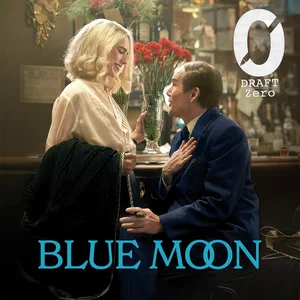
What craft tools make a low-budget, contained, period drama riveting?
AI✦The dialogue demands performers who can keep up with repartee, pop culture references, and technical wordplay about rhyme schemes from the opening pages--Ethan Hawke and Margot Qualley needed the chops to land the specificity.✦
Listen if you want to understand how narrative POV, screenplay format, and dialogue craft can elevate a contained biopic into an Oscar-nominated film
▶
More Info
BLUE MOON is a talky, period-drama that film about an obscure songer-writer in the 1940s. Yet, it attracted world-class talent AND Academy Award nominations, including for it’s script. Join Chas & Mel as they explore how narrative POV, interweaving relationships, hooky dialogue, and even the screenplay format itself make the script for BLUE MOON so great…
→
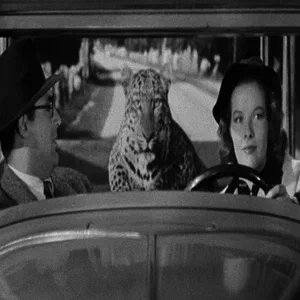
How do you make extended technical scenes funny on the page?
AI✦Chas notes that these writers give actors lots to play with through specific action descriptions--Kristen Wiig’s performance eating an almond or Melissa McCarthy’s physical choices--that aren’t ad-libbed but written into the structure of the scene.✦
Listen to learn how formatting--white space, caps, dashes--becomes your comedy toolkit without a director.
▶
More Info
Mel joins Chas to tackle physical comedy. We limited our homework selection to extended scenes (as opposed to moments and sight gags) in live action projects and – with the help of our Patreons – selected early sequences from BRINGING UP BABY, the pilot for HAPPY ENDINGS and that wonderful food poisoning scene in BRIDESMAIDS…
→
How can unfilmables help you create those cinematic moments of awe?
AI✦Performance beats emerge as a key tool for executing moments of awe, suggesting that what feels unscriptable is actually anchored in how you write for the actor in the frame.✦
Listen if you're writing a moment that feels too big for the page (but you need it on the page).
▶
More Info
In this second part of our series on unfilmables, Chas and Stu continue their deep dive into how writing the “unfilmable” can enhance your script. Rather than looking at micro moments, they turn their gaze to
“moments of awe” — those often breathtaking cinematic moments that feel
beyond writing. But are those scenes actually unscriptable…
→
How can unfilmables enhance the experience of your script?
AI✦Chas and Stu discuss how unfilmables bring performances to life -- giving actors language and texture that shapes how they inhabit a character, even when those words never make it to dialogue.✦
Listen to discover how *produced* screenplays use unfilmables to shape tone, performance, and humour on the page.
▶
More Info
*AKA Why your screenwriting guru is wrong *…
→
Films:
Lethal Weapon (1987)
,
Hereditary (2018)
,
A Quiet Place (2018)
,
Killing Them Softly (2012)
,
Spartan (2004)
,
The Girl on the Train (2016)
,
The Nice Guys (2016)
,
Drive (2011)
,
Michael Clayton (2007)
,
The Tree of Life (2011)
,
Three Billboards Outside Ebbing, Missouri (2017)
,
Killing Eve (2018)
,
Fleabag (2016)
,
Sharp Objects (2018)
,
Battlestar Galactica (2004)
It's the The Podcast You Used To Know…
AI✦Tash’s experience in front of the camera informs how she thinks about writing for performers, giving her a unique perspective on the writer-actor relationship.✦
Listen if you're navigating multiple creative disciplines and wondering how to build a sustainable career across them.
▶
More Info
Well, half of us is... Chas (sans Stu) is joined by a very special guest - Natasha Pincus. As a screenwriter, Tash’s feature CLIVE was on the 2012 Black List. As a director, her music video for Goyte’s
Someone I Used To Know was nominated for an MTV Music Video Award. And at the time of this recording, her debut feature as a screenwriter FELL was weeks away from opening night…
→
How and why should every scene have an emotional event?
AI✦Judith’s background directing actors informs the entire conversation about table reads and how writers can craft scenes that give actors the relational material they need to find truth in performance.✦
Listen to understand why a scene's power lives in what shifts between characters, not what happens to them.
▶
More Info
How and why should every scene have an emotional event?…
→
What can and should you do next?
AI✦David Wappel’s guest contribution on anchoring nouns speaks directly to the craft of writing prose that actors can work with on the page.✦
Listen to understand what you can control in your career--and what you absolutely cannot.
▶
More Info
In our annual Backmatter-only episode, Stu and Chas indulge themselves by offering personal opinions on the life and work of emerging screenwriters based on their own personal experience…
→How does a screenwriter collaborate with a director on an existing property?
AI✦Collaborating with a director on an existing property means negotiating how character moments serve both the actor and the franchise expectations--a dynamic the episode addresses through Aaron’s experience on set.✦
Listen if you're co-writing and need to figure out where your voice ends and your collaborator's begins.
▶
More Info
In this halloween special, Chas (sans Stu) is joined by a very special guest... Aaron Sterns the co-writer of WOLF CREEK 2 -- the big budget sequel to the infamous WOLF CREEK, also directed by Greg McLean. Chas and Aaron talk horror, anti-horror, collaboration, novels and how a screenwriter works within an existing franchise…
→