How do you make extended technical scenes funny on the page?
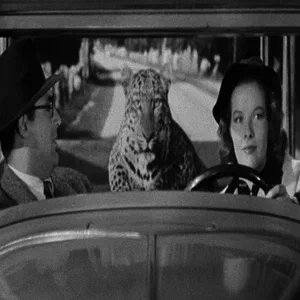
AI✦Bringing Up Baby’s slug lines mimic the editing pace and camera movement to convey rhythm and humor through white space, while Bridesmaids uses action lines to show the geography of different rooms and character combinations executing the same gag in various ways.✦
Listen to learn how formatting--white space, caps, dashes--becomes your comedy toolkit without a director.
▶
More Info
Mel joins Chas to tackle physical comedy. We limited our homework selection to extended scenes (as opposed to moments and sight gags) in live action projects and – with the help of our Patreons – selected early sequences from BRINGING UP BABY, the pilot for HAPPY ENDINGS and that wonderful food poisoning scene in BRIDESMAIDS…
→
How can we teach the reader to find the humour in our darkness?
AI✦Chas and Stu discuss what screenwriters can do on the page to compensate for cinematic tools like music, performance, composition, lighting, design, and editing--essentially how to encode tone without a director.✦
Listen if you want to use an unusual tone in your screenplay.
▶
More Info
Chas and Stu finally start their long-mooted exploration of tone with a series that examines films and shows with unusual tones and dives into how the writers establish those tones in the first 5 pages…
→
What can we learn by analysing how 'oners' are written on the page?
AI✦Chas, Stu, and Mel break down how writers create the feel of camerawork without calling shots, using big print and action lines to direct the camera through prose.✦
Listen to understand how screenwriters direct the camera without calling shots.
▶
More Info
Chas, Stu and Mel reunite to talk about writing the
feel of camerawork in screenplays. We use “oners” — a long-playing continuous take — as a lens to talk about how some writers have “directed” from the page. We talk immediacy, camera positions, handovers, and anchoring action and more…
→
How can you do powerful storytelling... without dialogue?
AI✦The episode centers on how George Miller constructs meaning through image systems and environmental storytelling rather than exposition or conversation.✦
Listen to hear how visual storytelling can carry an entire narrative with minimal dialogue.
▶
More Info
Stu and Chas are joined by filmmaker, podcaster and writer Lia Matthew Brownn to deep dive into FURY ROAD and its astounding
visual storytelling, both on the page and on screen. We talk about setups and payoffs, given circumstances, image systems, environmental storytelling, and how the relationship between Furiosa and Max is built over the course of the story with very little dialogue (besides Tom Hardy’s grunts and the odd bellow of “MEDIOCRE!”).
You can also watch the complete live stream on YouTube or just the breakdown of the Furiosa/Max fight (which isn’t in the podcast) here:
https://www.youtube.com/watch?v=f8uYAbEcQeQ&feature=youtu.be…
→
How can unfilmables help you create those cinematic moments of awe?
AI✦The episode centers on writing cinematically and using limited palettes of language to create those breathtaking visual sequences that feel transcendent on screen.✦
Listen if you're writing a moment that feels too big for the page (but you need it on the page).
▶
More Info
In this second part of our series on unfilmables, Chas and Stu continue their deep dive into how writing the “unfilmable” can enhance your script. Rather than looking at micro moments, they turn their gaze to
“moments of awe” — those often breathtaking cinematic moments that feel
beyond writing. But are those scenes actually unscriptable…
→
Are there screenwriting lessons to be taken from analysing the work of Michael f-ing Bay?
AI✦Stu, Chas, and Bitter analyze how Bay makes visual decisions on the page itself, translating cinematic action into screenwriting craft that serves the story’s information architecture.✦
Listen to understand how one of the world's highest-grossing directors structures story, makes great villians, controls information flow, and makes visual decisions on the page
▶
More Info
Of course there are. How could there not be? After all, Michael Bay is the 3rd highest grossing director at the worldwide box office... of all time. Behind, y’know, Spielberg and stuff. How could a man of such credentials not know story? Or, so argues this week’s guest: the author of MICHAEL F-ING BAY: THE UNHERALDED GENIUS IN MICHAEL BAY’S FILMS... [drumroll]... the Bitter Script Reader…
→
Does manipulating time on the page make your script feel more cinematic?
AI✦By examining scripts like PULP FICTION and THE BOURNE IDENTITY, Chas and Stu reveal how screenwriters use formatting and structure to write like you’d edit--creating visual momentum on the page.✦
Listen if you want your screenplay to feel cinematic before a director ever reads it.
▶
More Info
Chas and Stu are joined by Khrob Edmonds - an award-winning filmmaker - to discuss manipulation of time…
→
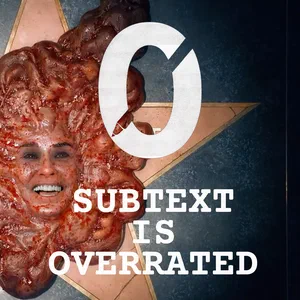
How do character goals, tactics, and fears create subtext automatically?
AI✦Stu observes that screenwriters must use action lines to play the role that music plays for directors, and the group analyzes how Fargaard Ouf and Corbet embed meaning in physical description and blocking.✦
Listen if you're struggling to write subtext without it feeling forced!
▶
More Info
Or, how focusing on good drama will result in good subtext. We often hear how subtext is important for good screenwriting. We’re here to tell you it isn’t. Good subtext is a result of good drama, and your focus should be on creating that good drama. But how…
→
How can we teach our audience new storytelling rules in the middle of our story?
AI✦Mel and Chas argue that what happens on the page--matter-of-fact descriptions, layered metaphors, color detail--replicates the visual language a director would later achieve through cinematography, grading, and composition.✦
Listen if you want to write tonal pivots that land on the page without a director's toolkit.
▶
More Info
Following on from our episodes on
establishing tone through action lines and
through character, this is what we have been building up to: how to pull off a tonal switch… that does NOT throw the audience out of the film. And, in particular, how to pull that off on the page when writers don’t have framing, lighting, music, editing, etc. at our disposal…
→
How can you use physical objects to track character change… wordlessly?
AI✦The episode focuses on how objects and locations become a visual grammar for character states, using paintings, instruments, and recurring spaces to articulate emotional arcs wordlessly.✦
Listen to write objects that accumulate powerful meanings across your story and create unspoken emotional payoffs.
▶
More Info
In part two of our two-part series on TALISMANS, we break down the beats used to turn objects (in a broad sense) into talismans; how talismans can track character journeys and transitions; and how they can be used to create powerful moments without words…
→
How can you use physical objects to reveal inner character?
AI✦Talismans function as a visual storytelling device--the object itself becomes a language through which audiences read character interiority without a word being spoken.✦
Listen to so you can write talismans that are powerful tools for accessing character!
▶
More Info
In this series, Chas and Stu discuss TALISMANS. Physical objects that are imbued with meaning by a character or characters. They’re a powerful tool to access inner character…
→
What can screenwriters learn from the storytelling techniques used by stand-up comedians?
AI✦Alice describes how the physical performance--where she looks away, how she shields herself, the long shots that show her whole body--is part of the script and conveys vulnerability differently than close-ups, showing screenwriters how physicality tells a story the words don’t.✦
Listen if you want to understand how stand-up comedians grip audiences and build emotional arcs (and what narrative tools screenwriters can borrow from comedy)!
▶
More Info
Standup comedians can keep audiences gripped to their every word for over an hour, and often bring them to emotional climaxes by the end. So how do they do it and what tools can apply to scripted narratives…
→
What can we learn from Sofia Coppola's on-the-page skills over her career?
AI✦Coppola’s reliance on whitespace and restraint on the page suggests her visual storytelling choices carry the tonal and experiential weight her scripts deliberately leave unwritten.✦
Listen to discover how Sofia Coppola crafts character performance on the page and uses whitespace to create her distinctive cinematic voice
▶
More Info
Following the success of the Tips from Tarantino episode, we have again decided to look at three different scripts from over the course of a long screenwriting career from a single writer to see what we can learn. Our beloved patreons not only selected Sofia Coppola as said writer, but also selected the scripts to analyse: LOST IN TRANSLATION, THE BLING RING and THE BEGUILED…
→
How do you know if your unfilmable is good... or if you're just being a wanker?
AI✦The discussion centers on how metaphors and concrete visual choices can communicate tone and emotional truth more effectively than authorial commentary.✦
Listen if you want to learn how to write tone and emotional context on the page.
▶
More Info
In this third and final part of our series on unfilmables, Chas and Stu turn their critical eye to... each other’s work! They take their key learnings from the previous episodes and apply them to rewriting scenes from their own projects. They discuss metaphors, emotional context, and how you can write tone on the page
without resorting to unfilmables…
→
How can unfilmables enhance the experience of your script?
AI✦Chas and Stu use the unfilmables in TREE OF LIFE and SHARP OBJECTS to demonstrate how writers can evoke visual and sensory experience through description that transcends what the camera literally captures.✦
Listen to discover how *produced* screenplays use unfilmables to shape tone, performance, and humour on the page.
▶
More Info
*AKA Why your screenwriting guru is wrong *…
→
Films:
Lethal Weapon (1987)
,
Hereditary (2018)
,
A Quiet Place (2018)
,
Killing Them Softly (2012)
,
Spartan (2004)
,
The Girl on the Train (2016)
,
The Nice Guys (2016)
,
Drive (2011)
,
Michael Clayton (2007)
,
The Tree of Life (2011)
,
Three Billboards Outside Ebbing, Missouri (2017)
,
Killing Eve (2018)
,
Fleabag (2016)
,
Sharp Objects (2018)
,
Battlestar Galactica (2004)
How can scene transitions do more than just move from one location to another?
AI✦Chas and Stu credit the writer’s work in building transitions into the script itself, separating what the screenwriter controls from the visual storytelling decisions made by directors and editors.✦
Listen to understand how transitions compress time, enhance thematic connections, unify story threads, and orient your reader
▶
More Info
Stu and Chas look at one of the basic building blocks of a script: scene transitions. Transitions don’t just move you from one scene to another in a slick way, they can help you compress time, enhance thematic connections, unify different story threads, orient (or disorient) your reader... and just make your script feel more like a movie… →
How does Film Noir show us terrible people doing terrible things without endorsing it?
AI✦Woman of the Hour walks a line between classical noir’s indirect brutality and neo-noir’s explicitness, using modern acting conventions and visual tactics to put you inside a predator’s perspective without endorsing him--a distinction Mel argues makes it belong with Zodiac and Memories of Murder.✦
Listen if you need audiences to root for characters who do terrible things
▶
More Info
Mel and Chas continue to explore what Noir (the genre) can teach writers of all other genres. In particular:…
→
It's the The Podcast You Used To Know…
AI✦Her MTV-nominated music video work for Goyte means Natasha brings directorial sensibility to how images and sound design communicate what words alone cannot.✦
Listen if you're navigating multiple creative disciplines and wondering how to build a sustainable career across them.
▶
More Info
Well, half of us is... Chas (sans Stu) is joined by a very special guest - Natasha Pincus. As a screenwriter, Tash’s feature CLIVE was on the 2012 Black List. As a director, her music video for Goyte’s
Someone I Used To Know was nominated for an MTV Music Video Award. And at the time of this recording, her debut feature as a screenwriter FELL was weeks away from opening night…
→