DRAFT ZERO
§ RESOURCES / TOPICS / Narrative POV

Narrative POV

Every episode covering Narrative POV.


"Everything he says to Marla, everything he says to Bob, everything he says to Tyler is him speaking to the audience because he’s showing us those things."

— Mel Killingsworth  |  DZ-111: Unreliable Narrators and FIGHT CLUB

Start here

DZ-5: Shifting audience point of view and heightened emotions

Can forcing your audience to ask questions - and then answering them - trigger an emotional response?
AIStu and Chas isolate audience point of view as the most powerful tool in screenwriting--whether your audience knows more, less, or the same as your characters determines emotional impact.
⏱ 1h 29m
27 APR 2014
Listen to learn about the most powerful tool in screenwriting: narrative POV.
More Info
Stu and Chas delve into audience point of view - not character point of view! Does your audience know more, less or the same as your characters? And does changing this within a scene trigger or heighten the desired emotional response…


KEY IDEAS

Narrative POV as a Tool

"To me, it's the greatest screenwriting tool: it's where are you positioning the audience in relation to their knowledge and to the character's knowledge."

— Chas Fisher (00:24:41) · DZ-125: Oscars One-shot - BLUE MOON

Placing the Ending First

"They could have put that opening at the end of the film, but I think the entire perception of that, like how compelling we would have found that 90 minutes would have been very different had they put that at the end. The way that you emotionally connect with those characters is going to be completely different depending on whether you're with them or whether you're ahead of them."

— Chas Fisher (00:22:10) · DZ-125: Oscars One-shot - BLUE MOON


Even More
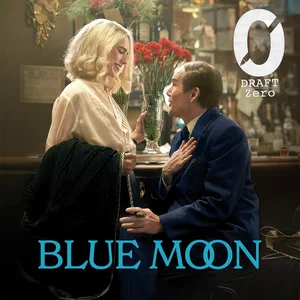
DZ-125: Oscars One-shot - BLUE MOON

What craft tools make a low-budget, contained, period drama riveting?
AIMel and Chas break down how Blue Moon’s almost total commitment to Larry Hart’s perspective--he’s absent from only two beats in the entire film--shapes both the script’s structure and the audience’s emotional experience of his decline.
⏱ 1h 18m
26 FEB 2026
Listen if you want to understand how narrative POV, screenplay format, and dialogue craft can elevate a contained biopic into an Oscar-nominated film
More Info
BLUE MOON is a talky, period-drama that film about an obscure songer-writer in the 1940s. Yet, it attracted world-class talent AND Academy Award nominations, including for it’s script. Join Chas & Mel as they explore how narrative POV, interweaving relationships, hooky dialogue, and even the screenplay format itself make the script for BLUE MOON so great…


DZ-119: Final Character Choices & Great Endings

How do you dramatise a protagonist's internal journey through their final decision?
AIChas and Stu compare narrative POV structures across five films to show how much the audience knows about a character’s options, the act of choosing, and the consequences, with Michael Clayton’s approach withholding experience to serve theme.
⏱ 1h 52m
18 JUN 2025
Listen if you want to understand how to better dramatise a character's internal journey
More Info
In this episode, Stu and Chas focus solely on the final choices made by protagonists and how that reflects their character journey and successfully, or not, dramatises the internal…


DZ-111: Unreliable Narrators and FIGHT CLUB

How does the unreliability of a narrator impact the way a story is told?
AIJack’s perspective as narrator determines everything the audience receives, and Stu and Mel show how point-of-view becomes a weapon when the person telling the story cannot be trusted.
⏱ 55h 26m
2 JUL 2024
Listen to learn how unreliable narrators shape storytelling through voiceover, structure, and control.
More Info
In this episode, Stu and Mel (sans Chas!) take a deep dive into FIGHT CLUB and its use of the unreliable narrator. This is a bridging episode between our previous episode on VOICEOVER and our forthcoming episode on TALKING TO CAMERA as Fight Club does both.


DZ-78: Interweaving Timelines 1 - Destroyer

How does interweaving two timelines change how the audience feel?
AIMel’s analysis of DESTROYER requires examining which timeline anchors the narrative perspective and how that choice orients the reader through competing temporal sequences.
⏱ 1h 42m
1 APR 2021
Listen when you're writting multiple timelines and struggling to anchor your reader to one timeline's perspective.
More Info
Stu and Chas are joined by Mel Killingsworth to dissect interweaving timelines. Not anthology films. Not Cloud Atlas. But films where two plot lines featuring the same characters, but from different timelines, are woven together…


DZ-68: Using POV to structure KNIVES OUT

How can shifting narrative point of view drive your sequences?
AIStu and Chas use shifts in what the audience knows relative to the characters as the structural spine for breaking down Knives Out’s sequences and turning points.
⏱ 1h 32m
17 MAY 2020
Listen to help you master the gap between what your audience knows and what your characters know.
More Info
Born out of isolation madness, this episode is an edited version of Draft Zero’s first YouTube livestream. Stu and Chas both watched KNIVES OUT and - together with our listeners - broke down each sequence and turning point by reference to what the audience knows in relation to the characters (aka narrative point of view). They then answer listener questions on KNIVES OUT and much else besides live on air…


DZ-46: Structure & Point of View

What questions do you want your audience asking at any given time?
AIStu and Chas take their micro examination of how shifting narrative point of view heightens emotion in scenes and apply it macro-structurally--organizing entire sequences and acts around what the audience knows relative to the characters.
⏱ 2h 25m
19 DEC 2017
Listen if you want to understand how narrative point of view can organise your entire story structure
More Info
Waaaaaaaaaay back in DZ-5, Stu and Chas examined how shifting narrative point of view (i.e. what the audience knows in relation to the characters on screen) heightens emotions in any given scene. We’ve now taken that micro idea and applied it to the macro: how can deciding what the audience knows and when in relation to the characters organise your story? Are whole sequences or even acts driven by the audience following a character, feeling concerned about a character, empathising with a character or being absorbed in the irony of knowing more than all the characters interacting on screen…


DZ-42: One-Shot - Character Worldview & Macro POV in SPLT

What screenwriting lessons can be we learn from SPLIT?
AIThe hosts examine SPLIT’s macro point of view choices and how the contained structure controls what the audience knows relative to the characters to generate both conventional and unconventional tension.
⏱ 1h 52m
26 APR 2017
Listen when you're writing a twist and need to earn it through point-of-view rather than surprise alone.
More Info
In our first (and perhaps last) one-shot, we take a close look at the M. Night Shyamalan’s SPLIT. Rather than having one topic with many examples, we use the one example to look at many topics. Well, okay, a few topics…


DZ-34: Game of Choices - Decision Making and Character Implications

How does the experience of a character's decision impact our feelings towards that character?
AIBoth Game of Thrones episodes demonstrate contrasting narrative point of view strategies that produce opposite effects on character perception despite equivalent narrative importance.
⏱ 1h 26m
14 AUG 2016
More Info
After a spectacular end to Season 6 of GAME OF THRONES, Chas and Stu were struck by the very different portrayals of Sansa in Episode 9 - Battle of the Bastards and Cersei in Episode 10 - The Winds of Winter. Despite both characters having an enormous impact on the narrative, the audience’s experience of those characters is very different -- largely because Sansa is absent from 98% of Battle of the Bastards…


DZ-32: High-Tension Sequences

How can you recreate the feeling of cinematic high-tension on the page?
AIShifting POV across scenes in NO COUNTRY FOR OLD MEN, ZODIAC, ROOM, and THE BABADOOK demonstrates how perspective choices control what readers know and fear at any moment.
⏱ 2h 23m
12 JUN 2016
Listen if you want to evoke fear and tension using only the written word (without relying on camera, lighting, music, or sound).
More Info
Chas & Stu take a close look at sequences of high-tension - the ones that make you lean forward in fear, or jump backwards in terror. Without camera angles, lighting, music or sound, how can screenwriters can evoke those emotions in readers using only the page? These sequences can be found in any genre of film, not just thriller or horror. To that end, Stu and Chas dive into high tension scenes from NO COUNTRY FOR OLD MEN, ZODIAC, ROOM, and THE BABADOOK. We cover their use of shifting POV, Dramatic Irony, Status Transactions, White Space, Sound FX, and many more…


DZ-30: Oscars revisited - Spotlight and Carol

What makes a script so compelling that it ends up with an Oscar nod?
AIThe dramatic point of view in each screenplay shapes what information the audience receives and when, a precision choice that Chas and Stu connect to the scripts’ narrative compulsion.
⏱ 1h 43m
28 FEB 2016
Listen to learn how catharsis, world-building, mid-points, and status transactions elevate great writing
More Info
In this episode Stu and Chas return to their first ever episode by tackling two Oscar-nominated screenplays. But this time - instead of exploring the rigid structures laid down by gurus - they use it as an opportunity to explore what they’ve learned in the last three years and apply them to the phenomenal writing in SPOTLIGHT and CAROL (with slight digression towards THE EXPANSE and GAME OF THRONES (which has possibly replaced Star Wars as the de facto reference point for anything.)…


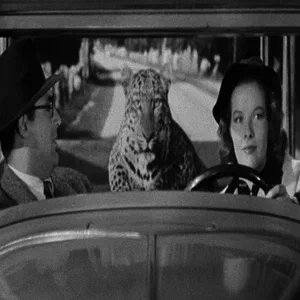
DZ-116: Writing Physical Comedy

How do you make extended technical scenes funny on the page?
AIIn the BRINGING UP BABY golf course sequence, the slug lines and action lines tell you whose point of view you’re in--how the editing mimics the character focus--which drives both pacing and humor.
⏱ 1h 35m
26 FEB 2025
Listen to learn how formatting--white space, caps, dashes--becomes your comedy toolkit without a director.
More Info
Mel joins Chas to tackle physical comedy. We limited our homework selection to extended scenes (as opposed to moments and sight gags) in live action projects and – with the help of our Patreons – selected early sequences from BRINGING UP BABY, the pilot for HAPPY ENDINGS and that wonderful food poisoning scene in BRIDESMAIDS…


DZ-112: Breaking the 4th wall

How is the effect of breaking the 4th wall different to voiceover?
AIThe hosts examine whose point of view we inhabit through fourth-wall breaking--whether the camera is in-world or metafilmic, who is talking, and to whom--ultimately discovering that the relationship between viewer and character shifts depending on those visual and narrative choices.
⏱ 1h 52m
31 JUL 2024
Listen to understand how breaking the 4th wall directly involves the audience in a character's emotional present.
More Info
As part of our series on how filmmakers can directly communicate to the audience, we finally examine the most blatant tool of them all: when character look directly down the barrel of the camera… and thus look directly at us, the viewer. Chas, Stu and Mel take the craft tools/levers they identified in previous episodes and use them to examine the tv-version-of HIGH FIDELITY (“Top Five Breakups”), ABBOTT ELEMENTARY (“Attack Ad)”) and - of course - FLEABAG…


DZ-109: Talking DIRECTLY to your audience

What are the different ways a filmmaker can ask something of the audience?
AIChas uses the concept of perspective and point of view to distinguish between objective narration, subjective internal monologue, and the Rashomon effect of multiple competing viewpoints.
⏱ 1h 20m
1 MAY 2024
Listen if you've wondered what a character actually wants when they're talking directly to the audience!?
More Info