§ RESOURCES / TOPICS / Formatting
Formatting
Every episode covering Formatting.
"The continual use of we in action lines contributes to the pacing. It helps carry us along through the French scenes without sort of pulling us out of it when it goes to action lines."
— Mel Killingsworth | DZ-125: Oscars One-shot - BLUE MOON
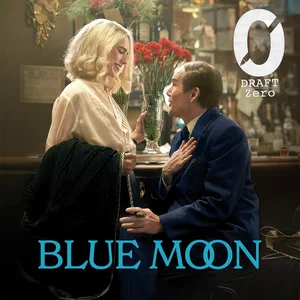
DZ-125: Oscars One-shot - BLUE MOON
What craft tools make a low-budget, contained, period drama riveting?
AI✦Mel shows how Blue Moon uses slug lines as emotional guideposts rather than formal location markers, signaling dramatic shifts even when characters stay in the same physical space--a rule-breaking choice that works because it serves the script’s needs.✦
Listen if you want to understand how narrative POV, screenplay format, and dialogue craft can elevate a contained biopic into an Oscar-nominated film
▶ More Info
BLUE MOON is a talky, period-drama that film about an obscure songer-writer in the 1940s. Yet, it attracted world-class talent AND Academy Award nominations, including for it’s script. Join Chas & Mel as they explore how narrative POV, interweaving relationships, hooky dialogue, and even the screenplay format itself make the script for BLUE MOON so great… →
Films:
Blue Moon (2026)
DZ-21: Scene Transitions and the Hook
How can scene transitions do more than just move from one location to another?
AI✦Understanding how to write transitions that do thematic and structural work requires knowing how to format them in a way that signals intention to both readers and production.✦
Listen to understand how transitions compress time, enhance thematic connections, unify story threads, and orient your reader
▶ More Info
Stu and Chas look at one of the basic building blocks of a script: scene transitions. Transitions don’t just move you from one scene to another in a slick way, they can help you compress time, enhance thematic connections, unify different story threads, orient (or disorient) your reader... and just make your script feel more like a movie… →
Films:
Scott Pilgrim vs. the World (2010)
, Highlander (1986)
, American Splendor (2003)
, Boyhood (2014)
DZ-16: Masters of Time and Whitespace
Does manipulating time on the page make your script feel more cinematic?
AI✦Present tense participles, white space distribution, and sentence structure are discussed as formatting choices that manipulate how cinema’s time-based techniques translate to the screenplay.✦
Listen if you want your screenplay to feel cinematic before a director ever reads it.
▶ More Info
Chas and Stu are joined by Khrob Edmonds - an award-winning filmmaker - to discuss manipulation of time… →
Films:
Pulp Fiction (1994)
, Raiders of the Lost Ark (1981)
, The Bourne Identity (2002)
, The Bourne Ultimatum (2007)
, The Untouchables (1987)
, The Woman in Black (2012)
, Up (2009)
, Whiplash (2014)