DRAFT ZERO
§ RESOURCES / TOPICS / Dramatic Questions

Dramatic Questions

Every episode covering Dramatic Questions.


"In Diving Bell and the Butterfly, it’s reversed. The character question comes first, unlike Toy Story, unlike 90% of stories. The character question is, will Jean-Dominique Boby find a way to make this existence palatable to himself? Will he be able to reconcile himself to this life? And that question is asked first, and then the plot question comes after. Will Jean-Dominique Boby write a book? And because he writes a book, he finds a way of making his life reconcilable to himself. Most stories have the plot question asked first, made possible by the answer of the character question. If you are doing it the other way around, it’s a character-driven story, which is to say the character question comes first and is answered last."

DZ-43: Driving Sequences - Character and Plot Intensity


KEY IDEAS

Control Over Questions Compels Action

"I think these films have got really strong control over the questions and that's how they get us to follow, compelling us to follow characters who are doing terrible things. And sometimes it's removing the mystery. We know who did it in Woman of the Hour."

— Chas Fisher (01:06:08) · DZ-124: Making the Despicable Compelling

Central Dramatic Question for Audience

"That is the central dramatic question for the audience, but that is what none of the characters are trying to do, except the father."

— Chas Fisher (00:24:50) · DZ-118: ADOLESCENCE -- How Questions Create Dramatic Tension

Plot vs. Character Questions

"Plot questions should be short and concise and comprehensible. And character questions should be long and meandering and incomprehensible. It's expressed as will X do Y? The thing they do must be clearly observable. In a character sequence, there is no plot question. If you say, what are they doing, the answer is they're just walking around to no purpose. There's no action, there's no question you can characterize over that 20-minute section of the story. It's not about what will happen, it's what will the character come to learn? Or will indeed they learn at all?"

— Stephen Cleary (01:18:25) · DZ-43: Driving Sequences - Character and Plot Intensity

The Inverted Structure

"In Diving Bell and the Butterfly, it's reversed. The character question comes first, unlike Toy Story, unlike 90% of stories. The character question is, will Jean-Dominique Boby find a way to make this existence palatable to himself? Will he be able to reconcile himself to this life? And that question is asked first, and then the plot question comes after. Will Jean-Dominique Boby write a book? And because he writes a book, he finds a way of making his life reconcilable to himself. Most stories have the plot question asked first, made possible by the answer of the character question. If you are doing it the other way around, it's a character-driven story, which is to say the character question comes first and is answered last."

— Stephen Cleary (01:44:17) · DZ-43: Driving Sequences - Character and Plot Intensity

Stating The Flaw Early Sets The Question

"What's really clever is here, and the other scripts do this as well, is normally in drama you wouldn't have the fla stated so early abd in such obvious terms. Often if it comes at all, it's like at the end of the second act, you know. And here they tell the audience and they tell the character what their flaw is, but they show them oblivious to it... And then this actually leads me to think...it actually sets up a dramatic question for the audience, right? You're told what is wrong with this guy. And so the question becomes, when will he realize or how will he realize? It's a subtle question, but I think it is in there. And then part of what you're compelled to do is watch to see, because you're not trying to work out who this character is. You're actually wanting to see how they will ultimately change."

— Stu Willis (00:17:21) · DZ-3: Making Unlikeable Protagonists Compelling


DZ-124: Making the Despicable Compelling

How does Film Noir show us terrible people doing terrible things without endorsing it?
AIMel and Chas argue that noir films control audience investment in morally compromised characters by controlling the questions they raise--whether it’s ‘Am I a bad person?’ in Devil in a Blue Dress or ‘Did he really let her go?’ in Woman of the Hour.
⏱ 1h 10m
30 JAN 2026
Listen if you need audiences to root for characters who do terrible things
More Info

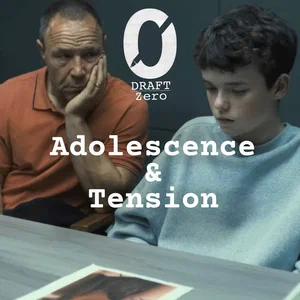
DZ-118: ADOLESCENCE -- How Questions Create Dramatic Tension

How do dramatic questions create tension?
AIChas and Stu demonstrate how ADOLESCENCE controls what questions the audience asks at any given moment--plot questions in episode one, character questions in episodes two and three, thematic questions by the end--and how this macro-level precision creates tension without relying on plot.
⏱ 2h 0m
1 MAY 2025
Listen when you need tension without external stakes--subtext, stillness, and thematic weight do the work.
More Info
In this episode, Stu and Chas delve into the cultural phenomenon of ADOLESCENCE. We try to find the craft tools that have made the show so compelling and such a catalyst for conversation…


DZ-99: Scene Questions

How do audience questions shape scenes?
AIThe episode breaks down how plot, character, and theme questions--and their hybrids--operate as distinct dramatic forces that pull an audience through the atomic unit of storytelling.
⏱ 1h 34m
1 MAY 2023
Listen if learn how to structure individual scenes through the questions you pose to your audience!
More Info
Inspired by our earlier episodes on sequences, Chas and Stu narrow their focus to look at the atomic unit of screen storytelling: the scene. In particular, we breakdown how question and answers prompted in the audience structure individual scenes…


DZ-69: PARASITE & Audience Questions

How can you use audience questions to heighten emotional investment?
AIThe deep dive into Parasite reveals how the film layers dramatic questions--about class, intention, and what will happen next--to sustain narrative momentum.
⏱ 1h 22m
10 JUN 2020
Listen to understand how refusing to give your audience moral clarity can deepen their investment in character fates.
More Info
Draft Zero return with their next YouTube livestream! Stu and Chas take a deep dive into PARASITE and how its mastery of audience questions elevates the film. They then answer listeners questions on PARASITE and much more…


DZ-43: Driving Sequences - Character and Plot Intensity

What gives your sequences their intensity?
AIThe episode’s central thesis examines how plot questions versus character questions--and combinations thereof--shape the intensity and audience engagement of your sequences.
⏱ 3h 16m
8 JUL 2017
Listen to understand how dramatic questions shape audience engagement and pacing through sequences.
More Info
Chas and Stu are joined for the fourth time by the inestimable Stephen Cleary - this time to take a deep dive into sequences. A real deep dive. A 3+ hour deep dive…


DZ-3: Making Unlikeable Protagonists Compelling
How do you keep an audience watching a character everyone in the film hates?
AIStu argues that explicitly stating a character’s flaw early creates a subtle but powerful dramatic question for the audience: when and how will the character realize or overcome this flaw?
⏱ 1h 20m
30 MAR 2014
Listen if you want to understand how you can make audiences care about deeply flawed protagonists
More Info
Stu and Chas tackle the first 20 pages of HOT FUZZ, AS GOOD AS IT GETS and GROUNDHOG DAY and try to work out what stops these a-holes from pushing the audience out of the move…


DZ-91: Raising (different kinds of) Stakes

How can you keep your audience hooked when they know the end of the story?
AIWhen plot questions are answered by history, Mel and the hosts shift focus to the dramatic questions that sustain engagement across HIDDEN FIGURES, DOWNFALL, and BRIGHT STAR.
⏱ 2h 19m
31 AUG 2022
Listen listen if you're writing a biopic or any story where the audience already knows how it ends.
More Info
Chas, Stu and Mel take a deep dive into stakes, using then lens of biopics to help us think about them. If an audience already knows the “plot” outcome of a story, then how do you create stakes to make a story tense for the audience…