Tone
Every episode tagged Tone, newest first.
2024
"The first half of the movie, I’d completely forgotten that this was set at Christmas. Like, they really lean into the L.A. sort of L.A. and winter vibe."
— Chas Fisher | DZ-115: A Christmas Special - Rewatching & Rituals
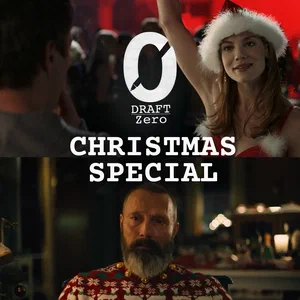
DZ-115: A Christmas Special - Rewatching & Rituals
What magic do Christmas movies use to make them so rewatchable?
AI✦The entire episode centers on what makes holiday films so rewatchable that they become seasonal rituals, using KISS KISS BANG BANG, RIDERS OF JUSTICE, and IT’S A WONDERFUL LIFE as case studies.✦
Listen if you want to understand what makes holiday films enduring parts of our seasonal rituals!
▶ More Info
In this “backmatter” episode of Draft Zero, Stu, Chas, and Mel Killingsworth embark on a festive exploration of what makes holiday films so engaging and so re-watchable that they can become part of our rituals. To that end, we breakdown the charm of of Christmas films like KISS KISS BANG BANG, RIDERS OF JUSTICE, and IT’S A WONDERFUL LIFE… →
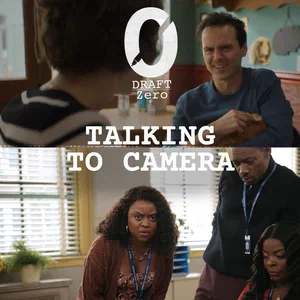
DZ-112: Breaking the 4th wall
How is the effect of breaking the 4th wall different to voiceover?
AI✦Chas notes how the physical placement and frequency of fourth-wall breaks--glancing over a shoulder versus barrelling straight at the camera--establishes whether the tone is confessional asides or urgent, immediate intimacy, a choice that flavors the entire show’s personality.✦
Listen to understand how breaking the 4th wall directly involves the audience in a character's emotional present.
▶ More Info
As part of our series on how filmmakers can directly communicate to the audience, we finally examine the most blatant tool of them all: when character look directly down the barrel of the camera… and thus look directly at us, the viewer. Chas, Stu and Mel take the craft tools/levers they identified in previous episodes and use them to examine the tv-version-of HIGH FIDELITY (“Top Five Breakups”), ABBOTT ELEMENTARY (“Attack Ad)”) and - of course - FLEABAG… →
DZ-107: Establishing Tone through Character
How can we use dramatisation to create tone?
AI✦Chas and Stu make tone their primary subject, using LADY BIRD, EMILY THE CRIMINAL, THE BALLAD OF BUSTER SCRUGGS, and SPONTANEOUS as case studies in how dramatisation creates and sustains a film’s unique tonal voice.✦
Listen if you want to understand how character actions and reactions shape a film's tone
▶ More Info
In this episode, Chas and Stu continue their deep dive into how to write tone by examining films with “light” (we use the phrase loosely) tones: LADY BIRD, EMILY THE CRIMINAL, THE BALLAD OF BUSTER SCRUGGS, and SPONTANEOUS. We also talk a surprising amount about DUNE and CRAZY STUPID LOVE… →
Films:
Lady Bird (2017)
, Emily the Criminal (2022)
, The Ballad of Buster Scruggs (2018)
, Spontaneous (2020)
2023
"He is writing our experience as the audience to us as we’re reading it."
— Chas Fisher | DZ-105: Establishing Tone through Big Print
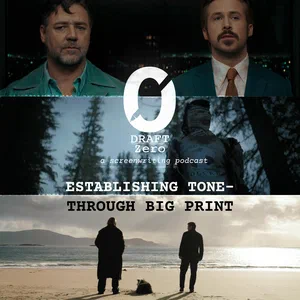
DZ-105: Establishing Tone through Big Print
How can we teach the reader to find the humour in our darkness?
AI✦Chas and Stu use the first 5 pages of three films to show exactly how writers establish darker or sadder tones before the reader knows what they’re supposed to feel.✦
Listen if you want to use an unusual tone in your screenplay.
▶ More Info
Chas and Stu finally start their long-mooted exploration of tone with a series that examines films and shows with unusual tones and dives into how the writers establish those tones in the first 5 pages… →
Shows:
YELLOWJACKETS 1x1
2022
DZ-89: Opening Sequences
How does your opening sequence set up your audience?
AI✦By analyzing what makes openings like OCEAN’S ELEVEN subversive, Stu and Chas show how tone is set through choices that work against audience expectations of the genre.✦
Listen if you want to understand how great opening sequences establish character, genre, and theme while defying genre conventions
▶ More Info
Inspired by her tweet on how subversive an opening OCEAN’S ELEVEN has, Chas and Stu invited amazing writer/director Jessica Ellis onto the show to deep dive into opening sequences. How does a good opening setup character, genre, and theme… →
2021
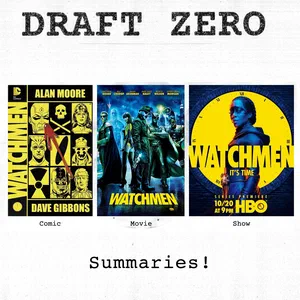
DZ-82: Dramatising Given Circumstances in WATCHMEN
How can you elegantly convey given circumstances and exposition?
AI✦Mel, Chas, and Stu show how tonal presentation shapes the reception of given circumstances: the same exposition reads differently when delivered through Snyder’s visual language versus Lindelof’s narrative structure and pacing choices.✦
Listen if you're drowning your readers in world-building and can't figure out how to make it awesome!
▶ More Info
In this final podcast release of last year’s run of LiveSoLation episodes, Chas and Stu are joined by Uber-geek Mel Killingsworth (who else?) in an epic exploration of how Dave Gibbons’ and Alan Moore’s seminal graphic novel WATCHMEN is adapted differently in Zack Snyder’s 2009 film and Damon Lindelof’s 2019 HBO television show… →
Shows:
Watchmen
DZ-76: Spotlight on Sofia Coppola
What can we learn from Sofia Coppola's on-the-page skills over her career?
AI✦The hosts are surprised to find that Coppola doesn’t write tone or experience into her scripts despite her films having such specific and distinctive tonal signatures.✦
Listen to discover how Sofia Coppola crafts character performance on the page and uses whitespace to create her distinctive cinematic voice
▶ More Info
Following the success of the Tips from Tarantino episode, we have again decided to look at three different scripts from over the course of a long screenwriting career from a single writer to see what we can learn. Our beloved patreons not only selected Sofia Coppola as said writer, but also selected the scripts to analyse: LOST IN TRANSLATION, THE BLING RING and THE BEGUILED… →
2020
DZ-70: Joker & Melodrama
How does Joker use melodramatic techniques to elevate its storytelling?
AI✦Melodrama is the central interpretive lens Stu and Chas apply to Joker, examining whether the film operates within that story paradigm and how that classification shapes the screenplay itself.✦
Listen if you're writing a character whose trauma becomes the engine of your entire narrative.
▶ More Info
Draft Zero return with their next YouTube livestream! Stu and Chas take a deep dive into JOKER and analyse the film through the story paradigm of melodrama. Is it a melodrama? Why or why not does that matter? And does that influence how it has been written on the page… →
Films:
Joker (2019)
DZ-67: Writing Passive Protagonists & Melodrama
How do I tell a powerful story where the protagonist cannot drive the plot?
AI✦Stephen Cleary joins Stu and Chas to reclaim melodrama from its pejorative meaning and establish it as a legitimate alternate story paradigm to the Hero’s Journey.✦
Listen if you want to write powerful stories centred on characters without much agency.
▶ More Info
Stu and Chas are joined by Stephen Cleary following his exploration into Melodrama, and together they try to reclaim the word from its pejorative meaning… →
Films:
Ladies in Black (2018)
, Marriage Story (2019)
, Pete's Dragon (2016)
, Mildred Pierce (1945)
, Joker (2019)
, The Handmaid's Tale (2017)
, Stranger Things (2016)
, The Witcher (2019)
, Lost (2004)
2019
DZ-60: Unfilmables 1 - Engaging imagination
How can unfilmables enhance the experience of your script?
AI✦The episode examines how unfilmables function to set or shift the mood and tonal register of a scene -- using examples from HEREDITARY, FLEABAG, and KILLING EVE to show tone-setting in action.✦
Listen to discover how *produced* screenplays use unfilmables to shape tone, performance, and humour on the page.
▶ More Info
*AKA Why your screenwriting guru is wrong *… →
Films:
Lethal Weapon (1987)
, Hereditary (2018)
, A Quiet Place (2018)
, Killing Them Softly (2012)
, Spartan (2004)
, The Girl on the Train (2016)
, The Nice Guys (2016)
, Drive (2011)
, Michael Clayton (2007)
, The Tree of Life (2011)
, Three Billboards Outside Ebbing, Missouri (2017)
, Killing Eve (2018)
, Fleabag (2016)
, Sharp Objects (2018)
, Battlestar Galactica (2004)
2014
DZ-15: World Building Rules, Okay?
How does setting up rules help you build a world?
AI✦By setting up the rules of your world, you simultaneously establish tone--the hosts show how THE MATRIX, GRAVITY, and MOONRISE KINGDOM use their opening moves to signal genre and register to the audience.✦
Listen when your opening pages feel like exposition dumps (which is bad, okay?)
▶ More Info
In our most epic/longest episode yet, Chas and Stu tackle world building in films. Specifically, how the rules make something a world and not just a setting. Starting with world-centric genres like sci-fi and fantasy, we also cover horror, crime drama and - er - “other”. We discuss a variety of techniques for setting up the rules of the world, including cold opens, voiceover, title cards and outsider characters! We’ve limited ourselves to the opening 3-5 pages... mostly... because (so the theory goes) they’re the pages that teach the audience how to read/watch your story/film… →
Films:
The Matrix (1999)
, Inception (2010)
, The Lord of the Rings: The Fellowship of the Ring (2001)
, Jurassic Park (1993)
, Pan's Labyrinth (2006)